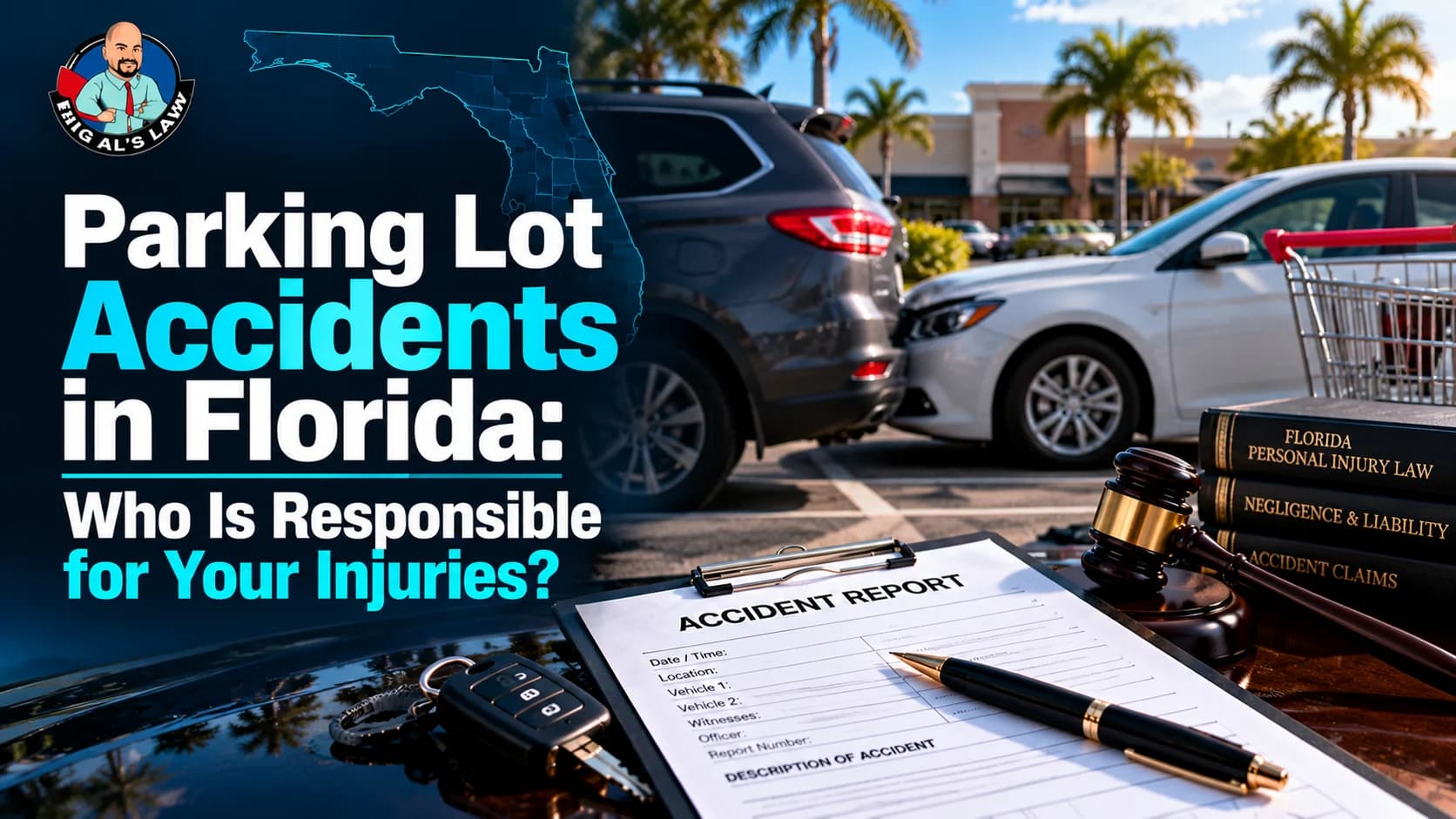
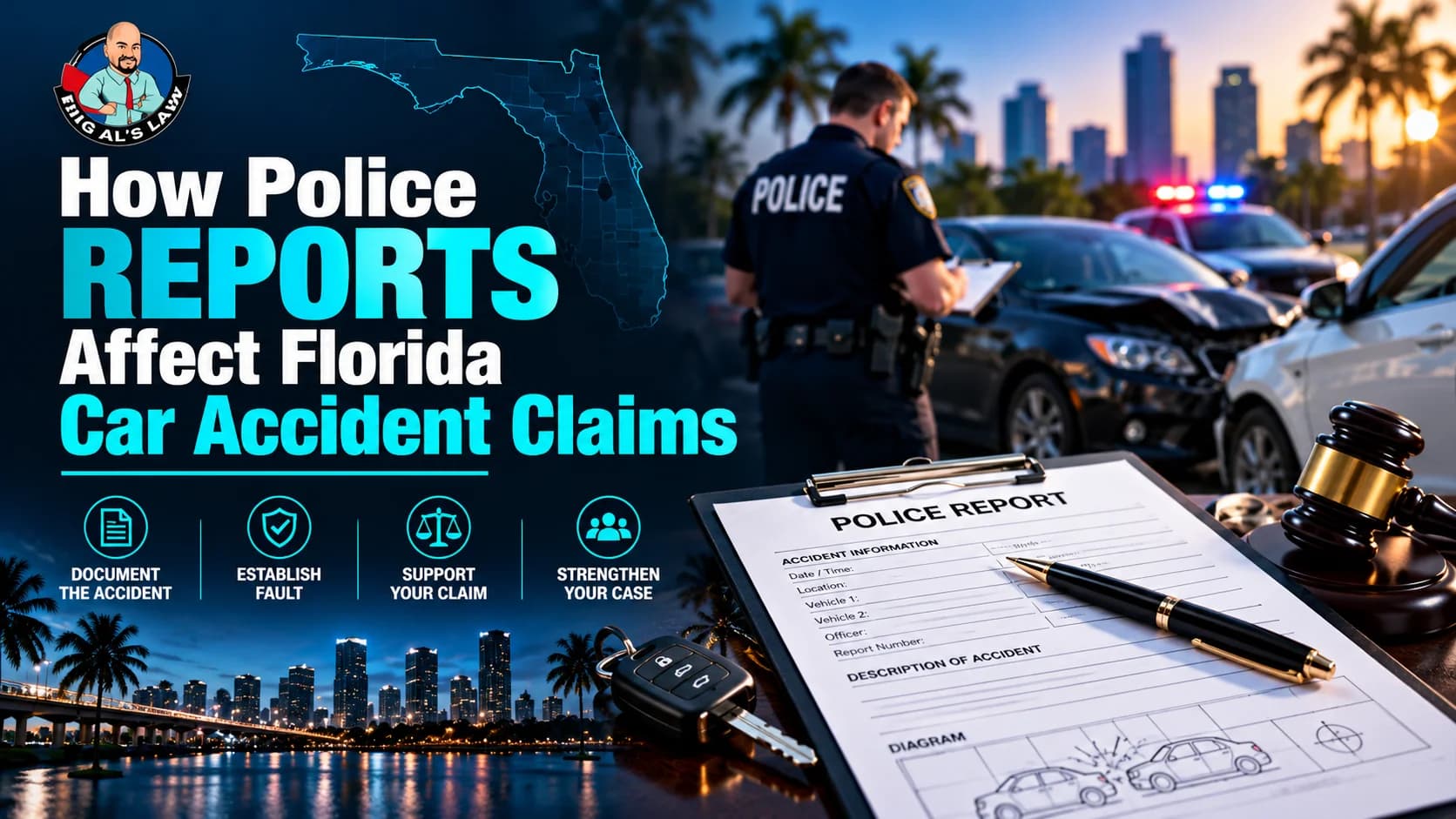
In Florida, police reports lay out who's to blame and what injuries happened right after a crash, and insurance adjusters really rely on them to figure out how much a claim is worth. If there’s stuff missing or just plain wrong in that report, it can sneakily lower your payout before you even get to the bargaining table.
Key Points
- Under Florida law, a driver must immediately notify law enforcement of a crash involving injury or death, a hit-and-run, or property damage that appears to exceed $500.
- Cops gotta whip out that official Long Form crash report within 10 days if there's an injury, a DUI, a commercial truck, or a car that had to get dragged away on a flatbed.
- Insurance adjusters treat the report as a starting point, not a verdict.
- Florida's 51% fault bar means every sentence in that narrative section carries real money behind it.
- You can correct a report after filing if the facts inside it are wrong.
- Failing to report a crash doesn’t preclude the possibility of a claim being made, but it does affect the claim's foundation.
You've probably seen an episode of a courtroom TV show, where the defense attorney pulls out one tiny piece of paper, and suddenly everything changes. That's a little dramatic for real life, but not by much, not when we're talking about the crash report sitting in a Florida Highway Patrol filing cabinet somewhere between Tampa and Largo.
1What Actually Triggers a Police Report in Florida?
Florida doesn't leave this up to vibes. Florida Statute 316.065 says the driver of a vehicle involved in a crash resulting in injury, death, or at least $500 in apparent property damage must give notice to law enforcement immediately, by the fastest means available. Not tomorrow. Not once the tow truck leaves. Right then.
Once an officer responds and investigates, a separate rule kicks in. Under Florida Statute 316.066, a Florida Traffic Crash Report Long Form gets completed and submitted within 10 days whenever the crash involved death, personal injury, or even a complaint of pain or discomfort. Same goes for a DUI or BUI violation, a vehicle towed from the scene because it couldn't drive away, or any commercial motor vehicle.
FLORIDA CRASH DATA
Total crashes statewide
Crashes with reported injuries
Hit and run crashes
Fatal crashes
2What’s Actually Sitting Inside That Report?
People imagine a crash report as a few scribbled lines. It’s much more than that. A long form includes dates, time, and the location of the crash. Vehicle descriptions for every car involved. Names and addresses of drivers, passengers, and witnesses. The badge number and agency of the responding officer. Insurance carrier information for each party. Often a diagram of how the vehicles collided, plus any citations issued on the spot.
| Report Type | When It's Used | What Gets Filed |
|---|---|---|
Long Form | Injury, death, DUI/BUI, towed vehicle, commercial vehicle | Full narrative, diagram, witness list, citations, insurer info |
Short Form | Minor crash, no injury trigger, on public roadway | Date, time, location, vehicle description, party names |
Exchange of Information | Very minor crash, officer discretion | Driver and passenger identification only, no narrative |
Every one of those fields becomes a fact someone can point to later. A witness name that didn't make it onto the page is a witness nobody thinks to call six months down the line. An officer's diagram that shows your car three feet off from where it actually sat becomes an argument in a deposition.
3How Most Insurance Companies Interpret Police Report
Here's where people get it wrong, and I mean almost everybody. They think if the report says the other guy was at fault, the check is basically in the mail. Adjusters don’t operate on faith. They pull the report, sure, first thing, but they also run their own investigation behind it. Photos. Repair estimates. Recorded statements. Sometimes their own accident reconstruction if the dollar amount justifies it.
What the report does is set the frame. If the narrative section describes the other driver failing to yield, or blows a red light, that language becomes the anchor the entire negotiation drifts around. Adjusters push back against anchors, but they rarely ignore them outright.
“I've watched a single sentence in an officer's narrative move a settlement offer by tens of thousands of dollars. Insurance companies act like the report is gospel when it favors them and a mere suggestion when it doesn't. Our job is making sure it gets read the right way, both times.”
— David Carter, Founder, Carter Injury Law
4Why the 51% Rule Makes Every Line of That Report Expensive
Florida was a State of pure comparative negligence. It’s possible to be 90% responsible for your own accident and still receive 10% of damages. This changed on March 24, 2023, when House Bill 837 amended Florida Statute 768.81. This bill created a rule that if a jury or adjuster finds you to be more than half at fault for an accident, you won’t be entitled to anything.
Florida's Comparative Negligence Bar (51% Rule)
Recovery on a $100,000 claim under Florida's comparative negligence bar
That 51% cliff is exactly why the fault language buried in a police report stopped being academic and started being financial. A report that assigns you even a sliver more blame than it should isn't a technicality anymore. It's the difference between a six figure settlement and a firm handshake goodbye.
5When the Report Gets It Wrong
This shows up constantly in Tampa Bay car accident cases specifically, where multi-vehicle pileups on I-4 or the Selmon Expressway generate reports written under pressure with several drivers giving conflicting accounts at once.
Florida allows a driver to request a supplement or correction to a filed report through the investigating agency. It's not automatic, and it's not always granted, but a documented request paired with solid supporting evidence carries weight. The National Highway Traffic Safety Administration tracks crash and fatality data nationally precisely because these records shape so much downstream decision making, from insurance to public policy to litigation. A flawed report doesn't just affect your check. It quietly distorts a much bigger dataset.
That's the case with rideshare companies, too, with Uber and Lyft accidents specifically, as the data from the app sometimes conflicts with police reports, and that's the game in the negotiation.
6What If There’s No Police Report at All
Sometimes an officer never responds. Sometimes both drivers agree, mistakenly, that the damage looks minor and they'll just handle it between themselves. Florida allows self reporting online through FLHSMV in cases that don't meet the mandatory notification threshold, but skipping that step leaves a claim thin on independent evidence. You end up rebuilding a timeline from memory, photos, and whatever the other driver feels like admitting to. Possible, but rougher surface.
Crash to Claim Timeline in Florida
Crash
Incident occurs on Florida roadway.
Immediate notice due
Mandatory call to law enforcement under Fla. Stat. 316.065.
Officer investigation
Field interviews, evidence documentation & measurements.
Long form filed
Official report submitted under Fla. Stat. 316.066.
Report available for purchase
Access opened online via FLHSMV portal.
Claim negotiation begins
Insurance adjusters evaluate fault narrative & damages.
Report Already Filed? Good. Now Let's Read It Right.
A free case evaluation with Carter Injury Law costs nothing and tells you exactly where your claim stands.
7The Report vs. The Reality
A police report captures a moment reconstructed after the fact, usually from statements given while people are shaken, bleeding, or downright lying. It’s not the truth carved in stone. Dashcam footage, event data recorder pulls from the vehicle's own computer, and independent witnesses routinely surface details the responding officer never had access to.
Legal commentary on this exact tension notes that adjusters weigh an officer's fault opinion alongside their own investigation and don't always land in the same place, which tells you everything about why treating the report as the finish line instead of the starting gun costs people money they were owed.
David Carter's team pulls the report the same week a client walks in, checks it line by line against photos and witness accounts, and flags discrepancies before an adjuster ever gets the chance to use them as leverage. Explore how that works on the firm's auto accident litigation page or read through real client outcomes on the testimonials page.
8Frequently Asked Questions
Does an officer have to respond to every fender bender in Florida?
No. Response is generally reserved for crashes involving injury, death, DUI or BUI, hit and run, or damage that looks like it clears $500. Minor crashes may only get a short form or an exchange of information sheet.
How fast can I actually get a copy of my Florida crash report?
Long form reports typically become available for purchase through FLHSMV or the investigating agency within about 10 business days after the officer submits it, sometimes sooner for straightforward crashes.
If the report cites the other driver, does their insurer have to pay?
No. A citation influences the conversation but doesn't bind the insurer. They can and often do dispute fault percentage even with a citation sitting right there in black and white.
Should I read the report before calling a lawyer?
Read it as soon as you have it. To a trained eye, errors, no witnesses, or wordy fault language present themselves early and early detection alters the appearance of the leverage later.
Don't Let an Inaccurate Police Report Hurt Your Recovery
Carter Injury Law investigates crash scenes across Tampa and Largo to ensure insurance adjusters see the full, accurate truth of your accident.
3114 N. Boulevard, Tampa, FL 33603 | carterinjurylaw.com
Disclaimer: This article is for general information only and is not legal advice. Laws change, and every case depends on its own facts. Speak with Carter Injury Law about your specific situation.