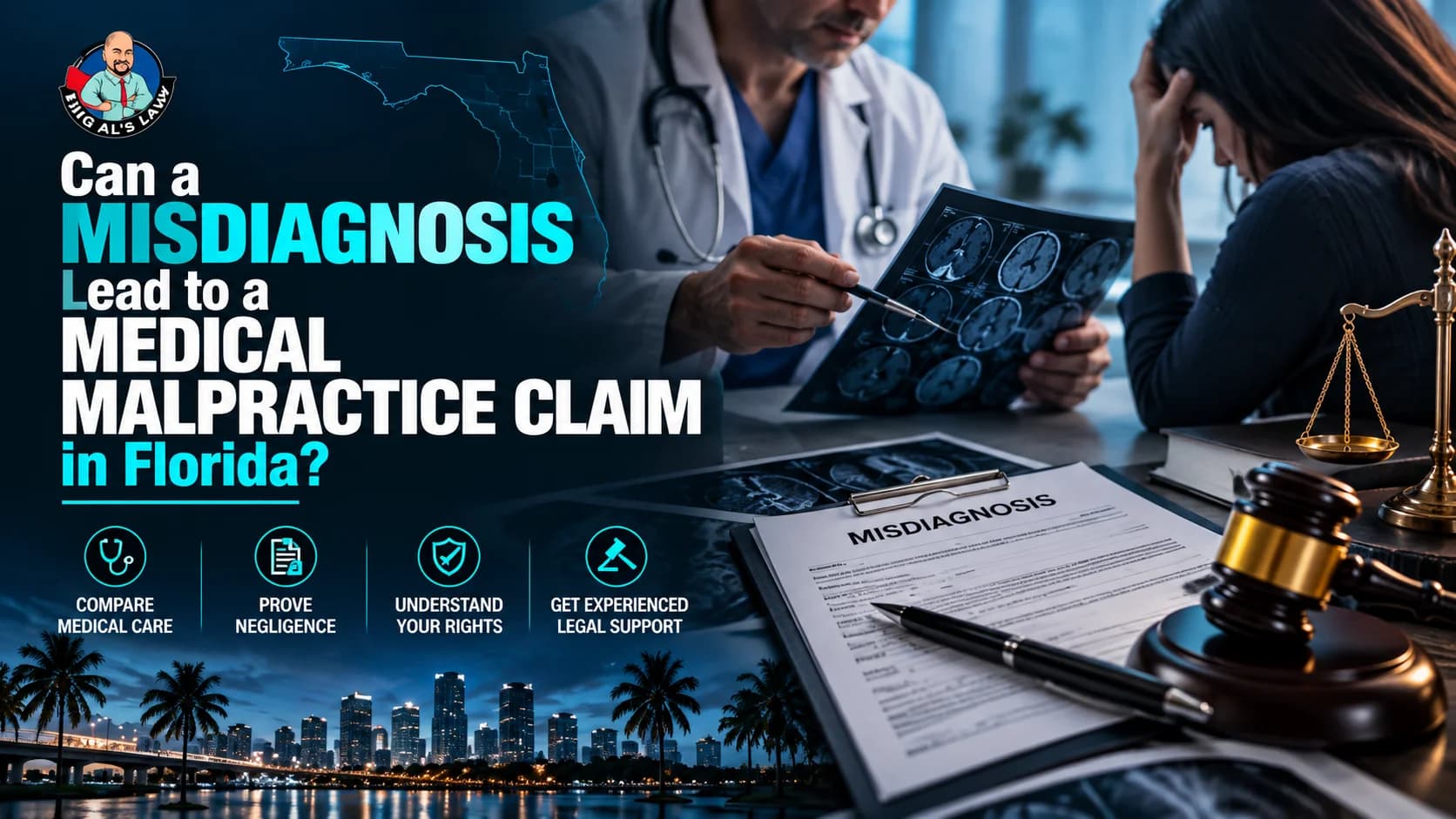
A misdiagnosis may give rise to a medical malpractice claim in the state of Florida when the patient is wrongly diagnosed by the doctor and the doctor acts unreasonably below the standard level of medical care. They can cause serious damage to the patient including delayed treatment, aggravation of the condition, and even death. Not every wrong diagnosis qualifies. The error has to be one a competent doctor would’ve caught.
Key Takeaways
- Florida law treats a misdiagnosis as malpractice only if it breaks the standard of care and causes provable harm.
- You generally have two years from discovering the error, and never more than four years from the incident, under Fla. Stat. section 95.11(5)(c).
- Florida requires a presuit investigation before any lawsuit, including a written expert opinion under Chapter 766.
- There is no cap on damages. The Florida Supreme Court struck down noneconomic damage limits in Kalitan (2017), and that still holds in 2026.
- Cancer, heart attack, stroke, sepsis, and appendicitis are on the list as in these conditions speed decides outcomes.
- A same-specialty medical expert needs to review your records early. Waiting costs you evidence and time.
1What Counts as a Misdiagnosis Under Florida Law
Plenty of good doctors have missed something on a first look. They can misread the symptoms. Only a wrong guess is not enough to be counted as malpractice. You can take action against a misdiagnosis if it fails to meet a certain legal standard. Florida courts ask two things. Does the doctor fall below the standard of care that a reasonable practitioner should have followed? Secondly, was there harm that wouldn't have occurred if the standard had been met? And, if the answer is yes, then it counts as a misdiagnosis.
Three patterns show up again and again in Florida misdiagnosis claims:
Missed diagnosis
A chest x-ray gets read as normal when a tumor was visible.
Delayed diagnosis
The correct call eventually happens, but months late, letting a treatable condition progress.
Wrong diagnosis
The doctor treats the wrong problem, sometimes causing harm through unnecessary treatment.
A missed diagnosis corrected the next week with no lasting harm usually will not support a claim.
Diagnostic Error
An estimated 12 million adults are affected by diagnostic errors in U.S. outpatient care each year, per research in BMJ Quality & Safety. Roughly half carry potential for serious harm.
Johns Hopkins Medicine researchers found diagnostic failures account for the largest share of paid malpractice claims nationally, more than surgical errors or medication mistakes.
2What You Have to Prove in a Florida Misdiagnosis Case
Florida requires four elements in any medical malpractice claim. Miss one and the case falls apart.
Duty of care
A doctor-patient relationship existed. Rarely contested.
Breach of the standard
The diagnostic process fell short of what a similarly trained physician would have done.
Causation
The misdiagnosis, not the underlying illness, caused the harm.
Damages
Real, measurable loss. Medical bills, pain and suffering, lost income or wrongful death.
3The Same Specialty Rule Is Important
Under section 766.102, your presuit expert has to practice in the same specialty as the doctor you are accusing. Courts dismiss cases over this exact issue.
| Expert's Specialty | Accepted by Florida Courts? |
|---|---|
| Orthopedic surgeon reviewing an orthopedic surgeon's care | Yes |
| Plastic surgeon reviewing an orthopedic surgeon's care | No, different specialty |
| Cardiologist reviewing a pulmonologist's care | No, even with shared internal medicine roots |
| Emergency physician reviewing an ER doctor's triage decision | Yes |
Source case law: Davis v. Karr, 264 So. 3d 279 (Fla. 5th DCA 2019), dismissed on this exact ground.
4How Long Do You Have to File in Florida?
A lot of valid claims die quietly, simply because nobody acted in time.
- Two years from the incident or discovery. Generally, you have two years from the medical incident to file a claim. If you did not discover the injury right away, the two-year period may instead run from when you discovered, or reasonably should have discovered, the injury with due diligence. Florida law addresses this under § 95.11(4)(c), Florida Statutes.
- A four-year outside limit. The statute of repose generally prevents a medical malpractice action from being filed more than four years after the incident, even if the injury was discovered later. There is an important exception for claims brought on behalf of a minor.
- Fraud or concealment can change the deadline. If fraud, concealment, or intentional misrepresentation prevented you from discovering the injury, the law can extend the filing period.
- Minors get more time. Generally until their eighth birthday.
Misdiagnosis cases are built on delayed discovery. You might not learn your original doctor was wrong until a second doctor, sometimes years later, tells you so. That second opinion date usually starts your clock, not the original visit. Do not assume that without a lawyer confirming it.
A Typical Misdiagnosis Timeline
BEFORE THE CORRECT DIAGNOSIS
Chest pain and fatigue. ER discharges with a diagnosis of anxiety.
No cardiac workup ordered. Symptoms worsen over six weeks.
AFTER THE CORRECT DIAGNOSIS
Second hospital orders an EKG immediately. Coronary blockage confirmed, six weeks late.
Patient now has permanent heart damage earlier treatment likely would have prevented.
5The Presuit Process Florida Requires Before You Can Even File Suit
Florida does not let you walk into court the day after a bad diagnosis. Chapter 766 requires a presuit investigation first. Skip a step and your case gets dismissed.
Records Review
Your attorney gets the file reviewed by a same-specialty physician.
Expert Opinion
That expert signs an affidavit supporting the claim.
Notice of Intent
Once the provider receives the notice, the 90-day presuit investigation period under Section 766.106, Florida Statutes, begins.
90 Day Response
The insurer denies, settles, or stays silent. Silence counts as denial.
Lawsuit Filed
With no resolution, the claim moves into court.
6What Compensation Looks Like in Florida Misdiagnosis Cases
Florida used to cap noneconomic damages at $500,000 or $1 million depending on injury. That is gone. The Florida Supreme Court struck it down as unconstitutional in North Broward Hospital District v. Kalitan back in 2017, and it stayed struck down. No dollar ceiling applies today.
- Past and future medical expenses tied to correcting the misdiagnosis
- Lost wages and diminished future earning capacity
- Pain and suffering, with no statutory cap since 2017
- Wrongful death damages for surviving family
A missed skin cancer caught one stage later carries a very different value than a missed sepsis diagnosis that led to organ failure. Numbers depend on the medical evidence, not a formula.
“The hardest part is proving the delay actually changed the outcome. That's why we get records reviewed fast, before memories fade. Waiting even a few extra months can weaken a claim that started out strong.”
— David Carter, Founding Attorney, Carter Injury Law, Tampa
7Which Conditions Get Misdiagnosed Most Often in Florida
Some conditions show up in claims far more than others, mostly because early symptoms mimic something harmless.
- Cancer: Especially breast, colorectal, and lung, where a scan or biopsy gets misread.
- Heart attack: Misdiagnosed as anxiety or indigestion, particularly in women.
- Stroke: Where narrow treatment windows make delay especially damaging.
- Sepsis: Which can progress to organ failure within hours.
- Appendicitis: Often mistaken for stomach flu.
Notice the pattern. Every one has a narrow treatment window. That is not a coincidence.
8Frequently Asked Questions
Can I sue if the misdiagnosis happened at a hospital instead of a private practice?
Yes. Hospitals and government run facilities can involve sovereign immunity limits under Fla. Stat. section 768.28. An attorney needs to identify who employed the provider.
What if I signed paperwork agreeing to arbitration before treatment?
Some providers include arbitration clauses in intake paperwork. This can shift where your claim gets resolved, but it rarely erases your right to compensation.
Do I need to pay anything upfront to have my case reviewed?
No. Reputable Florida malpractice firms, Carter Injury Law included, work on contingency and get paid only if your case wins.
Don't Let a Missed Deadline Take Away Your Case Too.
Carter Injury Law has represented Tampa Bay patients through medical malpractice claims for years, and we handle misdiagnosis cases on contingency.
3114 N. Boulevard, Tampa, FL 33603 | carterinjurylaw.com
Disclaimer: This article is for general information only and is not legal advice. Laws change, and every case depends on its own facts. Speak with Carter Injury Law about your specific situation.