The moment after a truck crash is a small, sharp fracture in ordinary life. People count injuries, call loved ones, and try to remember the sequence of events that turned a commute into a calamity, while records and devices quietly keep the truth that memory sometimes cannot.
Hours of Service rules measure time, and time matters to safety. Driver logs, ELD files, and dispatch notes are the ledger of choices, and when those entries show missed breaks or excess hours, they explain how fatigue became a factor. Expert witnesses make that translation intelligible, turning timestamps into consequences that juries and insurance companies can see.
I have looked at logs, phones, and cameras that show exactly how long a driver was on the road. It tells a story that can completely change the way a case is handled.
Hours of Service, the rules that shape a trucker’s day, read like a promise written in regulations, meant to keep people awake and alive. The Federal Motor Carrier Safety Administration enforces these hours of service rules to reduce fatigue, and the law reads in blunt terms.
11 hour driving limit: after taking 10 consecutive hours off duty, a driver may drive for up to 11 hours within a 14-hour window.
14 hour on-duty limit: once a driver starts their shift, they have a 14-hour window to complete all work-related activities, including driving, loading, and unloading.
30 minute break: Drivers must take a 30-minute break after 8 cumulative hours of driving.
60/70 hour limit: Over a 7 or 8 consecutive day period, drivers cannot exceed 60 or 70 hours of on-duty time, respectively.
Sleeper berth provision: Drivers can split their required 10-hour off-duty period into two segments, provided one is at least 2 hours long and the other is at least 7 consecutive hours in the sleeper berth.
A weary driver is a portrait in small, slow failures. Regulations like these are significant because fatigue looks like ordinary life until it becomes a catastrophe. Recent changes are stirring at the edges of that life.

In September 2025, the FMCSA proposed a pilot program to permit pauses in the 14-hour on-duty period, breaks that would not count against the total driving window, a reform intended to give drivers meaningful time to rest without penalizing their available driving hours.
Separately, several Electronic Logging Devices, known as ELDs, were revoked from the FMCSA registered list for noncompliance. As of December 16, 2025, carriers using those revoked devices will be treated as operating without an ELD, a status that can bring penalties and out of service orders.
Violations of HOS rules can be strong evidence of negligence. For instance, if a driver exceeded the 11-hour driving limit or failed to take the required breaks, it may indicate that fatigue contributed to the accident.
Additionally, if the carrier was using a revoked ELD, it could suggest a disregard for compliance and safety standards. This information can be pivotal in establishing liability and building your case.
To build a strong case, it's essential to obtain the driver's log records, dispatch records, and any available ELD data. These documents can provide insight into the driver's hours and whether any violations occurred.
When a trucker breaks Hours of Service rules, it is direct evidence that the driver was operating while impaired by fatigue. Courts recognize that driving tired reduces reaction time and judgment. This establishes negligence clearly, because the law treats violations of safety regulations as a breach of duty to others on the road.
Carrier accountability becomes easier to demonstrate when HOS logs show a violation. Insurance companies cannot claim the crash was purely accidental if the driver was already over their legal limits. The records often reveal patterns, like repeated long shifts without rest, which can show that the company ignored safety standards systematically.
Expert testimony becomes far more persuasive with HOS violations. Accident reconstruction experts and fatigue specialists can explain exactly how the driver’s exhaustion affected their ability to control the truck. This changes the abstract rules into a clear explanation for why the accident occurred, which juries and adjusters can understand immediately.
Finally, violations can impact settlement and damages. A fatigued driver who was illegally on the road makes the case more serious. It strengthens claims for pain and suffering, lost wages, and future medical costs. In some instances, it may even support punitive damages if the company’s disregard for the rules was extreme. The right evidence can turn a standard claim into one where the carrier has no choice but to take responsibility.

The first thing I do when investigating a truck crash is gather every record that shows how the driver spent their time. Electronic logging device data tells us exactly when the driver was on duty, driving, or resting. This raw data can reveal violations that are not obvious at first glance.
Dispatch records and trip plans are just as important. They show whether the carrier pressured the driver to meet impossible schedules. Often, these documents explain why a driver stayed on the road past legal limits and how company decisions contributed to the accident.
Other supporting evidence adds to the story. GPS logs, fuel card records, dash cam footage, and cell phone activity can all verify the driver’s movements. Even maintenance and inspection records matter because a fatigued driver cannot compensate for mechanical issues the truck might have.
Finally, witness statements and medical records provide context. People who saw the crash or the driver’s behavior before the accident can confirm fatigue or unsafe conduct. Medical reports link the injuries directly to the crash, showing the impact of HOS violations. Collecting this evidence quickly is crucial because delays can lead to lost or overwritten data, which weakens the case.
One of the most important parts of a truck crash case is the experts you bring in. Fatigue specialists can explain in clear terms how driving beyond legal hours affects reaction time, attention, and decision-making. Their testimony translates technical science into something a jury can understand.
Accident reconstruction experts can connect the dots. They analyze the truck’s speed, braking, and movements to show how fatigue contributed to the crash. This turns abstract HOS violations into a visual and factual story that clearly points to liability.
Vocational and economic experts demonstrate real-world consequences. They calculate lost wages, future earning capacity, and other financial impacts that might not be obvious at first. This ensures the jury sees the full scope of harm caused by the accident.
Finally, treating physicians and medical specialists are essential. They document injuries, explain recovery time, and connect the trauma to the accident itself. Their input supports both the severity of damages and the argument that fatigue played a role, making the case stronger for negotiation or trial.

I take a hands-on approach to every case, reading driver records the way a detective reads a ledger. We pull dashcam footage, examine dispatch notes, and follow the trail of timestamps and duty status entries until a clear story comes out. Once, a single overlooked video file flipped a case, a small moment caught on camera that moved a carrier from denial to accountability, like finding a lost scene in a streaming detective series that suddenly made the plot make sense.
You pay nothing unless we recover for you, our fees coming out of the recovery, not your pocket. That contingency approach lets people pursue the truth without mortgaging their lives, and it turns legal help into something available, not aspirational.
Your injuries deserve attention, and the law must answer for them. A fatigued driver on the road is not an accident; it is a failure that leaves people with pain, medical bills, and interrupted lives. When the records show violations, those entries add fuel to claims for sorrow and anguish, wage loss, and future care, and in extreme cases they can support punitive damages that hold companies responsible for reckless indifference.
Reach out early so the records are preserved and the evidence is secured. We will examine the logs, demand the ELD data, and shape the facts into a clear case that a judge or jury can understand, because clarity is how remedy begins.

Rideshare accidents happen in an instant, a moment so brief it can erase the line between caution and chaos. When that call comes into my office, it becomes a story that demands both empathy and evidence.
Dashcam footage and in-app GPS data have become the witnesses that can speak when memories fail. They can show the truth of what happened in those frantic moments. However, knowing how to capture that evidence, protect it, and use it in a claim is a different matter altogether.
In the next few minutes, I will take you inside that process, revealing how a single line of code or a minute of video can decide the fate of a rideshare accident claim in Florida. And what I’m about to show you might just change the way you see every ride you take.
I still remember the first time a dashcam clip changed the entire outcome of a rideshare accident claim in Florida. It was close to midnight, that quiet hour when even the streetlights seem to blink slower. My client, a rideshare driver named Luis, had been accused of running a red light on Collins Avenue.
The police report leaned against him, the passenger’s memory blurred by shock, and it looked grim. Then, we pulled the dashcam footage. There it was, grainy and irrefutable, a glowing green light and the other driver barreling through an intersection like a bullet. One minute of video did what hours of testimony could not. It told the truth without trembling.
That clip still plays in my head whenever a new client walks through my door with the same haunted look that says, I swear I wasn’t at fault, but I don’t know how to prove it. Dashcams have become the witnesses of the modern road. They don’t flinch, they don’t forget, and they don’t play favorites. For rideshare accident claims in Florida, that kind of honesty is gold.
I tell my clients that memory is elastic. People remember what pain lets them remember. However, the camera remembers everything. It catches the hesitation before the crash, the rain streaks across the windshield, and the reflection of the traffic light on a hood. The footage becomes part of the story I tell in the courtroom. A small window of light in the long, confusing night that follows every collision.
When I founded Carter Injury Law, I didn’t imagine I’d spend so much time studying car videos like a film critic. Yet here I am, learning that the road itself keeps a record. Every bump, every second of hesitation, and every proof of innocence lives inside a piece of footage that never lies.

There is a certain poetry in numbers, though most people don’t see it. In my world, a trail of coordinates can tell a story more powerful than any witness. Every rideshare app in Florida collects a continuously increasing amount of location data, a trail of timestamps, speeds, stops, and turns. The moment a crash happens, those numbers become the lifeline of a case.
When a new client calls me after a rideshare accident, I tell them to preserve the app data, the texts, and even the screenshots that seem trivial. I’ve seen in-app GPS data save a driver who was accused of speeding when the logs proved they were under the limit. I’ve seen it show exactly where an Uber car stopped, how long it waited at a light, and when another vehicle came out of nowhere. Not only does it confirm what just happened, but it also explains why.
Accessing that data isn’t always easy. Rideshare companies protect it fiercely, often waiting for a court order before they’ll release it. So my job becomes part detective, part translator. I pull records, cross-check timestamps, and match them with dashcam footage until the whole thing clicks together like a map unfolding in front of a jury. Suddenly the chaos of an accident becomes a sequence of facts.
Still, data alone can’t speak for itself. It needs context and also a story. Behind every GPS coordinate there’s a heartbeat, a breath held in fear, a driver gripping the wheel. Next, I’ll show you how those pieces come together, how i build a case from the digital trail that rideshare technology leaves behind.

Every rideshare accident claim in Florida begins with a call, a voice full of disbelief, and a silence that follows when reality sets in. By the time they reach me, most clients have already replayed the crash in their minds a hundred times. What they don’t know is that somewhere in the background, the story of that night has already been written by their phone and their car.
When I build a case, I start with a timestamp. From there I layer in the GPS data, the dashcam footage, and sometimes even traffic light patterns from city logs. A case is not just about who was right or wrong but about proving that sequence of truth. I once handled a case where a rideshare driver was blamed for rear-ending a sedan. The video showed his brake lights flashing just before the impact. The GPS data proved he was moving below ten miles per hour, while the other vehicle had cut across two lanes suddenly. That tiny piece of digital honesty saved him from financial ruin.
In the courtroom, I try to make juries see what I see. The vibrancy of a rideshare car, the glow of a phone screen on the dashboard, the way seconds stretch before the crash. It’s the most satisfying kind of work, watching logic and humanity meet halfway.
Still, not everything that matters can be measured. There are the voices trembling on the other end of the phone, the fear that data can’t record. In the next part, we’ll step away from the hard evidence and talk about the people who live inside these cases and what happens when the law meets the heart.
No amount of evidence ever prepares you for the sound of someone’s voice when they call after a crash. There’s a pause before words, a kind of disbelief that doesn’t fit into any legal document. People imagine that rideshare accident claims in Florida are all about laws and numbers, but really, they begin with fear and confusion.
A driver worries about losing their job. A passenger wonders who will cover their medical bills. In that first conversation, I don’t talk about statutes or forms. I just listen.
Still, the law is the silent companion in every call. Florida’s rideshare laws fall under Florida Statute 627.748, which sets the insurance and data-sharing requirements for transportation network companies like Uber and Lyft. That statute obligates rideshare companies to maintain certain records and cooperate with investigations, giving attorneys like me a way to find the truth. Without it, too many stories would remain unfinished.
However, even with the law on our side, I’ve learned that evidence alone doesn’t heal people. I once represented a young woman who blamed herself for a crash that wasn’t her fault. The data cleared her name, but the guilt stayed. We can prove facts, but we can’t always mend the heart. What I try to offer, in those moments, is patience. The law can deliver compensation, but acceptance takes longer.
Every case has two timelines. The one written by technology and the one written by pain. I face both, knowing that justice feels different depending on which you’re living. And as I’ve learned, time is more fragile than it looks, which brings me to the next truth every accident lawyer knows but few talk about.

In rideshare accident claims in Florida, timing is everything. Evidence disappears faster than most people realize. Dashcam footage is often overwritten within days, GPS logs can vanish as app servers purge old data, and memories of witnesses fade like footprints in sand. I tell my clients that the first 48 hours after a crash make the difference between building a solid case and chasing fragments of what once existed.
Florida’s Statute of Limitations, under Florida Statute 95.11, gives personal injury victims 2 years to file a claim for bodily injury. That may sound like plenty of time, but when it comes to digital evidence, waiting is a gamble. I’ve seen clients call weeks later only to find the crucial dashcam file deleted and the GPS trail incomplete.
Every day lost can feel like another brick stacked against their claim. That is why we must act fast. The moment someone contacts us, I start the clock in their favor, preserving what matters before it slips away.
Acting quickly is also about insurance companies, about other drivers, and about ensuring no one can twist the story while the truth is still fresh. There’s an art to collecting evidence while it is still raw, unedited, and trustworthy. That combination of speed, precision, and empathy is the only way to ensure a fair outcome.
Do not wait for memories to fade or evidence to disappear. Call me at Carter Injury Law. The clock is already ticking, and the right action today can protect your tomorrow.

Over the years I have stood at more crash scenes than I care to count, and I have learned one simple truth. When an RV collides with a single car, the facts are complicated. When an RV collides with several vehicles, the facts become a courtroom puzzle with too many missing pieces and too many insurance companies eager to rewrite reality.
Multi-vehicle RV crashes are not just bigger versions of ordinary wrecks. They create chain reaction dynamics that scatter responsibility across drivers, fleets, manufacturers, and sometimes municipalities. Phones stop ringing. Witness stories diverge. Police reports try to impose order but rarely capture the full sequence of events. And while victims are trying to help insurers start negotiating a different kind of damage assessment that often prioritizes their bottom line over your recovery.
I am not going to sugarcoat things or hide behind legalese for the sake of you. In the sections that follow I will explain how fault is reconstructed and why multiple insurance company complicate claims.
Every lawyer says a case is “complex” when they do not want to admit it is a riot. Multi-vehicle RV accidents are the definition of that riot. They start with one mistake, one sudden brake, one blind merge, and within seconds there are crushed bumpers, spinning trailers, and half a dozen insurance companies waiting in line to deny involvement.
The sheer size of an RV changes everything. A passenger car might stop in 30 feet; an RV can take three times that distance. Add wind resistance, shifting cargo, or a driver who has been awake since sunrise, and you have the recipe for a chain reaction. Once the first impact happens, the next few are nearly unavoidable. You get what investigators call a “progressive collision sequence,” which sounds neat in a report but in real life means vehicles smashing into one another long after the first driver’s mistake.
Then comes the paper storm. Each driver’s insurer wants to control the story. They demand statements, ask leading questions, and look for any sentence they can twist into an admission of fault. When more than two vehicles are involved, these companies turn on each other faster than the drivers did on the highway.
It is not only insurers that complicate things. Witness memory fades fast, and in multi-car crashes, everyone sees a different version of the same event. By the time we collect statements, one driver swears the RV drifted, another insists a sedan cut in front, and someone else remembers hearing a horn and nothing more. Without immediate preservation of scene evidence, the truth can vanish faster than the emergency lights fade.

When several vehicles collide, everyone suddenly becomes an expert on physics. Drivers insist they were pushed, not negligent. Insurers insist their client was two car lengths away. The truth hides somewhere between tire friction and panic. My job is to find it before the paper buries it.
We begin with what can be verified. Police crash reports offer a starting point, but they are rarely gospel. Officers do their best under flashing lights and traffic, yet their conclusions are often based on quick interviews and limited angles.
Modern RVs record speed, brake pressure, and steering angle in their onboard electronic control modules. Extracting that information quickly is because some systems overwrite data after a few engine restarts. We also secure footage from nearby surveillance cameras, dashcams, and traffic signals before they are deleted or recycled. It sounds tedious because it is. But evidence has a short shelf life, and delay is the enemy of truth.
Then come the human elements. Eyewitness statements often conflict, so we look for consistencies in timing and direction rather than narrative. A single line from a witness, “The RV swerved left before the impact,” can match with skid mark geometry and tell us far more than a paragraph of emotional recollection.
Photographs of debris placement help establish vehicle movement and impact sequence. In some cases, accident reconstruction specialists run digital simulations to demonstrate how momentum transferred from one vehicle to the next.
Determining fault is not just about physics. It is about conduct. Was the RV overloaded beyond its rated weight? Was a car following too closely? Did a commercial truck fail to maintain safe braking distance? Each of these details shifts liability fractions across drivers and insurers.
The first challenge is the web of insurance policies. Each driver’s coverage has its own limits, exclusions, and favorite excuses. The RV’s policy might classify it as a “temporary residence,” not a motor vehicle, while a trucking company’s insurer claims the driver wasn’t on duty. Everyone wants to be the innocent bystander in a crash they were literally inside of.
Next come medical bills. Hospitals do not wait for settlements. They send invoices to collections before fault is even determined. If your health insurer pays first, they often file a lien demanding reimbursement later. It feels like a relay race where every participant is running in the wrong direction.
Then there is the issue of partial fault. Florida follows a modified comparative negligence rule, meaning even a small percentage of fault on your record can cut your recovery. I have seen people lose thousands because an insurer convinced an adjuster that they “could have braked sooner.” That single phrase becomes a weapon in negotiations.
Evidence mishandling is another silent disaster. Vehicles are towed and destroyed before experts can inspect them. Data logs are wiped. Witnesses disappear because no one followed up in time. Every missing piece makes the case weaker, and every delay helps the insurance company.

Most victims do not hire a lawyer because they want to; rather, they do it because the process has worn them down. By the time they reach me, they have already spent weeks trying to manage calls from adjusters, track their medical records, and understand documents written in a language that feels designed to confuse. My role is to bring order to the mess that follows.
The first step is containment. We take control of all communication with insurance companies. That single move stops the endless stream of calls and letters demanding statements. Every word you say to an insurer becomes ammunition later, so we make sure nothing is said without purpose.
Next, we rebuild the narrative of the crash using verified facts. Our team collects black box data, vehicle maintenance records, and expert assessments, then organizes them into a timeline strong enough to withstand cross-examination. The goal is not just proving fault, but proving it so clearly that the other side knows settlement is cheaper than a trial.
We also handle the financial mapping that victims rarely think about early on. Medical bills, future therapy, property damage, and diminished earning capacity have to be calculated precisely. Skipping those numbers means you end up covering the gap out of your own pocket later. I have seen clients offered settlements that sounded generous until we added future physical therapy and discovered it would barely last six months.
When negotiations begin, we present a complete, evidence backed demand package. It leaves little room for creative denial. If the insurance company still plays games, we file suit. Trials are not my preferred path, but I do not bluff. The reputation of a law firm is built on the willingness to go to court, and insurance companies know which lawyers mean it.

Manufacturers can carry part of the blame. A defective braking system, worn suspension components, or a poorly balanced chassis can turn a mild impact into a catastrophe. RVs are often assembled with parts from multiple suppliers, and when something fails, each supplier points at the other. Tracing responsibility through that supply chain is tedious, but it exposes how engineering shortcuts become our suffering.
Maintenance companies are another weak link. Many RVs used for long trips depend on third-party mechanics who rush through inspections before a vacation season. A missing torque check on a tire assembly or neglected brake fluid replacement can create the perfect failure at highway speeds. Once that happens, the paperwork conveniently goes missing. We subpoena it before that disappearance becomes permanent.
Sometimes liability reaches the commercial side. Rental firms and tour operators have a duty to maintain safe vehicles and verify driver readiness. Yet I have seen records showing that some handed keys to drivers with no training on how to handle a 30-foot vehicle in crosswinds. When those drivers panic, they overcorrect, and several families end up in the hospital.
Even road design can share blame. Poorly marked merge lanes, worn paint lines, or uneven surfaces on Florida highways can all contribute to the chain reaction that defines multi-vehicle RV crashes. Government entities hide behind layers of procedure, but accountability does not vanish just because bureaucracy is slow.
My work in these cases often feels less like law and more like excavation. We dig until we find every contributor to the accident, because responsibility should not disappear into corporate papers. And in the end, that accountability is the only thing that prevents the next crash from repeating the same story.
Contact Carter Injury Law. Our services are provided on a contingency fee basis, meaning you owe nothing unless we achieve a successful outcome.

Scooter accidents on sidewalks arrive without warning, folding an ordinary walk into a catalogue of pain, paperwork, and sleepless nights. I say this as David Carter, because I have watched people arrive in my office with more than bruises, they bring stunned faces and the quiet terror of bills they cannot yet see how to pay. The primary harm is not only physical, it is the sudden rearrangement of life, the small certainties that vanish with a single stumble.
I have handled these cases across Florida, in hospital rooms and over kitchen tables, and I have learned that the law is less a blunt instrument than a careful map. Who was riding the scooter? Was the device defective? Did a cracked slab of concrete do the real damage? These details matter more than the moment suggests. I listen first, because stories reveal patterns, and patterns point to responsibility that a single photograph alone cannot name.
Before you make any moves, before you delete a rental receipt or leave a scene unphotographed, understand that the next few hours will decide whether your injury becomes a memory you can heal from or a burden that remains much longer than it should.
Scooters look harmless enough until you start reading the fine print of Florida law. The question I hear most often in my office is whether scooters are even allowed on sidewalks. The answer depends on what kind of scooter you are riding and where you are riding it. Under Florida Statute 316.1995, motorized vehicles are generally prohibited from operating on sidewalks unless a local ordinance says otherwise.
Many riders never realize that includes motorized scooters, which the law defines as vehicles without a seat or saddle, traveling on no more than 3 wheels, and not capable of exceeding 30 miles per hour on level ground. That definition sounds like most scooters you see zipping around downtown Tampa or Miami.
Over the years, I have seen how this technical detail can change an entire case. A client once told me he was riding his e-scooter along a quiet sidewalk to avoid heavy traffic when a pedestrian suddenly stepped out from a store. The collision left both of them injured. When we examined the case, the problem was clear. The local ordinance in that city prohibited scooters from sidewalks altogether. What he thought was a safer choice turned into a legal disadvantage.
The law treats scooters differently from bicycles, and that small difference catches people off guard. Cities like Orlando and Fort Lauderdale have adopted their own rules, some allowing scooters on sidewalks if they travel at walking speed and yield to pedestrians, others banning them completely. The lack of consistency makes it hard for riders to know where they stand, and it gives insurance companies room to argue that the rider was in the wrong place at the wrong time.
As I tell every client who walks into my office, the first question is not what happened during the crash, it is whether the scooter was even allowed to be there in the first place. The answer to that single question can decide who ends up paying the price.

When a scooter accident happens on a sidewalk, everyone starts looking for someone to blame, and Florida law gives each side plenty of ammunition. Under Florida Statute 768.81, which governs comparative negligence, fault can be shared between multiple parties. If a rider is found to be more than 50% responsible for the accident, they cannot recover damages at all. This rule sounds simple, but in practice it becomes a tug of war over details, behavior, and location.
In one case that crossed my desk, a pedestrian was struck by a scooter rider who was gliding along a sidewalk where scooters were banned by city ordinance. The pedestrian suffered a broken wrist and a concussion, while the rider ended up with a legal headache that lasted far longer than his physical injuries. Because he was riding where the law prohibited it, the court determined that he bore the majority of the fault. The statute left no room for sympathy.
The law also looks at other players. A car driver who fails to yield to a scooter entering a crosswalk can be held responsible, which outlines pedestrian rights and driver duties. A city can be drawn into a case if the sidewalk is poorly maintained, although Florida Statute 768.28 limits how much a government entity can be forced to pay, no matter how clear its negligence. Even the scooter company can find itself in the hot seat if a brake failure or software glitch contributed to the crash.
I have seen all of these elements collide in a single case, with the rider, the pedestrian, the city, and the scooter company each pointing to a different interpretation of the same event. The truth is that liability in these cases rarely belongs to one person. It becomes a patchwork of small mistakes and overlooked details stitched together by the law. And when that patchwork starts to unravel, someone always ends up holding the thread.

Clients often come to me after a scooter crash and ask whether their car insurance or health plan will cover the damages. The short answer is, it depends, and the details will often decide whether a claim lives or dies.
Florida requires motor vehicle owners to carry personal injury protection benefits, and those rules are found in Florida Statute 627.736, which governs what PIP will pay and who is eligible for those benefits.
That statute has significance because PIP attaches to motor vehicles, not automatically to every injured person. If a motor vehicle struck you while you were on an electric scooter, PIP and the at-fault driver’s liability coverage are usually the first places to look for recovery. If no motor vehicle is involved, PIP generally will not cover an electric scooter crash.
So injured riders must often rely on health insurance or homeowner or renter liability coverage. The scooter operator’s insurance if the device was rented, or a negligence claim against a third party. The practical effect is that two similar crashes can produce very different insurance options depending on whether a car was involved.
You should also keep Florida Statute 768.81 in mind, because comparative fault reduces what you can recover. If a jury finds you more than 50% responsible for your own injury, you cannot recover damages at all. That rule turns insurance negotiations into precise arithmetic, and it rewards careful documentation and a clear timeline of events.
All of this sounds technical because it is, and that is why I advise people to document everything, to notify insurance companies and the scooter operator at once, and to avoid giving recorded statements about fault until you have a lawyer review the coverage landscape. Practical steps taken early often shift the leverage in later settlement talks, and they protect options that vanish with time.

Sidewalk cases require a different playbook from crashes on the road, because the legal questions shift from traffic rules to property, maintenance, and foreseeability. I look at two overlapping tracks, one that asks whether a dangerous condition on the walkway caused the loss, and another that asks whether a human actor created or worsened the risk by riding recklessly or leaving a scooter where it blocked a path.
First, I pursue documentary proof of the sidewalk condition, because that often decides whether a property owner or a municipality has responsibility. Maintenance logs, repair requests, and records showing complaints about the same location are crucial. I subpoena public works records, request code enforcement files, and review sidewalk inventory maps that many local governments maintain. Video footage from nearby cameras often supplies the missing piece, because timestamps show how the incident unfolded and whether the defect existed before the crash.
Second, a photograph rarely persuades an adjuster or judge. I work with engineers who can measure displacement and explain why a particular crack or lip would cause a small wheeled device to lose control. Expert reports translate raw facts into legal causation and separate the effect of the sidewalk condition from poor rider choices.
Third, the procedural rules and settlement realities are not the same. Claims against a city require careful pre-suit preparation, while private owners respond to ordinary premises liability claims. I preserve evidence and develop experts quickly while initiating the formal notice and demand process appropriate to the likely defendant.
Fourth, if a shared scooter repeatedly malfunctioned, product or maintenance claims against the operator open a recovery path that does not depend on sidewalk ownership. If scooters are habitually parked in narrow sections of sidewalk, a negligence claim against the operator for creating an obstruction becomes viable.
Finally, I prepare clients for the differences in proof and timeline that sidewalk cases require. These cases are not won by intuition but by records, experts, and timing, and by knowing which box to open when the claim arrives.
If you have been hurt in a scooter crash, do not wait for the situation to sort itself out. Get the right information and protect your rights before deadlines or missing evidence close your options. Contact me to discuss your case and learn where you stand before making your next move.

I’m David Carter, a Florida personal injury lawyer, and when a bus crash lands on my desk, it arrives with noise, sirens, and a mix of stories. People do the sensible things first, they get medical care, they call 911, they call home, and they wait for the insurance company to call back. However, they do not replace a careful eye on things that vanish by the hour, like video files, maintenance entries, and the small, honest notes a driver forgets to make.
I walk scenes the way others skim them, because the obvious is only the first layer. Tires tell a history, skid marks map decisions, and a passenger’s throwaway remark can point to a mechanical fault no one logged. I ask the questions people do not think to ask, and I push for records before they disappear into routine file purges or get overwritten by an automatic system.
Cases often twist on one scrap of overlooked evidence, and I have watched insurance companies change their tune after a single frame of video surfaced. Months later, a routine inspection folder and a grainy dashcam clip unraveled what everyone assumed was settled, and that is where the real story begins.
When I arrive, the scene feels like a story mid-sentence, people still trying to remember how the sentence started. My first priority is to get the injured medical attention and make sure the police are on their way. After that, the work begins in a quieter, less obvious way, because the things that prove causation do not wait.
I take pictures as if the scene were a fragile manuscript. Positions of vehicles matter, tire marks matter, the precise placement of debris matters, and a self-portrait of the bus with its unit number can mean the difference between identifying the right operator in an hour and chasing wrong leads for weeks.
I ask anyone who saw the crash to give a short account while it is still vivid, and I write down the time and place they were standing. Eyewitnesses forget details, however their first impressions often point to what the data will later confirm.
I look for the small, technical things most people skip. Is the bus’s front bumper scraped in a way that suggests braking or pushed, which suggests impact? Are the brake lights intact or shattered? Are road signs or signal heads damaged or missing? Little details like a folded route card, a scuffed stairwell, or a broken emergency window handle are leads. I note the weather, the curb conditions, and any unusual lane striping. These facts are fragile, they change with wind, towing, and cleanup crews.
I make sure the bus company knows, right away, that we are watching. I request that they preserve anything that could be overwritten or discarded, including dashcam footage, onboard camera files, and the event data recorder. Technology erases itself by design, and logs are cyclical. If the data is not secured, it is gone. I also record who touches the bus and when it leaves the scene, because custody matters in court.
There is always a moment when a detail appears to be nothing, however it turns the story. A passenger’s offhand comment about the driver’s sudden lane change, a maintenance sticker with a missed date, a smell of diesel where it should not be, any of these can pivot the investigation. I collect them, and then I get ready to move from the street to the records room, because the paper trail often tells us what the scene only hints at.

The street gives you the immediacy of a crash, however the records tell you why it happened, and that is where I spend the next part of my day. I move from photographs and witness notes into subpoenas and preservation letters, because video files overwrite, logbooks recycle, and maintenance entries vanish unless someone demands otherwise.
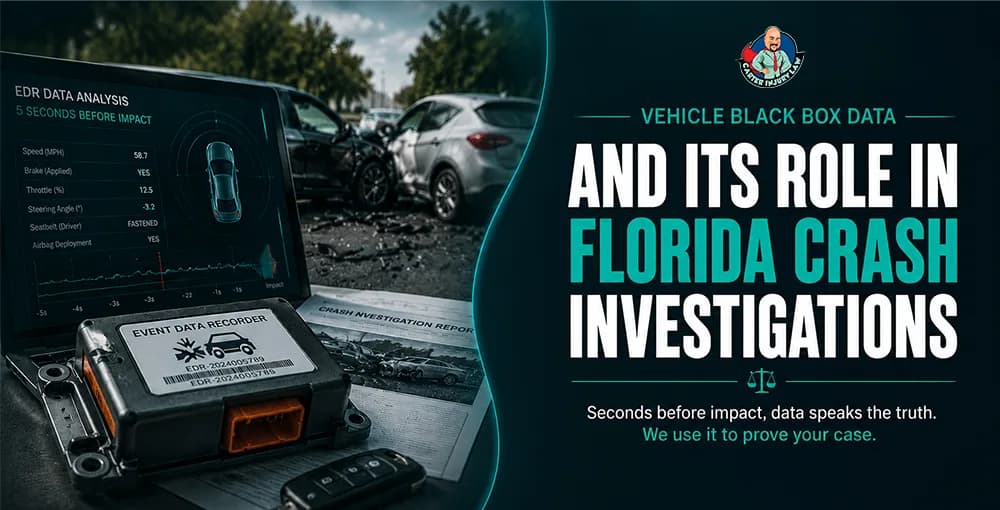
First, the data everyone wishes they had later, the event data recorder and any on-board footage. Modern EDRs record seconds of pre-crash data like speed and braking, and federal rules now expand what they capture. I request downloads immediately and notify the bus company to preserve raw files, because once the buffer resets, evidence is gone.
Next, driver records. I confirm CDL status, endorsements, and medical certification to ensure legal qualification. In Florida, Class B covers many buses, and state records reveal credentials or restrictions. If a driver lacked proper endorsement, that can shape liability.
Hours of service and drug testing are the other pillars. Federal rules require post-crash testing and duty logs showing hours and rest periods. I subpoena those logs to uncover fatigue or falsified entries. Missing tests or altered records are smoke signals.
Maintenance and inspection histories tell their own story. I pull invoices, inspection reports, and recall notices. A delayed repair or repeated brake issue shifts fault to the company. If the bus is government owned, Florida’s notice deadlines and damage caps apply, and I file that paperwork early to preserve the right to sue.
Finally, I bind every thread together. EDR data confirms or contradicts witnesses, maintenance logs explain mechanical failure, and testing records reveal impairment. That is how an investigation becomes a narrative a jury can follow, and how small details form the backbone of a claim.
After the records arrive, the work becomes surgical, and that is where I bring other minds into the case. A single snapshot will not persuade a judge or jury, however a reconstructed film, assembled from different sources, will. I hire reconstructionists to read the crash physics, engineers to study component failure, and medical experts to tie injuries to impact forces. Each turns a piece of evidence into a line on a timeline, building a coherent sequence.
I look for data that fixes time and motion, because time explains motive. Event data, GPS logs, traffic signal records, and nearby camera footage all create time stamps that confirm or challenge witness statements. Cell phone data, when legally obtained, shows distraction windows. The reconstructionist shows what happened, and the medical expert shows what that meant for those inside the bus.
Chain of custody is the courtroom’s gatekeeper. I document who handled data, who copied footage, and who logged invoices. If custody is sloppy, doubt seeps in. Experts also reveal corporate habits, repeated brake failures or driver fatigue patterns that expose negligence.
Legal rules shape the timeline. Federal regulations require post-accident drug testing and limit driver hours, while Florida law demands strict notice and caps recovery for public buses. The statute of limitations, two years for most injury claims, shapes every decision. When the experts finish, I have a timeline of what the bus did, what the driver did, what the company knew, and what the injuries prove. That is how chaos becomes a persuasive legal story for recovery.

Most bus cases resolve through settlement, however a timely, well-documented file is what turns an offer into a fair recovery. Insurers read evidence the same way a judge does, and when the file shows preserved video, unbroken maintenance records, and expert timelines, negotiating from strength becomes possible. I do not chase quick signatures, I build leverage, and that means keeping every piece of proof intact while we press for full compensation for medical care, lost wages, and the long tail of recovery.
If the insurer refuses to offer what the facts justify, I prepare for trial, because readiness changes behavior at the negotiating table. Preparing for litigation is not theatre, it is discipline, it requires depositions, written discovery, and expert reports that translate physics and medicine into plain cause and effect. Filing a suit is also a calendar move, Florida’s deadlines matter, and a well-timed complaint forces disclosure of the very records a carrier might otherwise delay.
I keep my clients informed at every step, because clarity reduces fear and strengthens decisions. That means clear explanations about liens, medical records, comparative fault, and the practical timeline for settlement or trial. I also explain costs, how contingency fees work, and the tradeoffs between an immediate offer and the outcome a jury might deliver after a full account of the evidence.
My job is to turn scattered facts into a coherent claim that a jury or insurer cannot ignore. Evidence disappears, memories dim, and corporate routines erase the traces of negligence, so the sooner we preserve and pursue, the better the outcome tends to be. If you have been in a bus collision, the legal windows are real, and the difference between a missed opportunity and a fair recovery often rests on the choices made in the first days after the crash.

First, get medical help and keep every record, because health is priority and paperwork follows the body, not the other way around. When you can, take photos of injuries, medical banding, and any visible marks, and save all medical bills and reports. Do not sign anything from an insurance company without checking with someone who knows bus cases, because an early release can close doors you did not mean to shut.
Finally, call a lawyer who understands Florida bus cases, because timing, notice rules, and the multi-party nature of these claims complicate things quickly. I will explain the process, handle subpoenas and preservation letters, and coordinate experts. Acting early is not legal theatrics, and it often makes the difference between recovering what you need and watching opportunities slip away.

I have stood at many of these crossings, not as a bystander but as the attorney people call when the damage is already done. I have read the reports, studied the skid marks, listened to witnesses argue over who moved first. In every case, the truth hides somewhere between the driver’s judgment and the geometry of the street.
Buses aren’t reckless machines. They are predictable in their size, their weight, their physics. What isn’t predictable is the human decision behind the wheel or the split-second instinct of another driver trying to make the light. One mistake collides with another, and suddenly an ordinary morning turns into a case file on my desk.
The pattern is familiar, yet it never loses its sting. Each story starts differently, but they all lead to the same question that keeps me awake long after the courtroom empties, who was truly at fault?
Most people assume bus crashes happen because someone was careless, and in a sense, they are right. However, carelessness wears many faces. Sometimes it’s the driver who misjudges a turn, sometimes it’s a light that changes too soon, sometimes it’s a city that built an intersection decades before buses grew this large.
In Florida, I’ve seen how small errors can grow teeth. A bus driver turns left with a full cabin and misses the car tucked inside a blind spot. A motorist, trying to beat a yellow light, meets the nose of forty thousand pounds of steel. Neither meant harm, but the laws of motion don’t forgive hesitation.
Blind spots are the silent villains in most of these crashes. A car can vanish beside a bus, gone from every mirror and window until the moment of impact. The driver might swear they looked, and often they did. The problem is the human eye isn’t designed for machinery that size.
Then there are the turns. Buses move like ships, slow and wide, their rear wheels carving a different path than their fronts. At tight intersections, this can mean cutting across lanes or brushing too close to the curb. I’ve seen entire cases turn on the angle of one tire.
And sometimes the fault doesn’t belong to the driver at all. Faulty brakes, worn tires, or a company skipping maintenance schedules can be just as dangerous as distraction. A bus is only as safe as the people paid to keep it that way.
Every investigation feels like assembling a clock after it has already shattered. Each piece of evidence tells a fragment of time. And somewhere inside that broken clock is the truth about what really happened.

Determining fault after a bus crash is never as simple as pointing at the larger vehicle. The law in Florida doesn’t hand out blame by size. It demands proof, detail, and patience. My job begins where chaos ends, sorting through the fragments until a pattern appears.
I start with what you can’t argue, like evidence. Traffic cameras, black box data, maintenance records, and witness statements. Each one holds a sliver of truth, though rarely the whole thing. Cameras reveal timing, witnesses reveal perspective, and records reveal whether someone ignored a problem long before the crash ever happened.
The law itself has its own rhythm. Florida follows what’s called modified comparative negligence, which means fault can be shared. A driver might be forty percent responsible while the bus company bears sixty. The catch is simple yet brutal, if you’re found more than 50% at fault, you lose your right to compensation. That single percentage can decide whether a victim rebuilds their life or faces the costs alone.
Right of way becomes another battlefield. A green light isn’t a shield. Even if the bus had the signal, it must yield to anyone lawfully in the intersection. I’ve seen cases turn on who entered first, who hesitated, who assumed the other would stop.
What the police report says is only the beginning. It’s a snapshot, not a verdict. The real fault lies deeper, in the choices that set the collision in motion. My work is to find that hidden thread, the one that explains not just how the crash happened, but why. And in that pursuit, the smallest overlooked detail can change everything.
When the bus belongs to the city, everything slows down, except the consequences. These cases feel different, heavier, as if bureaucracy itself has taken the wheel. A public transit crash is never just between two drivers; instead, it’s between a citizen and the system meant to protect them.
I’ve handled cases where victims assumed filing a claim against a city bus was like any other accident. It isn’t. In Florida, claims against government agencies come with strict notice requirements and unforgiving deadlines. Miss them, and the right to seek compensation can disappear before the wounds have even healed.
The process begins with what’s called a notice of claim. It must be filed within a specific time frame, usually within three years, and it must reach the right department. The wording matters, the timing matters, and every piece of documentation must align perfectly. The state gives itself protections that private companies don’t enjoy.
Yet accountability doesn’t vanish behind city walls. Public buses are still bound by the same duties as any other vehicle to operate safely, to be maintained properly, and to protect those who trust them to move through traffic without harm. When those duties are breached, the law still has room for justice, though the road to it is longer and steeper.
I often tell my clients that patience is part of the fight. And when that precision meets persistence, even the largest systems can be made to answer.

I start by making sure my client gets immediate medical attention, and I tell them to keep every record, every bill, every note from a doctor. Medicine becomes the timeline of injury, and that timeline is central to any claim. Parallel to that, I have investigators secure cameras, pull transit logs, photograph damage, and take witness statements while memories are fresh. In bus crashes, that early preservation work is often the difference between clarity and confusion.
Next, I bring in specialists. Accident reconstruction experts set skid marks and broken glass into motion, and medical economists estimate the long road of care and lost income ahead. If maintenance looks suspect, I work with mechanics who know buses, and if the vehicle is public, I note the special notice requirements that government claims demand. Every expert is chosen to turn fragments into a coherent narrative the court and an insurer can understand.
Insurance companies call early, and they want two things, a statement and a release. I advise my clients not to speak to adjusters alone, not to sign anything, and not to accept a first offer that sounds convenient. Insurers measure exposure in minutes, and they hope hurried settlements will close claims before the full extent of injury becomes apparent. My role is to buy time, gather evidence, and negotiate from a place of complete information.
I also protect my client financially. We work on a contingency fee basis, which means my clients owe nothing up front, and we only collect if we recover compensation. That arrangement lets people focus on recovery, not bills. I also coordinate with medical providers about liens when necessary, so treatment can continue while we build the case.

Every intersection keeps a record, if you know how to read it. Tire rubber on the road, a bent signal pole, a scratched mirror, a witness who looks at you and can only remember the sound, not the color of the light. Those traces are stubborn, and they do not lie forever. My job is to translate them into a story that holds in a courtroom and into a recovery plan that holds in life.
People want neat answers, a single culprit to blame, a ledger that closes cleanly. Life refuses that neatness. Responsibility is often layered, divided among decisions, maintenance choices, and unseen design flaws. That complexity is not an excuse for inaction but a reason to be thorough, relentless, and humane in pursuit of justice.
If you have been hurt in one of these crashes, you deserve someone who treats the facts with equal parts rigor and care. I hold systems to account, and I help people rebuild the practical pieces of their lives, medical by medical, bill by bill, piece by honest piece. We move with purpose, because the stakes are not legal points alone, they are futures.
Every time I close a file, I remember that intersections are where lives meet, sometimes briefly, sometimes forever. Choosing to fight for accountability is one way to turn chaos into consequence, to make sure the next family does not inherit the same silence.
If you need guidance, call me. I will listen first, then act, and we will carry the work forward with the respect the moment demands.

Bus accident injuries in Florida can turn a regular day into a series of hard choices. I have seen people walk into my office with confusion in their eyes, still carrying the sound of screeching brakes in their memory. They are not just here to fill out forms or talk about compensation. They are here to make sense of what happened to them and how to take the next step without feeling lost.
When I first started Carter Injury Law, I promised to make sure no one had to face that silence alone, the silence that comes after the noise of an accident fades and the reality sets in. Every case tells its own story, but it always begins the same way, with a question that changes everything.
The first few moments after a bus accident are strange. Time slows down, but everything still moves too fast. People look around, dazed, trying to understand who is hurt, who needs help, and what just took place. I tell people to hold on to those moments, because what you notice right then often becomes the foundation of your case.
Before anything else, make sure you are safe. Get medical attention if you think you are in need of it. I have seen too many people walk away from a crash believing the pain will fade, only to wake up the next morning unable to move their neck or lift their arm. Documentation from a doctor helps, but more than that, it protects your health, which always comes first.
If possible, take photos of the scene. Capture the bus, the road, the lights, and the traffic signs. Note the weather, the time, and the direction of travel. If the police arrive, stay calm and describe what you saw in your own words. Do not guess or fill in blanks.
Your statement will become part of the official report that shapes how fault is determined later. The law will come in, but at this moment, you are the witness to your own story. And that story needs to start clearly.
Contact the authorities if that has not already happened. A police report captures the position of the bus, other vehicles, and pedestrians. It notes what the officers observe, which can be critical later when determining liability.
If you can, write down everything you remember. Even small details like which lane the bus was in, how fast it seemed to be moving, or the reactions of other passengers can become important. Memories fade and stories change, but a written record from the first day preserves your version of events.
Collecting evidence goes hand in hand with reporting. Keep copies of any medical records, photographs, or videos from the scene. If someone else was involved and offers their account, make a note of it. Every piece of information creates a clearer picture of what happened.
At this stage, understanding the steps is one thing, but knowing the impact they will have later is what truly matters. How you document, how you report, and how you hold on to the facts can define the outcome of your case long before any negotiations start.

The moment you realize the accident has left more than just bruises, reaching out to a lawyer can feel like admitting you need help, but it is really about taking control. I tell people that the earlier you speak to someone who understands the local legal system, the stronger your position becomes.
A lawyer’s role is connecting the dots others might overlook. I listen to every detail, even the ones that seem small or unrelated. Sometimes what looks like an insignificant gesture, like a bus driver’s reaction or a broken handrail, becomes central to proving responsibility.
Waiting too long to ask for help costs more than anyone tells you at first. Time starts to blur the edges of what happened. However, Insurance companies do not wait, they start building their own version of the story before you have even caught your breath. When you reach out early, we freeze that moment before it slips away.
I track down the records, talk to the people who saw what you lived through, and help you find the right words when others try to twist them. That early call not only protects your case but also protects your story from being rewritten by someone who was never there.
After a bus accident, money is never the first thought, but sooner or later it becomes part of the story. Medical bills start to collect in quiet stacks, paychecks stop coming, and the small comforts of daily life begin to feel out of reach.
Florida law does not only count the hospital visits or the broken bones. It measures the hours you could not work, the nights you did not sleep, the therapy sessions you did not plan to need. It considers what pain has taken from your rhythm, your confidence, and the simple things that used to make up an ordinary day.
When I work with someone, we start from the ground up. First, the obvious costs, like the ambulance ride, the medication, and the endless appointments. Then we look wider. What changed in your life that you did not choose? Did the accident make you miss time with your family, step away from a career you built, or live with a pain that has its own schedule? Those questions matter as much as any receipt.

Insurance calls start soon after the accident. They sound polite, helpful, and even concerned. However, do not feel pressured to accept quick offers from insurance companies. It is to protect the company, often at your expense. I tell people to pause, breathe, and avoid giving detailed statements before they know their rights.
A casual comment about pain fading or a minor injury can later be used to reduce your claim. If an insurance company asks for a recorded statement, you do not have to agree. You are not being difficult; you are protecting yourself.
Keep a log of every interaction. Note names, dates, times, and what was said. Copies of letters and emails should be saved in a dedicated folder. It might feel tedious now, but this record becomes a map of the conversation, showing exactly what was communicated and when.
I guide people on how to respond confidently without creating liability. Sometimes it is as simple as saying, I am speaking with my lawyer before I provide information. Other times, it means redirecting questions to written communication. The point is to stay in control.
When you handle insurance company this way, the difference between a rushed settlement and fair compensation becomes clear. The accident has already disrupted your life enough. Communicating carefully ensures it does not control the next chapter.
Sometimes the paperwork and photos are not enough. Some cases need to move into the legal arena, where the accident and everything it left behind become part of the record. Every bruise, every lost hour, and every sleepless night needs to be seen.
I sit with people and go through every detail, from medical records to photographs to the quiet statements of those who witnessed it. Each piece builds a picture of what actually happened and what it took from them. Seeing it all together often brings a kind of clarity that was impossible in the days right after the crash.
I explain what comes next so there are no surprises. We talk about how the process works, what the bus company’s legal team might try, and how we respond. When you understand each step, the uncertainty starts to shrink, and the path forward begins to feel solid again.

When I sit with someone who has been hurt in a bus accident, I often ask them to tell me what “normal” used to feel like. For example, I once worked with a school teacher in Tampa who took her local bus every morning. After the crash she couldn’t climb the classroom steps anymore and she cancelled weekend outings she once loved.
We began by naming the losses of daily commute she took, the ease of movement, and the simple pleasure of being on her feet without pain. From there we made a plan for physical therapy, carefully documented treatment, conversations about how this would affect her income, and legal guidance so she wouldn’t be facing the recovery process alone. Over time she began to feel like she was rebuilding rather than just surviving.
There are stories out there that show the legal system can respond meaningfully when people are harmed. For instance, consider the case of Aurora Beauchamp who was struck and dragged by a bus while crossing a street in New York, then lived in Florida. The jury awarded her $72.5 million for the trauma, permanent injury, and life changes she endured.
While every case is different and not every outcome looks like that, this shows that courts do take these incidents seriously and that you don’t have to accept less than your rights.
We handle cases like these on a contingency fee basis, so you do not pay anything unless we secure a win for you. Legal support should never be out of reach, especially when life has already taken more than its share.

The top hidden risks of riding a scooter in Florida include lack of protective gear, distracted drivers, uneven or slippery roads, limited insurance coverage, and unpredictable traffic from tourists and locals. These factors make scooter accidents more likely and often more serious than most riders expect.
Florida’s roads hold a strange beauty. Palms cast their thin shadows over asphalt, and everything smells faintly of heat and rain. However, beneath that beauty live uneven pavement, drivers distracted by screens, and rental scooters that promise simplicity but deliver chaos. The state’s growing number of scooter riders are stepping into a system that was never designed for them.
I write this not as a warning, but as something closer to truth told from experience. These stories are about the five biggest risks that shape every ride through Florida and what I have learned from those who never saw them coming.
One afternoon, I drove to the scene of a case in St. Petersburg. The city was quiet after a storm. Water glistened in shallow puddles that caught the sunlight like glass. A rider had gone down there, thrown by a patch of sand that washed from a nearby construction site. It was the kind of accident that should never have been possible, yet it happened because no one thought to sweep the road.
That’s not a rare story. I have seen roads where city maintenance blurs into county jurisdiction, where no one takes responsibility until someone is hurt. A single neglected pothole can turn into a question of liability that moves between insurance companies and public agencies for months.
For riders, the danger begins in those unnoticed details. Loose gravel, faded lane markings, broken drainage grates are each a small test of balance that cars never notice. Most people assume the state’s sunshine makes for gentle riding, but the truth is that heat warps asphalt and rain hides the damage. Florida’s beauty is both a blessing and a disguise.
The road remembers everything. It holds the stories of riders who fell, of drivers who never saw them, of cities too stretched to mend the cracks in time. In my office, I listen to those stories retold by people trying to make sense of what happened. And every time, I am reminded that a smooth ride in Florida often depends on luck more than it should.

I once handled a case in Miami that began with a sound no one ever forgets. A rider was crossing Biscayne Boulevard when a driver, lost in a text, drifted into the bike lane. When I met her later in the hospital, she told me she had seen the driver’s face a second before impact, his eyes fixed on something glowing in his lap.
This is what I see most often now. Drivers looking down instead of ahead. Hands too busy with phones to turn the wheel in time. I have read police reports where the moment of distraction lasted less than 3 seconds, but in those seconds a scooter became invisible. The human brain edits out what it does not expect, and most drivers still do not expect a scooter beside them.
In Florida, distraction is its own epidemic. Sunlight flares against windshields, palm leaves flutter in the corner of vision, and phones buzz like restless insects. A rider cannot predict what the driver behind them will do, and by the time they can, it is usually too late. The law calls it negligence, but what I see is the collapse of attention in a world that keeps asking for it.
When I speak to new clients, I tell them that being visible on the road is a full-time act. Bright clothing, steady speed, constant awareness. It feels unfair that the smaller vehicle must shoulder the greater vigilance. However, the truth is, safety often belongs to the one who notices first.
Most people do not realize how exposed they are until after the crash. I meet them in quiet rooms at my office when the hospital bills begin to arrive and the calls from insurance companies grow less kind. They always tell me that they thought their insurance would cover them. Florida law, however, has a way of revealing the gaps only after it is too late.
In this state, scooters occupy an uneasy space. They are neither motorcycles nor bicycles in the legal sense. Under Florida Statute 316.003(44), a “motorized scooter” is defined as a vehicle without a seat that cannot travel faster than 20 miles per hour on level ground. Because of that technicality, most scooters are not required to be registered, insured, or even titled. It sounds freeing until the accident happens, and the injured rider learns that no insurance coverage often means no compensation for medical costs.
Personal Injury Protection, or PIP coverage, is another hidden trap. Florida’s no-fault law, under Statute 627.736, requires PIP for cars, but it does not apply to scooters. That means a rider thrown from a scooter has no automatic access to the medical and wage benefits that drivers take for granted. The result is a kind of legal limbo, where your recovery depends on whether another driver was involved and whether they carried bodily injury coverage.
This is where law turns into lived experience. A simple ride to the store can spiral into a rabbit hole of claims and counterclaims. I have seen people forced to choose between medical treatment and rent while insurance companies debate definitions written decades ago. The law catches up slowly to new forms of travel.
When I explain these things to clients, I tell them that preparation is not paranoia. Checking a policy, adding uninsured motorist coverage, or carrying private medical protection is not fear. Florida’s sun makes everything look simple, but simplicity is often the mask that danger wears.
Every time I read a statute or draft a claim, I think of those empty lanes where the accident began and how silence follows after the fall. The law will eventually speak, but for the rider, the cost of that silence is already written in ink and bone.

I have walked the corners of Florida cities long after the traffic lights stopped pulsing. There is a strange geometry to these places, where a scooter rider’s perspective collides with streets built for cars.
Sight lines are rarely what they seem. Palm trees cast sharp shadows that hide movement. Parked cars block entire lanes from view. Even a simple right turn can feel like threading through a forest of blind spots. Florida law, under Statute 316.130, requires drivers to yield at intersections, but it does not protect against mistakes or the inattention that so often follows. Responsibility exists, yes, but accidents happen in the milliseconds when human perception fails.
I have seen intersections where the paint has nearly disappeared, replaced by faint streaks worn down by tires over decades. I have studied police reports where riders were invisible not because of speed or recklessness, but because the road itself failed them.
Nighttime is worse. Streetlights flicker or do not exist. A scooter’s small frame disappears into the shadows, leaving drivers unaware until impact. I remember one case in Tampa, where a rider’s reflective jacket caught just enough light to avoid catastrophe, but not enough to prevent serious injury. The law will sort out liability afterward, but at the moment, visibility is all that matters.
One summer, in Orlando near the theme parks, a student named Marco was riding home from his night shift. A tourist, navigating with a phone in one hand and a bag in the other, swerved across his path. Marco’s injuries were serious, but the confusion that followed was worse.
Insurance companies argued over liability. The rental company claimed the rider had assumed the risk. Florida law, under Statute 316.008, holds vehicle operators responsible for care on the road, but in practice, enforcement gets tangled when tourists and locals collide.
Rental scooters are everywhere. Companies promise convenience and adventure, but the laws that protect riders lag behind technology. Users often assume helmets and rules are optional, while local riders must anticipate the unexpected at every turn. I have seen the consequences: broken bones, hospital stays, and legal battles that stretch for months.
It is not just a matter of negligence. Tourists’ inexperience compounds risk, and for someone who rides regularly, those streets feel like a patchwork of danger zones. I counsel riders to treat rental scooters as wild animals in the cityscape. Stay alert, maintain distance, assume nothing, and protect yourself with reflective gear and caution.
In my office, I witness both sides of the locals who never expected an encounter and visitors who never realized what a street could demand. The Tamiami Trail, Miami Beach, and Tampa avenues all carry these stories, waiting silently for the next collision of freedom and oversight.

I rarely get to talk about falling. My work at Carter Injury Law exists in the aftermath, where broken bones and shattered confidence are the first words of every story. Yet I have learned that how a rider falls can matter almost as much as why the accident happened.
The first lesson is to roll. I have seen hands shattered by instinctive grabs at pavement. When a rider tucks and rolls with the motion of the fall, the body absorbs the impact across muscles instead of concentrating it on fragile bones.
Keep the chin tucked. I remember a young man in Sarasota whose instinct left his neck exposed. A small misjudgment turned a minor accident into a spine injury. Clothing matters too. Long sleeves and sturdy pants can turn scrapes into something manageable, while sneakers with solid soles protect the feet from the jagged surprises of asphalt.
Release the scooter. Let it go. I have counseled riders who tried to hold on, only to have the machine crush a limb or twist in ways that magnify injury. It is replaceable. You are not.
Every accident begins with a moment. How you move in that moment shapes the story that follows, and sometimes, it is the difference between being another case file and walking away with only a scar to remember it by.
I have answered calls in the quiet hours, when the streets are dark and the world seems paused. The voices on the other end carry shock, pain, and confusion. They describe a moment that happened too fast for memory to catch, a second that rewrote their lives. That second becomes the story we trace, piece by piece, trying to make sense of what the law can fix and what it cannot.
Florida statutes provide a framework, but they are not the same as understanding the human cost. Statute 316.130 ensures right-of-way rules, 627.736 explains insurance protections, but none can replace the seconds lost in the crash itself.
Each case teaches me something. The law can assign fault, enforce compensation, and hold negligent drivers accountable. It can map liability between rental companies, city maintenance departments, and distracted drivers. However, the first seconds of an accident are private, invisible, and impossible to reclaim.
In every phone call, in every meeting at my office, I carry the weight of those first seconds. They are the reason I write, the reason I advise, and the reason I hope that every rider who reads this will take the quiet moments before the ride seriously. Because once that second passes, the law will follow, but it cannot undo what has been lost.

I’m David Carter from Carter Injury Law, and if you are reading this, chances are you just went through a crash that has thrown your life off balance. I’ve seen how quickly one moment of distraction or one miscalculation behind the wheel can turn into medical bills, insurance calls, and a lot of questions you do not know how to answer.
Most people think they just need to call the police and exchange information, but there is more at stake than that. Every choice you make after a crash can affect your recovery, your rights, and the compensation you may be entitled to.
In the next few minutes I am going to walk you through what I tell everyone who calls me after a delivery truck accident in Florida. Step by step we will cover what to do first, what to document, and how to protect yourself. But before we get to all of that, there is one thing almost everyone misses at the scene that can change the outcome of your case completely.
The very first thing I tell anyone who calls me after a delivery truck accident is to take care of yourself. You might be focused on the chaos around you, but if you are hurt, you cannot save the day or even get through the next few hours without help.
Call 911 if there are injuries or significant damage, and do not ignore even minor aches or soreness. Some injuries, like whiplash, do not show up immediately, but they can haunt you for months if untreated.
I always recommend going to a doctor. Florida law requires prompt medical attention to qualify for Personal Injury Protection benefits. It might feel inconvenient, but getting checked ensures you and your claim are protected. I have had clients shrug off a doctor visit only to face bigger problems later.
Safety also includes the scene itself. If possible, move to a safe spot and avoid putting yourself in danger from traffic or other hazards. It may not feel glamorous like a TV rescue scene, but staying safe is the real hero move here.
Next, I want to tell you why documenting everything at the scene is more important than most people realize and how it can change the course of your case.

After you have made sure you and anyone else are safe, the next step is to document everything. I tell my clients what you see, what you touch, and what you record at the moment can be the difference between winning a case and struggling to prove your story later.
Start with photos. Take clear shots of the vehicles, the damage, the road, traffic signs, and even skid marks. Think of it like capturing a scene for a movie. Every detail matters, and later no one will remember exactly what they saw.
Get the contact information of the driver and the delivery company. Jot down names, phone numbers, license plate numbers, and insurance details. If there are witnesses, ask them to describe what they saw and collect their contact info. In court or during negotiations, these statements can be invaluable.
Keep a written record for yourself as well. Note the time, the weather, what the traffic was like, and any unusual circumstances. Small details that seem unimportant now often become crucial when insurance adjusters or lawyers review the case.
The evidence you collect here sets the foundation for everything that comes next, including protecting your rights and making sure you are fully compensated for what happened.
Once the scene is documented, the next step is to make sure the accident is reported correctly. How and when you report can affect your case, your insurance, and even your health claim. Call the police if they did not come to the scene. Florida law requires that accidents involving injuries or significant property damage be reported.
When the officer files the report, it creates an official record of what happened, which can be critical if there is any dispute later. Ask for a copy of that report. It includes the time, location, and the details recorded by law enforcement, all of which will help build your case.
Next, notify your insurance company. Provide the facts of what happened without guessing or admitting fault. Insurance adjusters will use every word to determine liability, so keep it factual and concise. Make a note of the claim number and the contact person handling your case.
Reporting correctly does not end the process, but it lays the groundwork for protecting your rights and establishing a timeline of events.
The step after this is the one I see most people overlook, and it is where having a lawyer early can change everything.

This is the step that often changes everything. I have met many clients who waited too long to reach out, thinking they could handle things on their own. By the time they called, evidence had disappeared, witnesses had moved, and the insurance companies had already shaped the story to fit their version.
Delivery truck accidents are not simple fender benders. There can be multiple parties involved, the driver, the delivery company, and sometimes even a third-party contractor or vehicle manufacturer. Each one has its own insurance policy, its own lawyer, and its own way of avoiding responsibility. My job is to untie that web and make sure the focus stays on you, your injuries, and what you deserve.
When you contact me early, I can start protecting your claim from the first day. That means preserving evidence, collecting surveillance footage before it gets erased, and dealing with insurance companies so you don’t have to. You should be focusing on healing, not arguing over paperwork or calls.
Next, let’s talk about who can actually be held responsible for a delivery truck accident in Florida.
When I take on a delivery truck accident case in Florida, I never stop at the surface. Most people think it is always the driver’s fault, but that is rarely the whole truth. Every crash has layers, and once you start peeling them back, you see how many hands were actually on the wheel that day.
Let’s start with the driver. If they were speeding, distracted, or too tired to be on the road, they carry a share of the blame. But I always look beyond that. Delivery companies are often the bigger problem. They push impossible schedules, skip safety checks, and hire drivers who barely meet the minimum qualifications. In my experience, companies like that create accidents long before the crash happens.
Then there are the contractors and maintenance crews. Some companies lease their trucks to third parties or cut corners on repairs to save money. A bad brake job or worn tire can turn a regular drive into a disaster. If that happens, I make sure those responsible are part of the case too.
Sometimes, the fault goes even higher. Defective parts or faulty designs can make a truck unsafe from the start. In those cases, I bring the manufacturer into the conversation.
Just a few months ago, a crash on Florida’s Turnpike made national news. A delivery truck blocked traffic during an illegal U-turn, and a family in a minivan didn’t stand a chance. It turned out the driver’s commercial license had issues in multiple states, and the company failed to check his record properly. That single mistake cost three lives and opened an investigation into how many others were driving under the same conditions.
That story stays with me. It is a reminder that no accident happens in isolation. It is a chain of bad decisions, ignored warnings, and overlooked responsibilities. My job is to trace that chain and hold every link accountable, no matter how far it goes.

If you are here trying to figure out what comes next after a delivery truck accident in Florida, I want you to take a breath. You are not the only one feeling lost right now. These moments are heavy and unfair, and no one should have to go through them alone. That is why I started Carter Injury Law, to take some of that weight off your shoulders and help you find a way forward that actually feels fair.
When you call me, there is no pressure. There is no fee to start. We work on a contingency basis, which means you do not pay me anything unless we win. I take on the risk so you can focus on healing, on getting your strength back, on putting the pieces of your life where they belong.
You deserve someone who listens and someone who fights for you until the job is done. So reach out. Tell me what happened and what it has cost you.