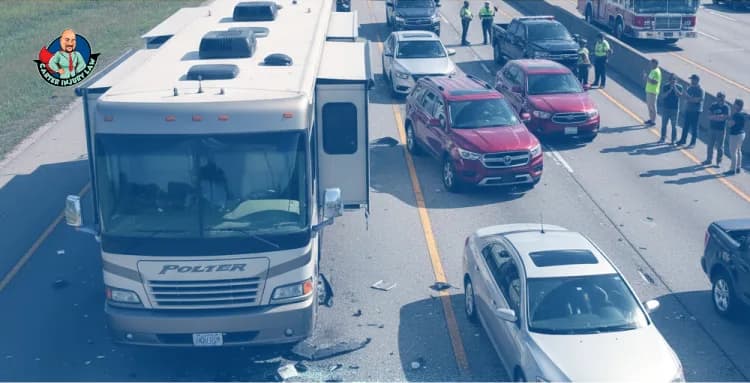
Over the years I have stood at more crash scenes than I care to count, and I have learned one simple truth. When an RV collides with a single car, the facts are complicated. When an RV collides with several vehicles, the facts become a courtroom puzzle with too many missing pieces and too many insurance companies eager to rewrite reality.
Multi-vehicle RV crashes are not just bigger versions of ordinary wrecks. They create chain reaction dynamics that scatter responsibility across drivers, fleets, manufacturers, and sometimes municipalities. Phones stop ringing. Witness stories diverge. Police reports try to impose order but rarely capture the full sequence of events. And while victims are trying to help insurers start negotiating a different kind of damage assessment that often prioritizes their bottom line over your recovery.
I am not going to sugarcoat things or hide behind legalese for the sake of you. In the sections that follow I will explain how fault is reconstructed and why multiple insurance company complicate claims.
(1) Why Multi-Vehicle RV Accidents Are So Complicated
Every lawyer says a case is “complex” when they do not want to admit it is a riot. Multi-vehicle RV accidents are the definition of that riot. They start with one mistake, one sudden brake, one blind merge, and within seconds there are crushed bumpers, spinning trailers, and half a dozen insurance companies waiting in line to deny involvement.
The sheer size of an RV changes everything. A passenger car might stop in 30 feet; an RV can take three times that distance. Add wind resistance, shifting cargo, or a driver who has been awake since sunrise, and you have the recipe for a chain reaction. Once the first impact happens, the next few are nearly unavoidable. You get what investigators call a “progressive collision sequence,” which sounds neat in a report but in real life means vehicles smashing into one another long after the first driver’s mistake.
Then comes the paper storm. Each driver’s insurer wants to control the story. They demand statements, ask leading questions, and look for any sentence they can twist into an admission of fault. When more than two vehicles are involved, these companies turn on each other faster than the drivers did on the highway.
It is not only insurers that complicate things. Witness memory fades fast, and in multi-car crashes, everyone sees a different version of the same event. By the time we collect statements, one driver swears the RV drifted, another insists a sedan cut in front, and someone else remembers hearing a horn and nothing more. Without immediate preservation of scene evidence, the truth can vanish faster than the emergency lights fade.
(2) Determining Fault in Multi-Vehicle RV Crashes
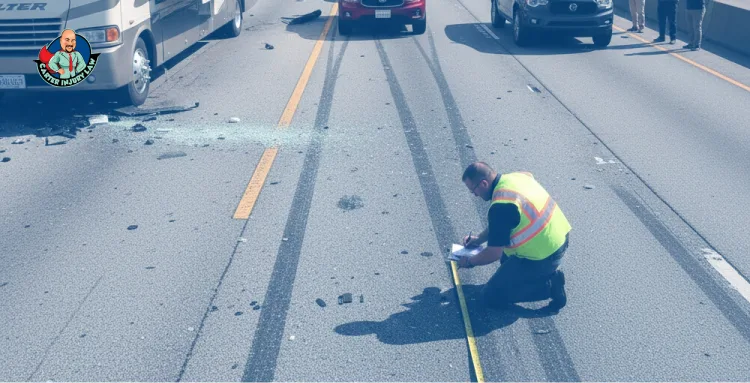
When several vehicles collide, everyone suddenly becomes an expert on physics. Drivers insist they were pushed, not negligent. Insurers insist their client was two car lengths away. The truth hides somewhere between tire friction and panic. My job is to find it before the paper buries it.
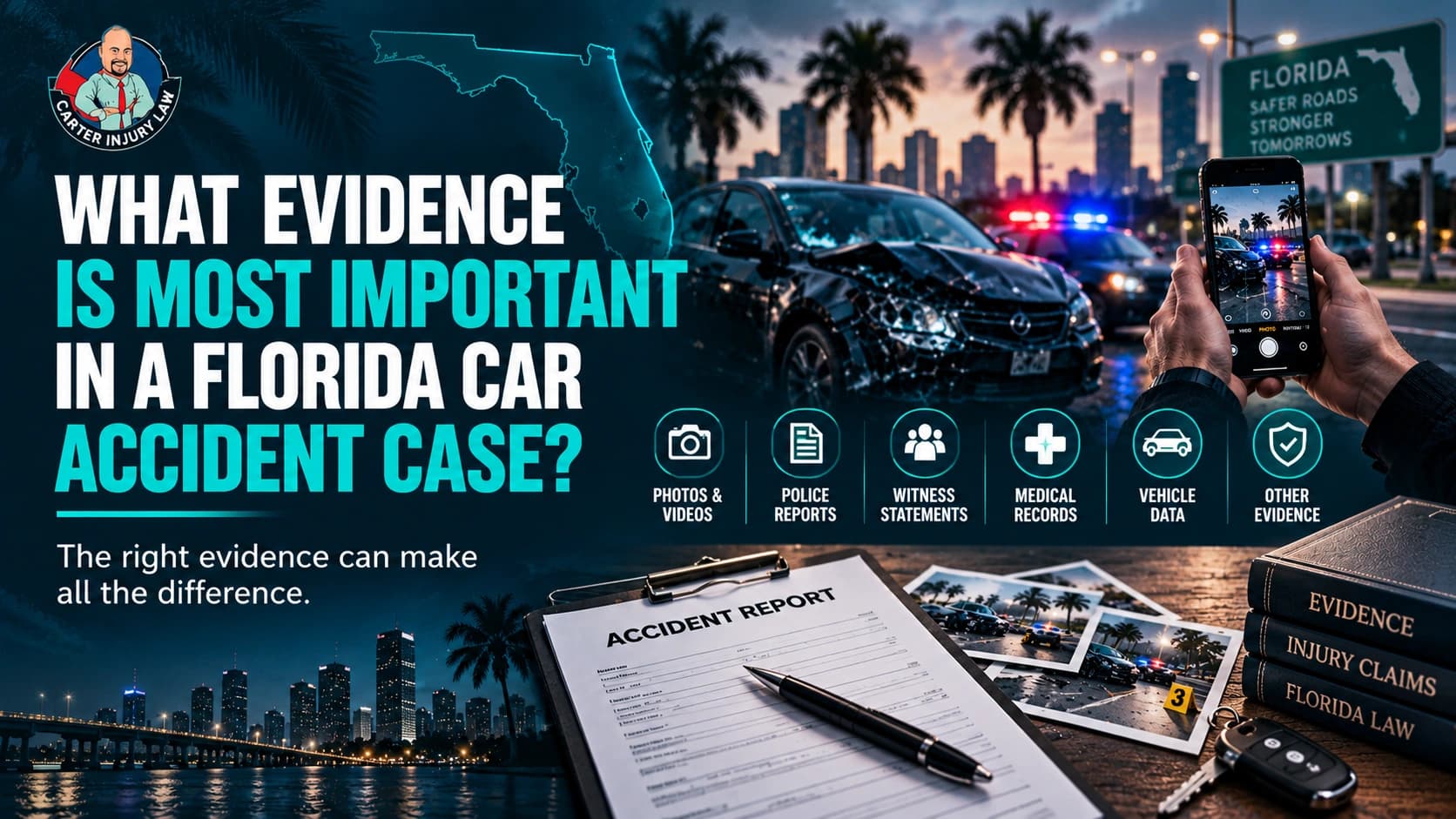
We begin with what can be verified. Police crash reports offer a starting point, but they are rarely gospel. Officers do their best under flashing lights and traffic, yet their conclusions are often based on quick interviews and limited angles.
Modern RVs record speed, brake pressure, and steering angle in their onboard electronic control modules. Extracting that information quickly is because some systems overwrite data after a few engine restarts. We also secure footage from nearby surveillance cameras, dashcams, and traffic signals before they are deleted or recycled. It sounds tedious because it is. But evidence has a short shelf life, and delay is the enemy of truth.
Then come the human elements. Eyewitness statements often conflict, so we look for consistencies in timing and direction rather than narrative. A single line from a witness, “The RV swerved left before the impact,” can match with skid mark geometry and tell us far more than a paragraph of emotional recollection.
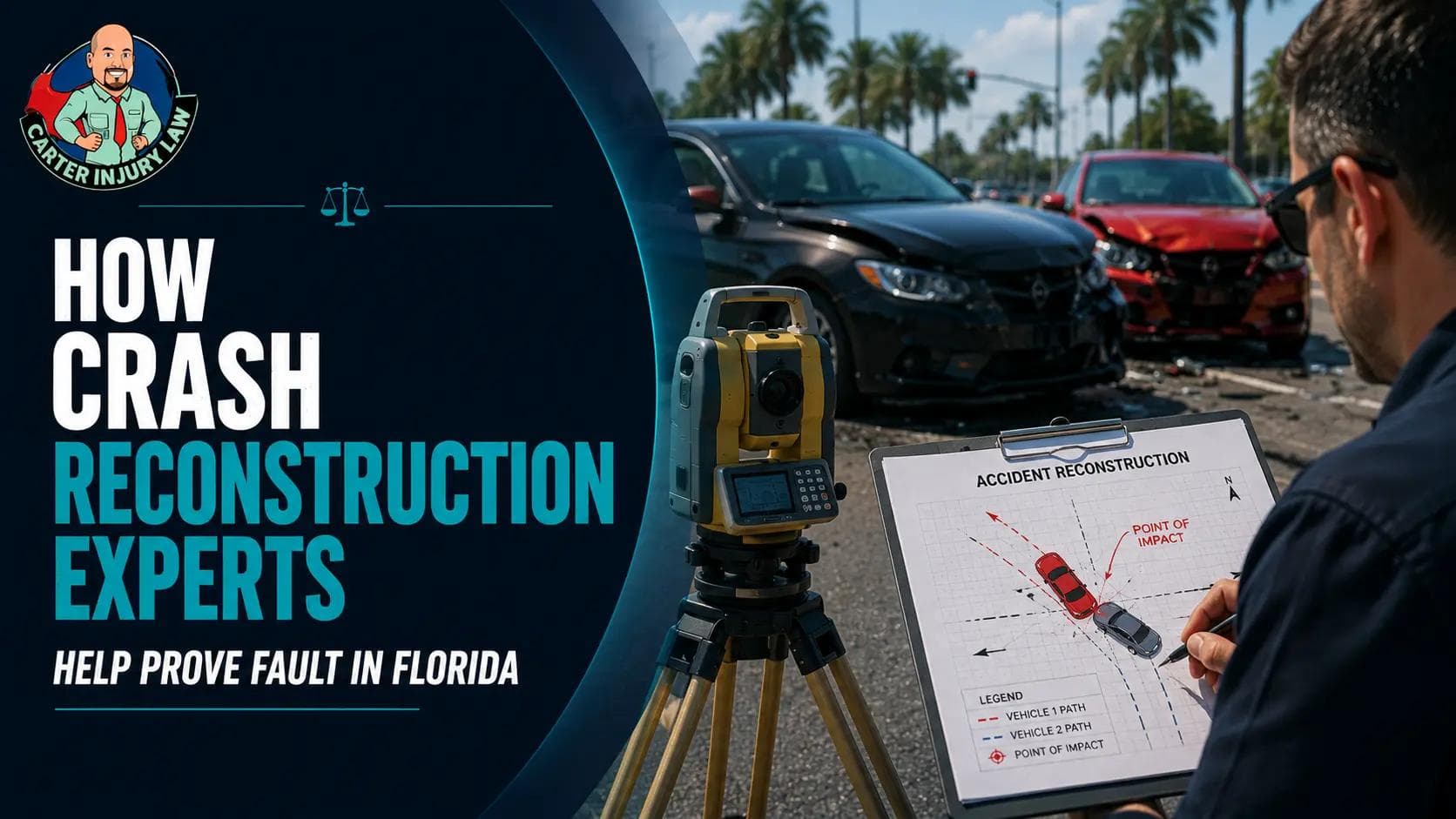
Photographs of debris placement help establish vehicle movement and impact sequence. In some cases, accident reconstruction specialists run digital simulations to demonstrate how momentum transferred from one vehicle to the next.
Determining fault is not just about physics. It is about conduct. Was the RV overloaded beyond its rated weight? Was a car following too closely? Did a commercial truck fail to maintain safe braking distance? Each of these details shifts liability fractions across drivers and insurers.
(3) Common Legal Challenges Victims Face
The first challenge is the web of insurance policies. Each driver’s coverage has its own limits, exclusions, and favorite excuses. The RV’s policy might classify it as a “temporary residence,” not a motor vehicle, while a trucking company’s insurer claims the driver wasn’t on duty. Everyone wants to be the innocent bystander in a crash they were literally inside of.
Next come medical bills. Hospitals do not wait for settlements. They send invoices to collections before fault is even determined. If your health insurer pays first, they often file a lien demanding reimbursement later. It feels like a relay race where every participant is running in the wrong direction.
Then there is the issue of partial fault. Florida follows a modified comparative negligence rule, meaning even a small percentage of fault on your record can cut your recovery. I have seen people lose thousands because an insurer convinced an adjuster that they “could have braked sooner.” That single phrase becomes a weapon in negotiations.
Evidence mishandling is another silent disaster. Vehicles are towed and destroyed before experts can inspect them. Data logs are wiped. Witnesses disappear because no one followed up in time. Every missing piece makes the case weaker, and every delay helps the insurance company.
(4) How Legal Representation Simplifies a Multi-Vehicle RV Claim

Most victims do not hire a lawyer because they want to; rather, they do it because the process has worn them down. By the time they reach me, they have already spent weeks trying to manage calls from adjusters, track their medical records, and understand documents written in a language that feels designed to confuse. My role is to bring order to the mess that follows.
The first step is containment. We take control of all communication with insurance companies. That single move stops the endless stream of calls and letters demanding statements. Every word you say to an insurer becomes ammunition later, so we make sure nothing is said without purpose.
Next, we rebuild the narrative of the crash using verified facts. Our team collects black box data, vehicle maintenance records, and expert assessments, then organizes them into a timeline strong enough to withstand cross-examination. The goal is not just proving fault, but proving it so clearly that the other side knows settlement is cheaper than a trial.
We also handle the financial mapping that victims rarely think about early on. Medical bills, future therapy, property damage, and diminished earning capacity have to be calculated precisely. Skipping those numbers means you end up covering the gap out of your own pocket later. I have seen clients offered settlements that sounded generous until we added future physical therapy and discovered it would barely last six months.
When negotiations begin, we present a complete, evidence backed demand package. It leaves little room for creative denial. If the insurance company still plays games, we file suit. Trials are not my preferred path, but I do not bluff. The reputation of a law firm is built on the willingness to go to court, and insurance companies know which lawyers mean it.
(5) Why Accountability Extends Beyond the Drivers
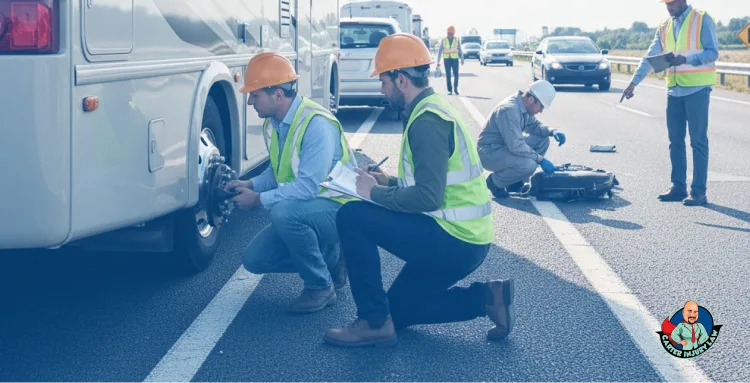
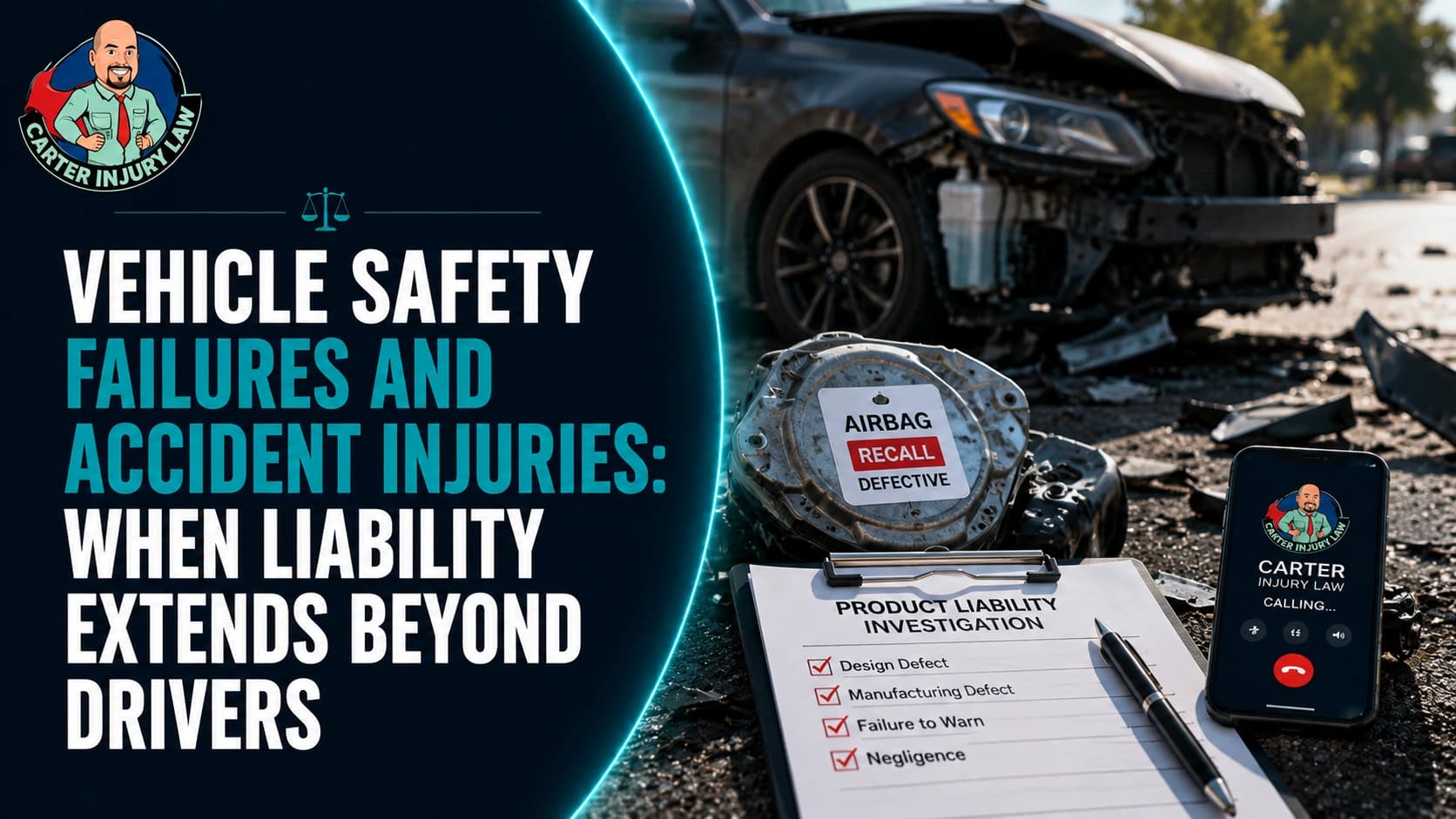
Manufacturers can carry part of the blame. A defective braking system, worn suspension components, or a poorly balanced chassis can turn a mild impact into a catastrophe. RVs are often assembled with parts from multiple suppliers, and when something fails, each supplier points at the other. Tracing responsibility through that supply chain is tedious, but it exposes how engineering shortcuts become our suffering.
Maintenance companies are another weak link. Many RVs used for long trips depend on third-party mechanics who rush through inspections before a vacation season. A missing torque check on a tire assembly or neglected brake fluid replacement can create the perfect failure at highway speeds. Once that happens, the paperwork conveniently goes missing. We subpoena it before that disappearance becomes permanent.
Sometimes liability reaches the commercial side. Rental firms and tour operators have a duty to maintain safe vehicles and verify driver readiness. Yet I have seen records showing that some handed keys to drivers with no training on how to handle a 30-foot vehicle in crosswinds. When those drivers panic, they overcorrect, and several families end up in the hospital.
Even road design can share blame. Poorly marked merge lanes, worn paint lines, or uneven surfaces on Florida highways can all contribute to the chain reaction that defines multi-vehicle RV crashes. Government entities hide behind layers of procedure, but accountability does not vanish just because bureaucracy is slow.
My work in these cases often feels less like law and more like excavation. We dig until we find every contributor to the accident, because responsibility should not disappear into corporate papers. And in the end, that accountability is the only thing that prevents the next crash from repeating the same story.
Contact Carter Injury Law. Our services are provided on a contingency fee basis, meaning you owe nothing unless we achieve a successful outcome.