
I want you to know two things right away. First of all, you are not insane. Biologically, delayed neck or back pain following a car accident is extremely common.
Second, and this is the hard truth, Florida’s insurance laws are designed to punish you for waiting.
I’m David Carter, founder of Carter Injury Law. I’ve spent my career fighting for folks here in Florida who get tangled up in our complicated insurance system just because they didn’t feel pain the exact second a crash happened.
If you are feeling delayed symptoms right now, you need to understand that the clock is already ticking against you.
(1) Why You Felt "Fine" at the Scene
Before we get into the legal weeds, let’s validate what you’re feeling medically. Why does delayed onset muscle soreness or whiplash happen?
When a multi-ton vehicle slams into yours, your body goes into instantaneous survival mode. Your brain floods your system with a cocktail of adrenaline and endorphins. These are powerful chemicals designed for a "fight or flight" situation. They do an incredible job of masking pain signals so you can function in a crisis.
Think of it like a football player who breaks a finger during a big play but doesn't feel it until he's sitting on the bench ten minutes later.
It’s only after the dust settles, the police report is filed, and you’ve tried to return to normal life, usually 24 to 72 hours later, that the adrenaline wears off. That’s when inflammation sets in. The soft tissues in your neck and back, which were violently stretched during the impact, start screaming.
Unfortunately, insurance companies love to ignore this biological reality. They see that police report where you said, "I'm fine," and they try to use it as a get-out-of-jail-free card.
(2) The Florida Reality of "No-Fault" System
To understand why delayed pain is such a problem here, you have to understand Florida’s weird insurance setup. We are a "no-fault" state.
This confuses a lot of people. It doesn't mean the other driver isn’t at fault for hitting you. It just means that no matter who caused the wreck, your own car insurance is responsible for paying your initial medical bills and some lost wages.
This coverage is called Personal Injury Protection, or PIP. If you drive in Florida, you are required to carry at least $10,000 of it.
The idea behind PIP was to make things faster. You get hurt, your own insurance pays, and we avoid clogging up the courts with small lawsuits. In theory, it sounds great. In practice, the insurance lobby has managed to pass laws over the years that make accessing those benefits harder and harder, especially for people whose injuries aren't immediately obvious, like broken bones.
(3) Florida’s Strict 14-Day Rule
If you take only one thing away from this article, make it this section. This is where folks with delayed back pain get burned the most often.
Under Florida Statute § 627.736, there is a strict deadline on your PIP benefits.
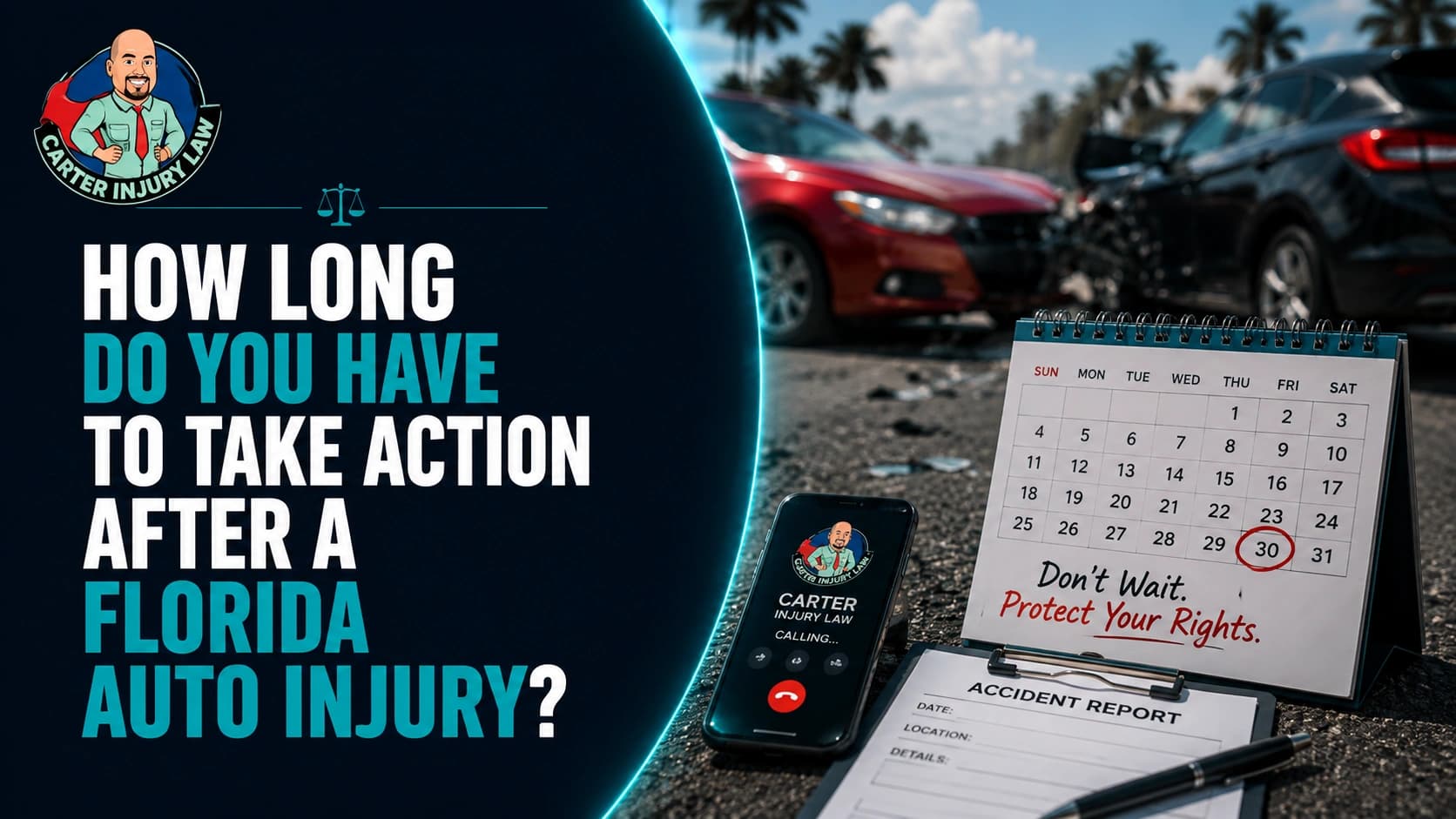
To be eligible for any of your PIP coverage to pay your medical bills, you must receive initial medical care within 14 days of the date of the motor vehicle accident.
Notice it doesn't say "14 days from when you started hurting." It says 14 days from the crash.
I cannot tell you how many heartbreaking consultations I’ve had where someone tried to tough it out. They used heating pads, they stretched, and they hoped it would go away. They finally couldn't take the back pain anymore and went to an urgent care center on Day 15.
At that point, their own insurance company is legally allowed to deny their PIP claim entirely. They are left on the hook for 100% of those medical bills.
Don't let that happen to you. Even if you think it's just minor stiffness right now, you need to get it documented by a professional immediately to stop that 14-day clock. You can see:
A Medical Doctor (MD)
A Chiropractor (DC)
A Dentist (for jaw pain/TMJ related to the crash)
An emergency room or urgent care facility
(4) The $2,500 vs. $10,000 Trap: The "EMC" Hurdle
Okay, so you made it to the doctor within 14 days. You’re safe, right? You get your $10,000 in medical coverage?
Not necessarily. This is the second trap Florida law sets for delayed injuries.
Just seeing a doctor in time isn't enough to guarantee full benefits. Florida law creates two tiers of PIP coverage based on the severity of your diagnosis.
The Full $10,000: You only get access to the full policy limit if a medical doctor, osteopathic physician, dentist, or advanced nurse practitioner determines that you have an "Emergency Medical Condition" (EMC).
The $2,500 Cap: If you see a doctor, and they diagnose you with something they don't consider an "emergency," like general soreness or mild whiplash, your PIP benefits are capped at just $2,500.
An EMC is generally defined as medical symptoms so severe that without immediate attention, you could face serious jeopardy to your health or serious dysfunction of a body part.
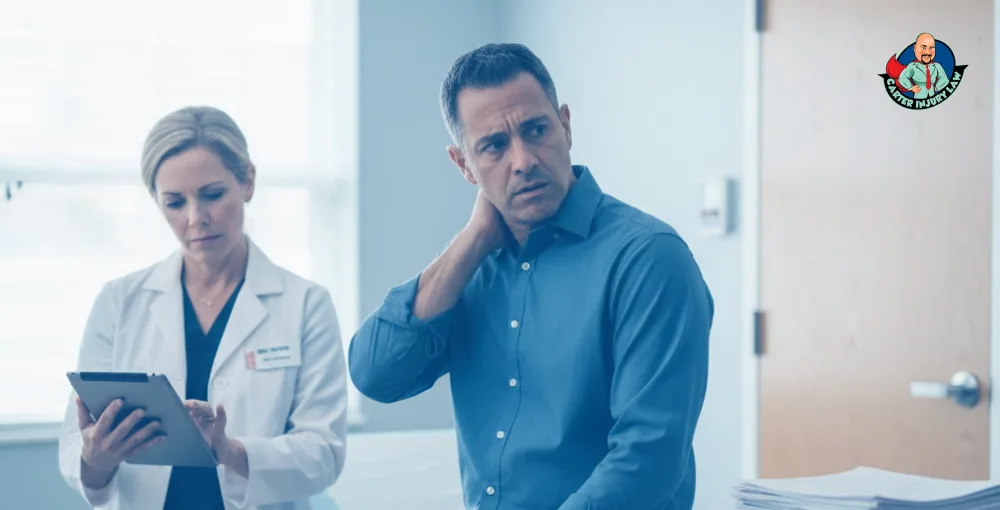
This is where delayed neck and back pain gets tricky. If you go in days later and downplay your pain, saying "it's just a little stiff," a doctor might not categorize it as an EMC. But $2,500 burns up incredibly fast in the medical world; sometimes just a few diagnostic scans and therapy sessions will wipe it out.
In order for your doctor to accurately determine whether your pain and limitations meet the EMC threshold, it is imperative that you be completely honest with them.
(5) How Insurance Companies See Your "Delayed Pain"
I deal with insurance adjusters all day long. I know their playbook. When they see a file that says "no injuries reported at scene" followed by a gap of four or five days before treatment started, their eyes light up.
They see an opportunity to deny coverage.
They will use what we call the "causation defense." They will look at that gap in time between the crash and when you saw a doctor and argue that something else must have happened in the interim to cause your back pain.
They’ll suggest you must have tweaked your back carrying groceries, picking up your kid, or tripping on the sidewalk at home. They will try to argue that the car accident isn’t the cause of your current pain because you waited so long to complain about it.
When you have delayed symptoms, the burden of proof gets heavier. We have to work harder to medically connect the dots between the impact of the crash and the herniated disc or severe whiplash you are suffering from now. This is why having a lawyer in your corner early in the process is so critical.
(6) What Happens When PIP Isn't Enough?
Sometimes, delayed pain turns out to be something very serious. What felt like stiffness on Day 3 might turn out to be a herniated disc pressing on a nerve that requires surgery months later.
Obviously, $10,000 in PIP won't cover surgery.
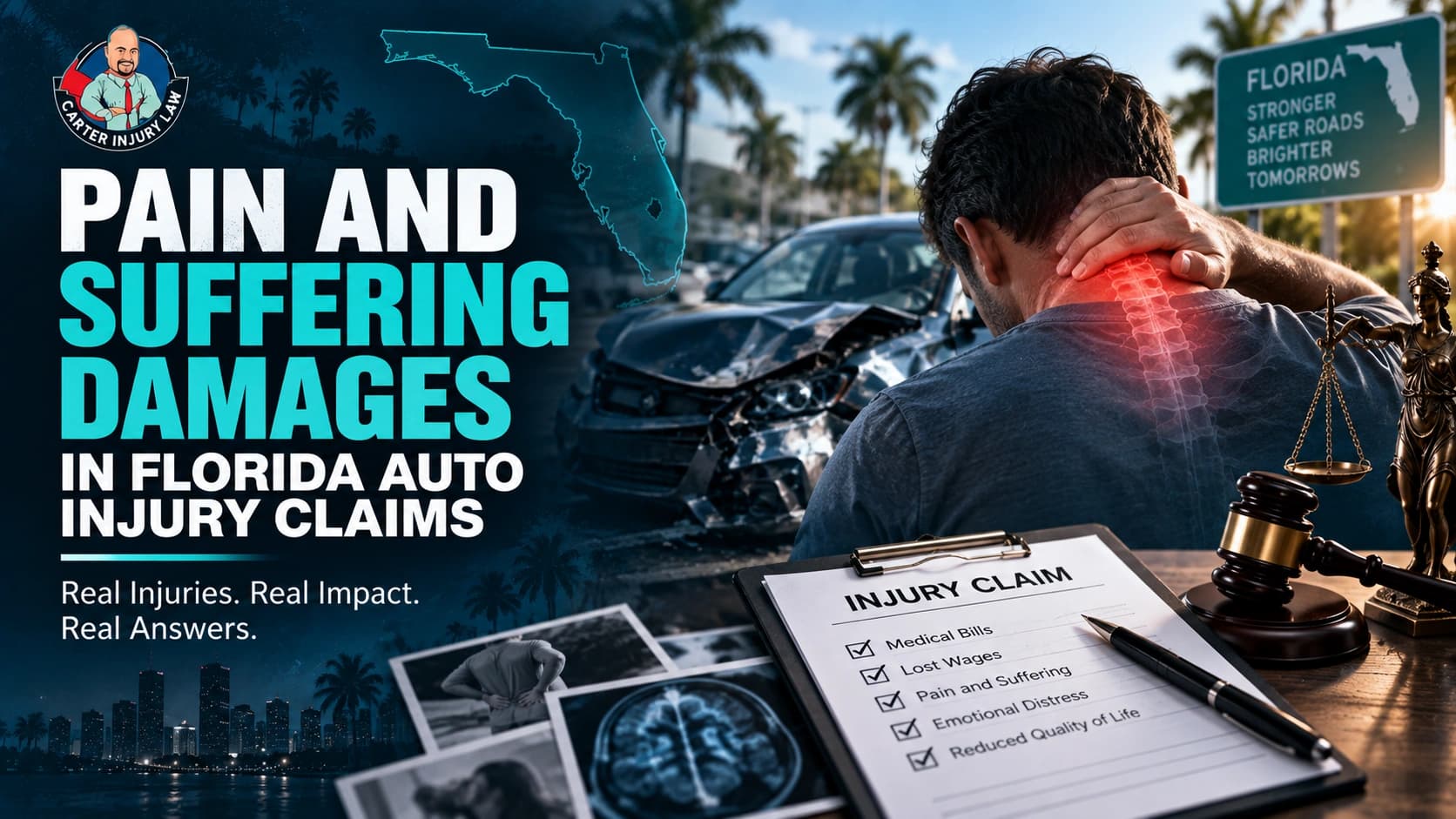
When your injuries are severe, we have to step outside of the "No-Fault" system and file a claim against the at-fault driver's liability insurance for things like pain and suffering, future medical bills, and lost income capacity.
However, in Florida, you can't just sue for pain and suffering for minor bumps. You have to meet what’s called the "Permanent Injury Threshold." You need medical proof that you have suffered a permanent loss of a bodily function, significant scarring, or a permanent injury within a reasonable degree of medical probability.
Delayed-onset back injuries often end up meeting this threshold, but it requires diligent medical documentation from the very beginning.
(7) Don't Wait, Let's Talk

If you are reading this a few days after an accident and your neck or back is starting to hurt, please don't panic, but do act quickly.
Don't try to be tough. Don't worry about inconveniencing doctors. Your health and your financial future are on the line.
Go to an urgent care or see a specialist today. Tell them exactly when the pain started and that you were in a crash. Start a journal at home documenting your pain levels everyday and what activities you can no longer do.
And before you give a recorded statement to any insurance adjuster, even your own, give my office a call.
We know the tricks insurance companies use to devalue delayed pain claims. We know how to ensure your medical records tell the true story of your injury. Let us handle the complex legal timelines so you can focus on getting your back feeling right again.