If you live in Largo, you know the feeling. You’re driving down East Bay Drive on a Tuesday afternoon, just trying to get home or maybe heading to the grocery store. Suddenly, traffic starts to slow down. You see the blue and red lights flashing ahead.
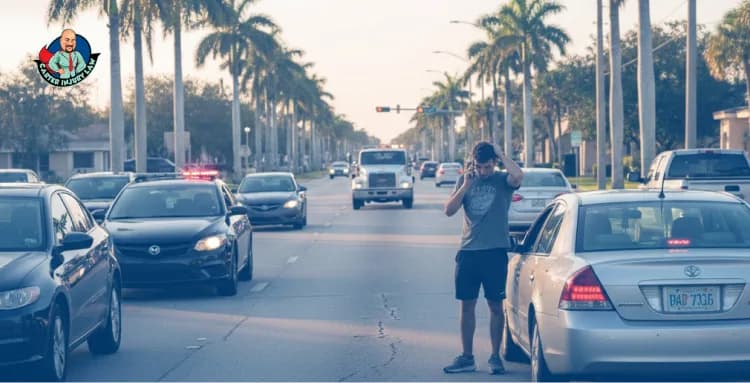
My heart always sinks a little when I see that. As an injury lawyer, I know what those lights usually mean. But as a neighbor and a member of this community, my stomach really drops when I see a teenager standing by the side of the road, looking terrified, phone in hand, staring at a crumpled bumper.
Teen driver accidents in Largo aren’t just a statistic on a government spreadsheet. They are happening right here, at the intersections we drive every day. I’ve had countless parents sit in my office, still shaking from the call they got an hour prior. They are worried about their child’s health, obviously. But once the dust settles, a new worry sets in. They start asking the hard questions about money, lawsuits, and their family’s future.
I want to have a frank conversation with you today. We need to talk about why our kids are crashing and the scary reality of who actually pays the price when they do.
(1) Why Are Largo Roads So Tough for Teens Right Now?
People ask me all the time, "David, are drivers getting worse?" Honestly? It’s a mix of things. But for teenagers specifically, driving in Pinellas County is like being thrown into the deep end of the pool before you know how to tread water.
There are real reasons why we are seeing an uptick in crashes involving young drivers.
The "Conflict Points" Are Everywhere
Largo isn’t a sleepy town anymore. We have heavy commercial traffic mixing with residential neighborhoods.
Have you driven on U.S. 19 or near the Gateway Expressway project lately? It’s confusing enough for me, and I’ve been driving for decades. For a 16-year-old with six months of experience, shifting lanes, concrete barriers, and sudden stops are a recipe for disaster.
Places like Ulmerton Road and Seminole Boulevard are notorious. You have cars trying to beat yellow lights, people making U-turns, and tourists who don’t know where they’re going. These are "conflict points." An experienced driver knows to hover over the brake pedal here. A teen driver usually assumes the coast is clear until it’s too late.
The "100 Deadliest Days"
We hear this term in the safety industry, but it plays out consistently in Florida. The period between Memorial Day and Labor Day is dangerous. School is out. Teens aren’t driving to class; they are driving to the beach. They are driving to friends' houses. They are on the road later at night.
In Largo, this often means more kids in the car. And that is a huge factor. When a teen driver has two or three friends in the passenger seats, the risk of a fatal crash doubles. It’s simply too much distraction inside the vehicle to handle the chaos outside the vehicle.
Tech Is a Double-Edged Sword
We all know about texting. We hammer that into our kids’ heads. Don’t text and drive.
But the cases I’m seeing now involve different kinds of distractions.
GPS Apps: a kid looking down to see which turn to take for that new restaurant.
Streaming Music: trying to find a specific playlist on Spotify while merging onto Starkey Road.
Notifications: it’s not just texts. It’s Snapchats, Instagram alerts, and Life360 pings.
A two-second glance at a screen at 45 mph means they just drove the length of a football field blind. On our crowded roads, that’s usually where the brake lights of the car in front of them are.
(2) The "Who Pays?" Question (And Why Parents Should Be Worried)
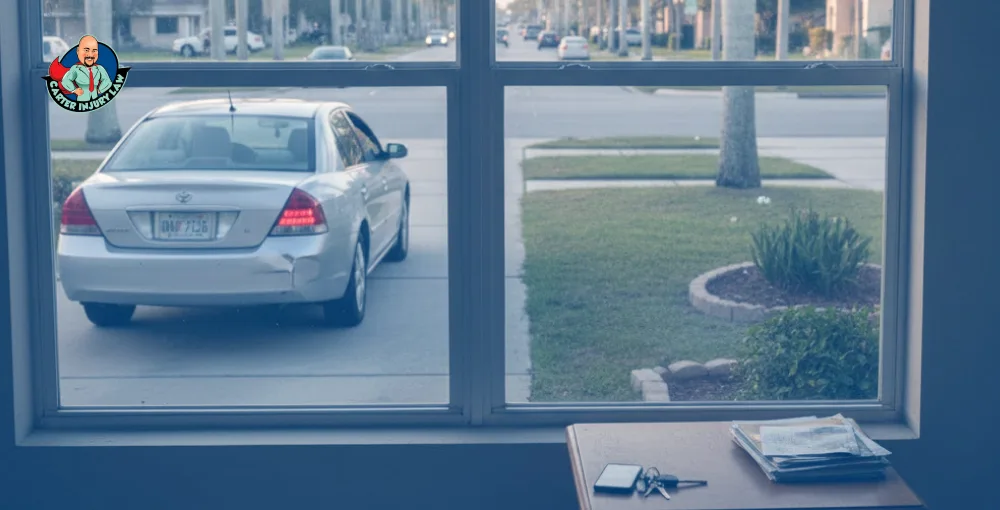
Most parents assume that if their teen causes a crash, the insurance will handle it, and maybe their rates will go up. That’s the best-case scenario. But in Florida, the liability laws are very specific, and they are designed to protect the victim, not the driver or the driver's parents.
If you are a parent in Largo, you need to understand three concepts. These aren't just legal jargon; they are the things that can put your house and savings at risk.
You Signed the Contract (Statute § 322.09)
Do you remember the day you took your kid to get their learner’s permit or driver’s license? It’s a proud moment. You stood at the counter, filled out a form, and signed your name. Most people don't read the fine print on that form.
By signing that application, under Florida Statute § 322.09, you agreed to be jointly and severally liable for any negligence or willful misconduct of your minor child when they are driving.
This isn't about whether you own the car. This isn't about whether you were in the passenger seat. You essentially co-signed for their driving behavior. If they run a red light and injure someone, the law views you as equally responsible for the damages.
The "Dangerous Instrumentality" Doctrine
I know, it sounds like something out of a sci-fi movie. But Florida is one of the few states that follows this legal doctrine strictly. A car is considered a dangerous tool. Like a weapon. Because a car is dangerous, the law says the owner is responsible for how it is used. If you own the car, your name is on the title, and you give anyone permission to drive it, you are on the hook.
It doesn’t matter if you told your teen, "Drive safe."
It doesn’t matter if you said, "Don't take the interstate."
It doesn’t matter if you said, "Be home by 10."
If you gave them the keys (express permission) or even if they just took the keys and you didn't stop them (implied permission), you are liable. This catches so many parents off guard. They think, "I didn't crash the car, why am I being sued?" You are being sued because you are the owner of the dangerous instrument that caused the harm.
The "Permissive Use" Trap
This one gets complicated. Let’s say you let your son drive the car. He goes to a friend’s house. Then, he lets his friend drive your car to the store. The friend crashes. Are you liable?
In many cases, yes. Florida courts have often ruled that if you allow someone to use your car, and they allow a third person to use it, the owner is still responsible. You lose control of the liability the moment those keys leave your hand.
(3) Why Minimum Insurance is a Disaster in Largo
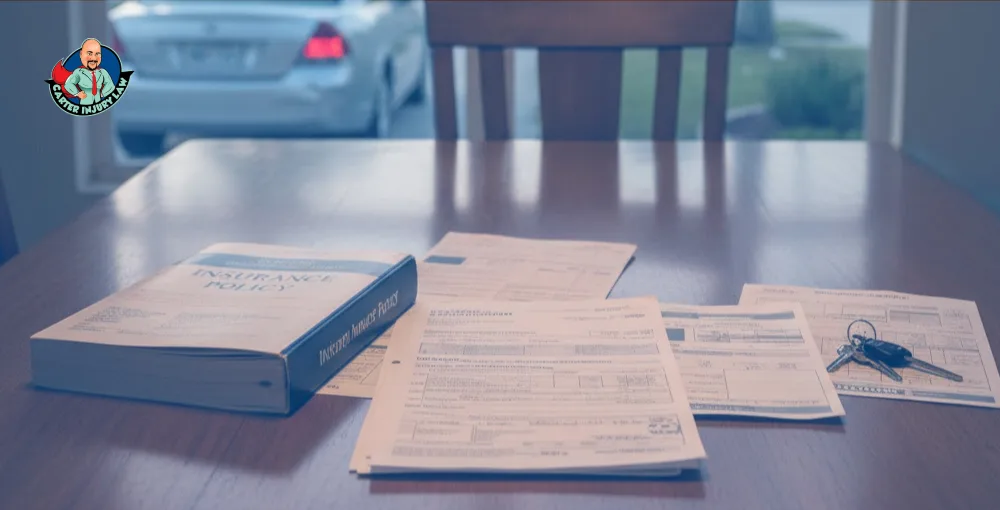
If you are driving around Pinellas County with the state minimum insurance coverage, you are walking a financial tightrope without a net. Florida’s "No-Fault" law can be confusing. People hear "no-fault" and think, "Oh, I can't be sued."
That is absolutely wrong.
"No-Fault" just refers to the first $10,000 of medical bills (PIP). That money gets burned through in about four hours in an emergency room. Once the injuries step outside that $10,000 window, which happens in almost every crash involving broken bones, whiplash, or concussions, the at-fault driver is personally liable.
If your teen causes a serious accident, the damages could be $50,000, $100,000, or more.
If you only have minimal coverage (like $10,000 in bodily injury), the insurance company cuts a check for that $10k and walks away. Guess who is responsible for the remaining $90,000
You are.
If you own a home, have a savings account, or have a job, those assets are now targets. I have seen families devastated financially because they tried to save $30 a month on their premiums and got caught in a bad teen driving accident.
(4) A Lawyer’s Advice About How to Protect Your Family
Here is what I tell my friends and neighbors when they ask for advice. Review Your "Bodily Injury" Limits. Pull out your policy today. Look at the line that says Bodily Injury Liability. If it says 10/20 (meaning $10k per person / $20k per accident), change it immediately.
You want enough coverage to protect your assets.
I generally recommend at least 100/300 coverage if you are a homeowner, and an "umbrella policy" on top of that if you have significant equity or savings. Umbrella policies are surprisingly cheap and offer a million dollars or more in protection.
Florida has one of the highest rates of uninsured drivers in the country. If a drunk driver or someone with no insurance hits your teen, your own UM coverage is the only thing that will pay for your child’s medical bills and pain and suffering. Do not waive this coverage.
Create a Parent-Teen Driving Contract. Make it formal. Sit down and write out the rules.
No passengers for the first 6 months.
The phone goes in the glove box, or "Do Not Disturb" mode is on.
No driving after 10 PM.
If grades drop, the keys get taken away.
Make them sign it. It reinforces that driving is a privilege, not a right.
Ride With Them (Even After They Get Their License). Don’t stop coaching just because they passed the test. The test in the parking lot is nothing like driving on West Bay Drive at 5:00 PM. Ride with them occasionally. Watch their habits. Are they following too close? Are they braking late? Correct them now before it turns into a crash.
(5) If The Unthinkable Happens
Look, nobody wants to call a lawyer. I get it. We are usually the last people you want to talk to because it means something went wrong. But if you get that call, and your teen has been in an accident, you need to be careful.
We have been handling cases in Largo and throughout Pinellas County for a long time. We know the local judges, we know the roads, and we know how to protect your rights. If you are worried about a crash, or if you just have questions about your liability as a parent, my door is open. We can sit down, look at what happened, and figure out the best path forward to keep your family safe and financially secure.