Not every smile in a suit is prepared to fight for your life in a courtroom. We live in an age of marketing noise, especially here in Florida. However, when your health and livelihood are on the line, you don't need a marketing machine. You need a professional who understands the dance of negotiation and the brutal reality of litigation.
Today, we aren't just talking about how to hire a lawyer. We are also going to talk about how to look past the advertisements and select a professional personal injury law firm in Florida that sees you as a human being who deserves justice.
(1) Why experience is not a number on a website
Experience is a string of days in court, of depositions, of calling a doctor at midnight because a client needs clarity. We all know that years do not equal readiness. A lawyer with many years may never have taken a case to trial. A lawyer with fewer years but with a record of trial work understands the pressure points in a lawsuit. In my office, we test for two things, always.
Has the attorney tried cases similar to yours?
Do they have the expert network to explain medical and vocational damage?
You need preparedness. When an insurance company says no, a lawyer who has been to court will not be surprised. They will have the files, the witness lists, and the medical chronology laid out like a map. That is what experience looks like when it helps the client.
(2) How local knowledge changes outcomes in Tampa
Tampa is not an abstraction. Our judges have temperaments. Our clerks have routines. The local medical providers file records in a particular way. I have learned that a hearing scheduled for two weeks can become a trial by calendar if you do not know the judge’s preferences. Knowing the local rhythm saves money and time. It means fewer surprises for the client. It is also a practical advantage, not arrogance.
If you want verification that a lawyer works locally, look for recent case results in Hillsborough County courts and familiarity with Tampa hospitals and clinics. Use local referral services when you begin your search, because they screen for members in good standing and for relevant experience. The Hillsborough County Bar Association maintains a Lawyer Referral Service that connects the public with screened, local attorneys.
(3) How fees work in Florida

Most personal injury lawyers in Florida work on a contingency basis. This means the lawyer is paid only from recovery, only if the case is successful. That structure aligns interests, but it also raises questions you should settle before a pen crosses paper.
Expect a written contingent fee agreement.
Expect clarity on what percentage is taken if a settlement happens before suit, after suit, or after trial.
Expect a statement about costs advanced on your behalf and how those are handled if there is no recovery.
Florida law gives clients 3 business days to reconsider a contingent fee agreement after signing it. This business day window is a real protection. You may cancel the contract without explanation, provided you notify the lawyer in writing in that period. Read the agreement slowly and use that period if anything about the agreement feels off.
(4) How to verify a lawyer’s license and record
A firm that will be honest in person will be honest online. Start with the Florida Bar directory. It is the official source for whether a lawyer is licensed and in good standing. It also shows public disciplinary records, if any exist.
If a lawyer suggests a practice area that seems new to them, look up their filings, recent court cases, and whether they hold any board certifications relevant to civil trial law. The Florida Bar directory is the right place to begin.
(5) What true communication feels like, and why it matters

I judge a firm early on by how it communicates. If I walk into a firm and I meet an assistant who cannot name the lawyer handling the case, I leave. Good communication is simple, honest, and repeated.
In my practice I do three things for clients.
I explain the process in plain terms, step by step.
I tell clients who will be the point person and how often they will hear from us.
I give a timeline that is realistic, not aspirational.
Clients who feel informed sleep better. It also shapes every decision toward better outcomes.
(6) Red flags that I have seen too often
I have taken calls from people who were shuffled like paperwork. I have seen promises made that could not be kept. I list the things that have cost clients time, money, and peace.
Being passed between unknown staff with no clear point person.
Promises of quick, high-dollar settlements with no explanation of risk.
Contracts with unclear language about costs and who pays if there is no recovery.
Lawyers who refuse to show recent representative results.
Each of these is practical. Each one corrupts trust. If a lawyer will not put clear commitments in writing, that is not theater. That is a solid signal to look elsewhere.
(7) A pocket list of what to bring to the first meeting
Treat the first meeting like a small inventory. Bring the pieces that tell the story with a bit of context.
Police or incident reports.
Photographs of the scene and of injuries.
Medical records and bills, or at least the names of hospitals and clinics.
Insurance information for all involved parties.
Any correspondence you have received from insurers or other lawyers.
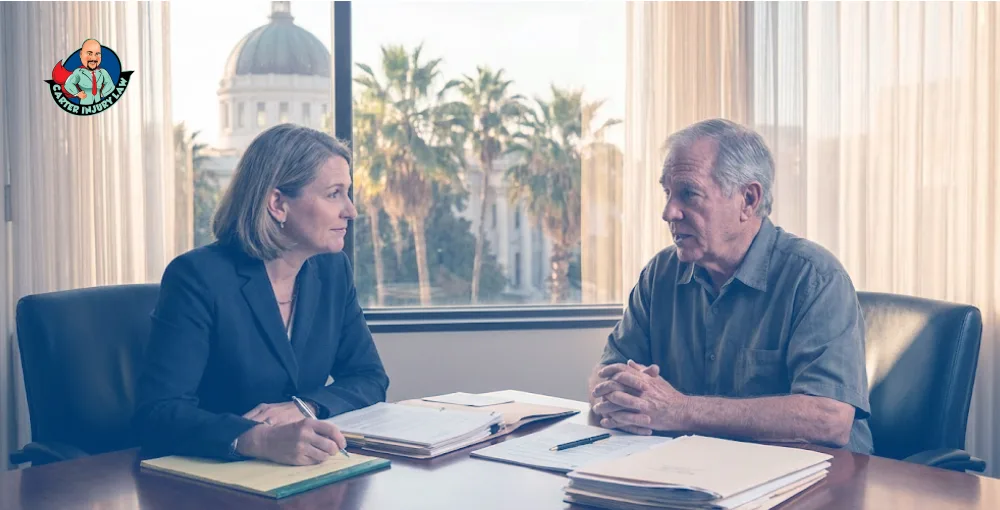
I open a file with these items. The first fifteen minutes are for listening. The next fifteen are for assessment and plain talk about options. That is how I set a tone of clarity and respect.
(8) How I decide whether to take a case at Carter Injury Law
I am selective. A client’s case is not a number on my docket. It is a commitment of time and resources. I accept a case when I can do one of three things well.
Assemble the proof that will show liability and damages.
Deploy experts who can testify about injury and future needs.
Make a credible path to settlement or trial that serves the client’s interest.
If a case requires resources I do not have, I will be honest. I will refer the client to someone who can do better work for them. I have done this. Ethics and outcomes matter more to me than volume.
If you sign with me, I will walk you through the retainer in person. We do not hide costs in fine print. If there is a contingency fee, you will see the math in writing. If we advance costs for specialists or records, you will see how those are handled in case of no recovery. You will also have the three-business-day right to reconsider. Use it if you need to.
(9) How to search for a professional personal injury lawyer online

Search phrases and keywords that matter to people in Tampa show up in how you choose words when you look for a lawyer. Here is a checklist that doubles as a search list when you are online.
Tampa personal injury law firm experience.
Tampa personal injury lawyer trial experience.
Contingency fees Florida 3 business day cancellation.
Hillsborough County personal injury attorney.
Florida Bar directory license check.
(10) A final note from my desk in Tampa
There is no simple formula for choosing the right lawyer. There is, however, a series of small truths. They are simple and stubborn. Get a written agreement. Verify the license. Know who will speak for you and how often. Understand fees and the cooling-off period. Expect plain talk.
I cannot promise the road will be short. I can promise that a good lawyer reduces the number of sudden turns. In my office we try to be the kind of people who show up, who listen, and who do the hard work without making it feel like a spectacle. If you come in with a bag and a story, I will sit. I will listen. I will tell you, plainly, whether I can help. If I can, I will fight. If I cannot, I will point you to someone who can.
This is how I do the work. This is how I would want someone to do it for my family.