People know Florida for its beaches and theme parks, but its roads tell a different story. Traffic is a way of life here, as you know if you've ever been stuck on I-4 or the Howard Frankland Bridge. Sadly, when there is a lot of traffic, there is a high risk of accidents. It’s important to know how the law works after a crash, which is why Carter Injury Law has provided this guide on Florida auto accident laws explained for injured drivers.
Florida's laws are different from those of many other states. Because Florida is a no fault state, the process for seeking compensation begins with your own insurance provider, regardless of who caused the wreck. However, this does not mean the person who hit you is off the hook.
1) What Does It Mean That Florida Is a No-Fault State?
One of the most common points of confusion for residents in Largo and Tampa is the phrase "florida is a no fault state." This does not mean that no one is to blame for the crash. Instead, it refers to how your initial medical bills are paid.
Under this system, your own insurance provider is responsible for paying a portion of your medical costs and lost wages regardless of who caused the accident. This is handled through a specific type of coverage that florida law requires every driver to carry.
2) How Does Personal Injury Protection (PIP) Work for You?
The backbone of the no-fault system is personal injury protection pip. This coverage is mandatory for all motor vehicle owners in Florida. Here is what you need to know about your PIP benefits:
Standard PIP policies provide up to $10,000 in benefits.
PIP typically pays 80% of your medical expenses, such as ER visits, surgeries, and physical therapy.
If you cannot work, PIP pays 60% of your lost income.
If the worst happens, PIP provides a $5,000 death benefit for funeral costs.
It’s important to note the "14-Day Rule." To qualify for PIP benefits, you must seek medical treatment within 14 days of the accident. If you wait longer, the insurance company can legally deny your claim. Furthermore, if a doctor does not determine that you have an "Emergency Medical Condition" (EMC) as defined by Florida Statutes Section 627.732, your PIP benefits may be capped at a mere $2,500.
3) What Are the Current Florida Auto Insurance Requirements?
To legally operate a vehicle in Florida, you must meet specific insurance requirements. These laws are in place to ensure that there is at least a baseline of financial protection on the road. However, many drivers are surprised to learn that Florida's minimum requirements are among the lowest in the nation.
Currently, the state requires:
$10,000 in Personal Injury Protection (PIP)
$10,000 in Property Damage Liability (PDL)
Interestingly, Florida does not technically require "Bodily Injury Liability" (BIL) for most private passenger vehicles. This means that the person who hit you might not have any insurance to pay for your long-term care or pain and suffering emotional distress. This is why we always recommend that our clients purchase Uninsured/Underinsured Motorist (UM) coverage to protect themselves from drivers who only carry the bare minimum.
If you were involved in a collision with an unconventional vehicle, the rules might differ slightly. For instance, you can learn more about how liability works when a golf cart vs. a car collide in residential neighborhoods.
4) Why Is a Crash Report Essential for Your Personal Injury Claim?
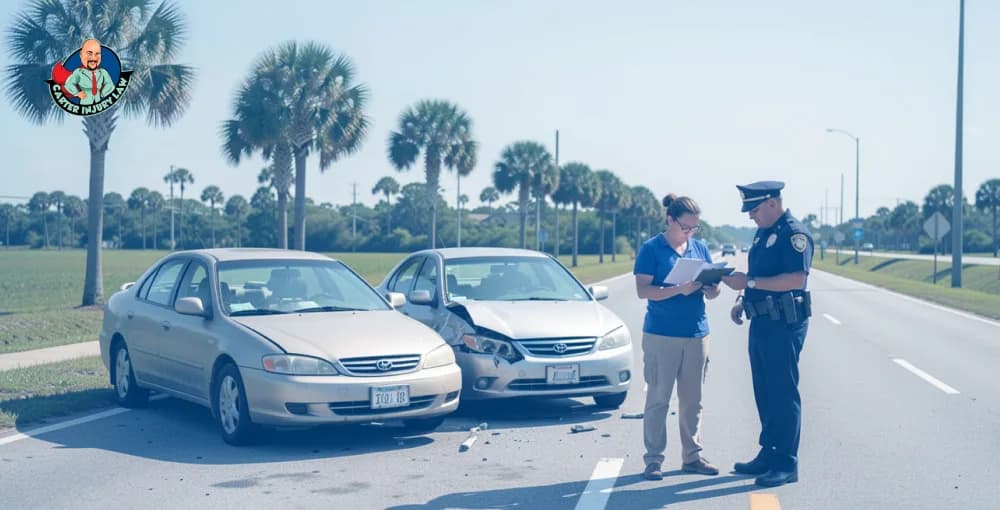
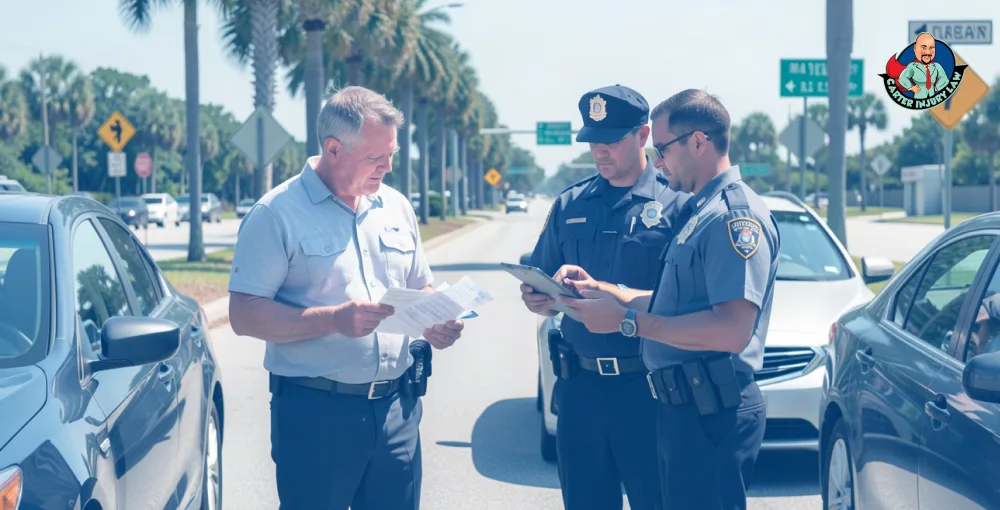
Following a collision, your first priority is safety, but your second should be documentation. Under Florida Statutes Section 316.066 drivers must report any accident involving injuries, death, or property damage estimated at $500 or more to law enforcement immediately.
When an officer arrives, they will create an official crash report. This document is a cornerstone of your personal injury claim. It contains:
The date, time, and precise location of the incident.
Identification of all parties and vehicles involved.
The officer's initial assessment of how the crash happened.
Whether any citations were issued for traffic violations.
You can typically obtain a copy of this report through the FLHSMV Crash Portal. Remember, while the report itself might not always be admissible as evidence in a trial due to "accident report privilege," the information within it helps your attorney track down witnesses and preserve physical evidence before it disappears.
5) Does Your Injury Qualify as a Permanent Injury?

Because of the no-fault system, you cannot usually sue the other driver for non-economic damages unless your injuries are severe. To "step outside" the no-fault system and seek compensation for pain and suffering emotional distress, you must prove that you sustained a permanent injury.
According to the florida statutes, a permanent injury is generally defined as:
Significant and permanent loss of an important bodily function.
A permanent injury within a reasonable degree of medical probability.
Significant and permanent scarring or disfigurement.
Death.
Expert medical testimony and a thorough understanding of medical record presentation are necessary to prove this threshold. You are probably only eligible for the benefits of your PIP policy and any property damage coverage the other driver may have if it is anticipated that your injury will heal completely over time.
6) What Is the New Statute of Limitations for a Car Accident Case?
One of the most significant changes to florida law requires your attention: the statute of limitations. For many years, injured drivers had four years to file a lawsuit. However, as of March 2023, the time limit for most negligence-based personal injury cases has been slashed.
How Long Do You Have to File a Lawsuit?
Two-Year Limit: For accidents occurring on or after March 24, 2023, the statute of limitations is now only two years from the date of the crash.
Four-Year Limit: Only if your accident occurred before March 24, 2023, do you still have the old four-year window.
Government Claims: If you are hit by a city or state vehicle, there are even shorter notice requirements that must be met before you can sue.
If you miss this deadline, you lose your right to seek compensation forever. This is why it is vital to contact a lawyer early in the process. You can find more details on how personal injury settlements are paid out once the legal hurdles are cleared.
7) How Does the Modified Comparative Fault System Affect You?
Another major shift in the law involves how we calculate fault. Florida recently moved from a "pure" comparative fault system to a "modified" one. This change has a massive impact on your ability to recover money if you were partially responsible for the accident.
Under the old rules, if you were 90% at fault, you could still recover 10% of your damages. Under the new rules, if you are found to be more than 50% at fault, you recover zero.
The insurance company will work tirelessly to shift the blame onto you. They might argue that you were speeding, distracted by your phone, or failed to use a turn signal. Their goal is to push your percentage of fault above that 50% mark so they can walk away without paying a dime.
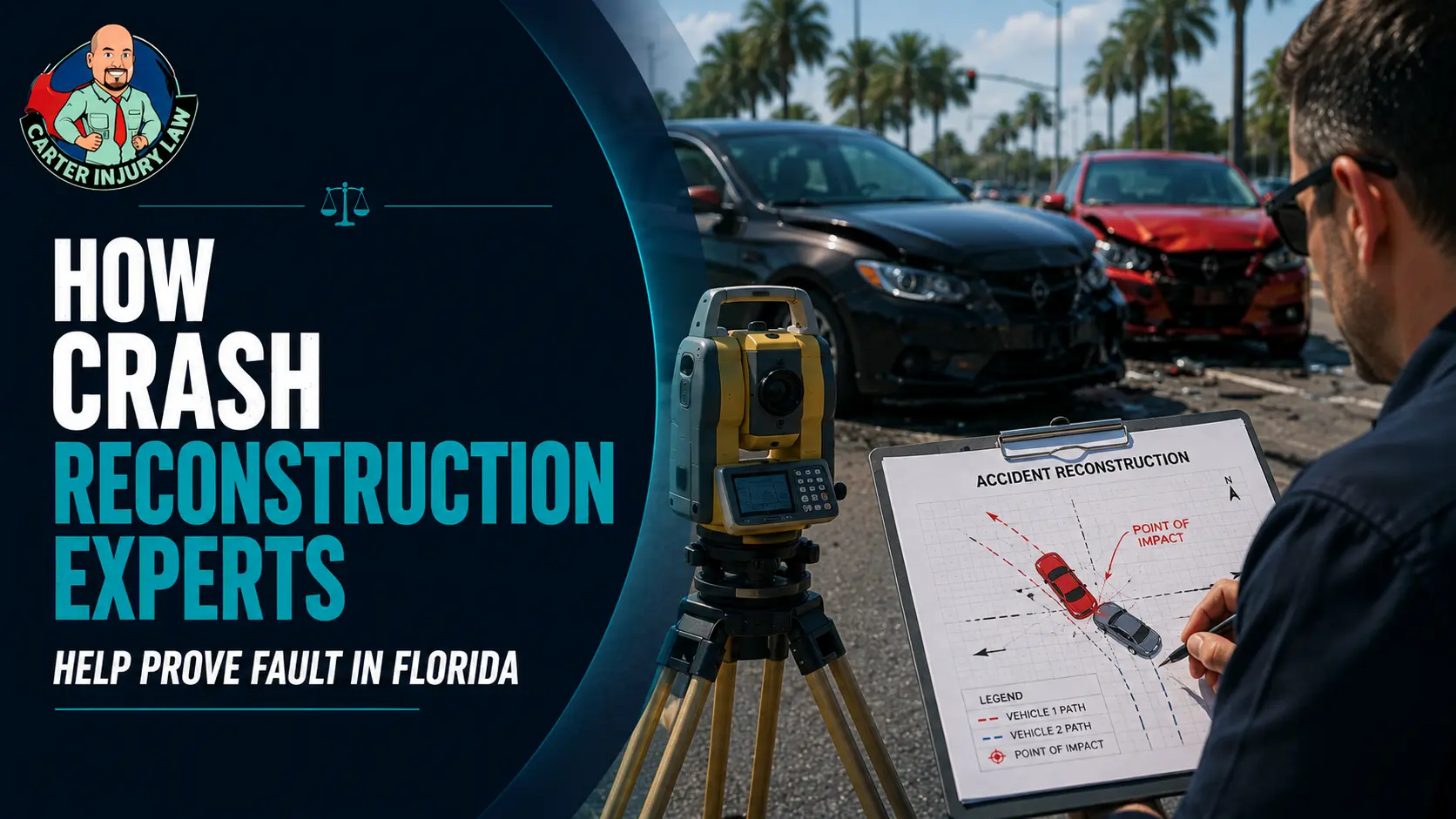
This strict standard makes it more important than ever to have a legal team that can investigate the crash, gather dashcam footage, and interview witnesses to prove the other person was the primary fault driver. This is especially true for vulnerable road users, such as those discussed in our post about bicycle accident laws in Largo.
8) What Can You Recover in a Personal Injury Claim?

If you meet the permanent injury threshold and the other driver is at fault, you can seek damages beyond what PIP covers. A comprehensive car accident claim seeks to "make the victim whole" by covering both economic and non-economic losses.
Your claim may include:
Full medical expenses include the 20% that PIP did not pay, plus all future medical costs for surgeries or therapy.
Total Lost Income can recover the 40% of wages PIP missed, plus any future loss of earning capacity.
Trauma and injury make up for the physical strain, emotional distress, and pain that the trauma has caused.
The cost to repair or replace your vehicle and any personal items inside.
Managing these details while trying to heal is an immense burden. Avoiding common mistakes after a crash is the first step toward securing the settlement you deserve.
9) What Makes Carter Injury Law the Best Choice for Your Case?
We know that a car accident is more than just a legal document; it changes your life. We are based in Tampa and serve clients all over Florida, including Largo and the Hillsborough and Pinellas counties that are close by.
David J. Carter and our hard-working team have a reputation for being strong advocates against big insurance companies. We know how they try to make your personal injury claim worth less, and we won't back down. We make sure that you are never just a case number by giving each car accident claim a personal touch.
We work on a contingency fee basis, meaning you pay nothing upfront.
As a fifth-generation Floridian, David Carter knows the local courts and the unique risks of Florida roads.
We assist with everything from finding the right doctors for your medical expenses to recovering your lost income.
You’ve got enough on your plate right now—let Carter Injury Law handle the rest from our Tampa office at 3114 N Boulevard. If you’re in Hillsborough County, give us a shout at (813) 922-0228, or call our Pinellas team at (727) 955-1922. We’re here to look out for you from day one.