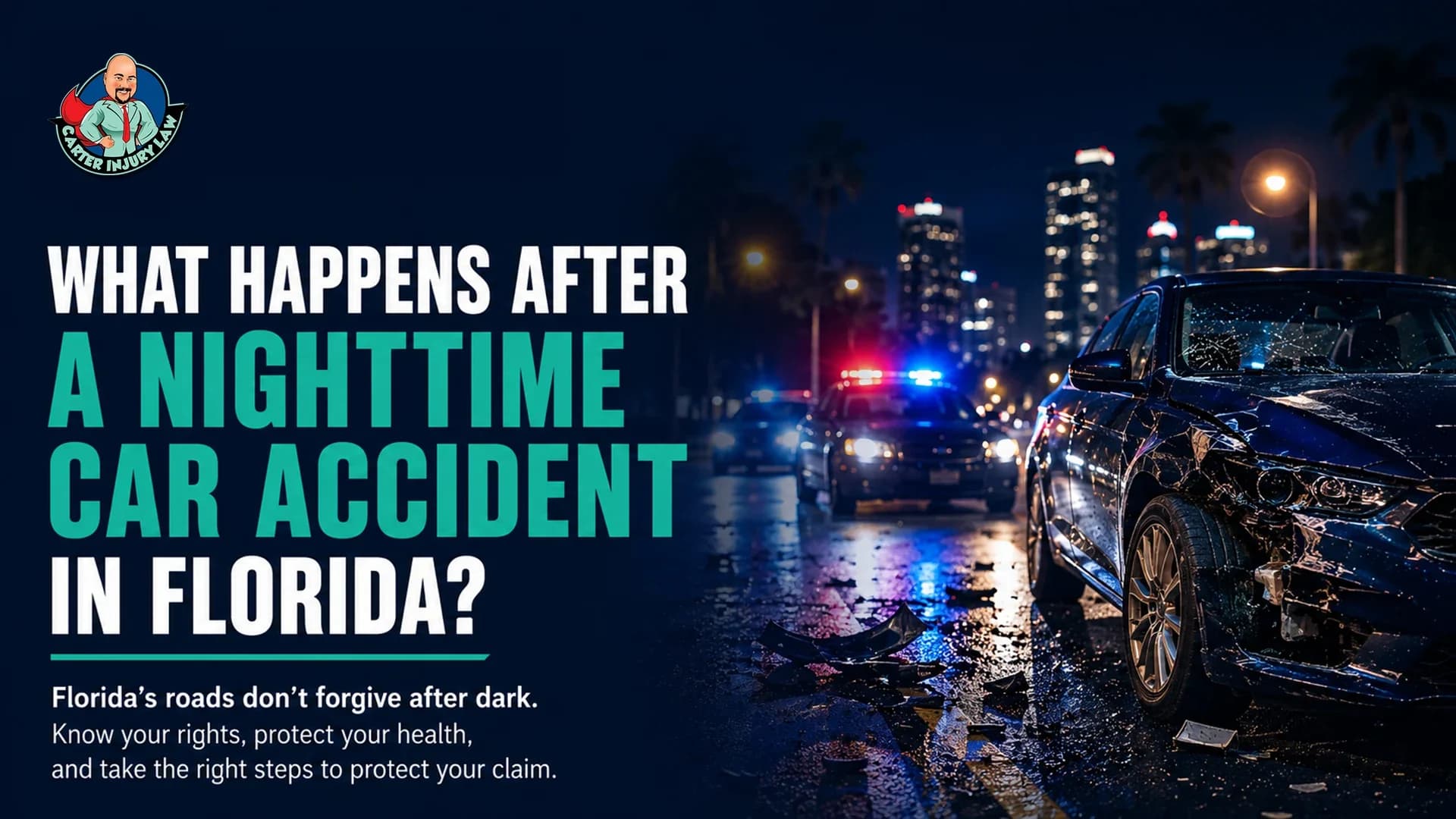
Florida's roads do not forgive after dark. A nighttime car accident in Florida can trigger medical deadlines, insurance pressure, and evidence problems before the next morning. The more quickly you protect the scene, your treatment record, and your claim file, the harder it becomes for an insurer to turn darkness into an excuse to deny responsibility.
Key Takeaways
- Nighttime crashes are harder to prove because visibility, witnesses, and scene evidence can disappear quickly.
- Call 911, get medical help, and document vehicle positions, damage, road conditions, lights, signs, and witnesses.
- Florida's PIP rules make early medical treatment critical after any crash, including one that happens after dark.
- For many Florida negligence claims after the 2023 civil justice changes, the lawsuit deadline is generally 2 years.
- Florida's modified comparative fault rule can bar recovery if you are found more than 50% at fault.
- Dashcam, surveillance, and phone video can become important proof in a nighttime car accident claim.
1Florida After Dark: Why It Matters
Most drivers picture late-night crashes as a drunk-driving problem. That story is incomplete. Reduced visibility, driver fatigue, tourist-heavy roads, poor lighting, speed, and distraction can all collide at night. When they do, the injuries are often more serious and the proof can be harder to preserve.
Statewide crash numbers should be checked against the official FLHSMV Crash Dashboard, because Florida's traffic patterns change year by year. The practical lesson stays the same: evidence after dark is fragile.
| Metric | Daytime | Nighttime |
|---|---|---|
| Share of fatal Florida crashes | 55% | 45% |
| Alcohol involvement rate | Lower | Higher |
| Visibility conditions | Clearer sight lines | Reduced visibility |
| Evidence risk | More scene detail | Footage and photos can be blurry |
| Common peak danger window | 5PM-7PM | 8PM-10PM |
2The First 10 Minutes After the Crash
Call 911 first. Florida crash scenes can become more dangerous at night because approaching drivers have less time to react. Get to safety, request medical help, and let officers create a record. Then preserve what you can before vehicles move and lighting conditions change.
Step 1
Call 911 and wait for law enforcement if anyone is hurt or the crash scene is unsafe.
Step 2
Move to a safer location only if you can do so without making injuries worse.
Step 3
Photograph vehicle damage, final resting positions, debris, skid marks, traffic lights, road signs, and street lighting.
Step 4
Record short videos of the intersection, roadway hazards, weather, and the other driver's visible behavior.
Step 5
Collect the other driver's license, plate, insurance information, and witness contact details.
Step 6
Preserve dashcam footage immediately because some systems overwrite files within hours.
Do not say you are fine at the scene. You may feel steady because adrenaline is masking pain. Instead, describe what you feel, avoid guessing, and get evaluated quickly.
3Why Nighttime Claims Are Harder to Win
Insurance companies know nighttime crashes are harder to prove. Security footage may be blurry. Witness accounts may be thin. Skid marks and debris fields may be gone by morning. Details that would be obvious at noon can become disputed after dark.
Adjusters may argue that poor visibility means shared fault. Florida's modified comparative fault statute reduces damages by your percentage of fault and can bar recovery when a party is found more than 50% responsible for their own harm.
Nighttime Evidence Priority
What to preserve before the claim becomes a visibility dispute
A Claim Can Change by Morning
Nighttime crash victims often underestimate how quickly the claim window closes. Evidence disappears, memories fade, and insurers move fast. Early legal help can protect video, reports, medical records, and witness statements before the story gets rewritten.
For local claim strategy, see how our Tampa car accident lawyer page explains evidence and insurance disputes after a crash.
4The 14-Day Rule Nobody Warns You About
This deadline catches people off guard. You walk away sore but stable, decide to monitor symptoms, and then pain gets worse a week later. That delay can become expensive because Florida PIP benefits are tied to prompt medical documentation.
Florida's PIP statute, section 627.736, governs required personal injury protection benefits. The core practical rule is simple: get evaluated quickly, document symptoms, and keep the treatment chain clear.
14 Days
is the medical treatment window commonly associated with preserving Florida PIP benefits after a crash.
Source: Florida Statute 627.736
$10K
is the standard PIP benefit limit many Florida drivers rely on first for medical bills and lost wages.
Source: Florida no-fault PIP coverage
2 Years
is the general negligence lawsuit deadline for many claims accruing after March 24, 2023.
Source: Florida Statute 95.11
5No-Fault Benefits and Serious Injury Claims
Florida is a no-fault state. After a nighttime car accident in Florida, your own PIP coverage generally pays first, regardless of who caused the crash. But PIP can run out fast when ambulance care, emergency room treatment, imaging, therapy, and lost wages stack up.
To pursue the at-fault driver directly for broader damages, your injuries usually need to satisfy Florida's serious injury threshold. That means medical records matter from the beginning. They help connect the nighttime crash to your pain, limitations, treatment, and future care needs.
The 2023 civil justice changes also shortened the general negligence limitations period for many cases. Section 95.11 should be reviewed with the accident date in mind, because waiting can cost you the right to file.
6Evidence That Can Decide the Claim
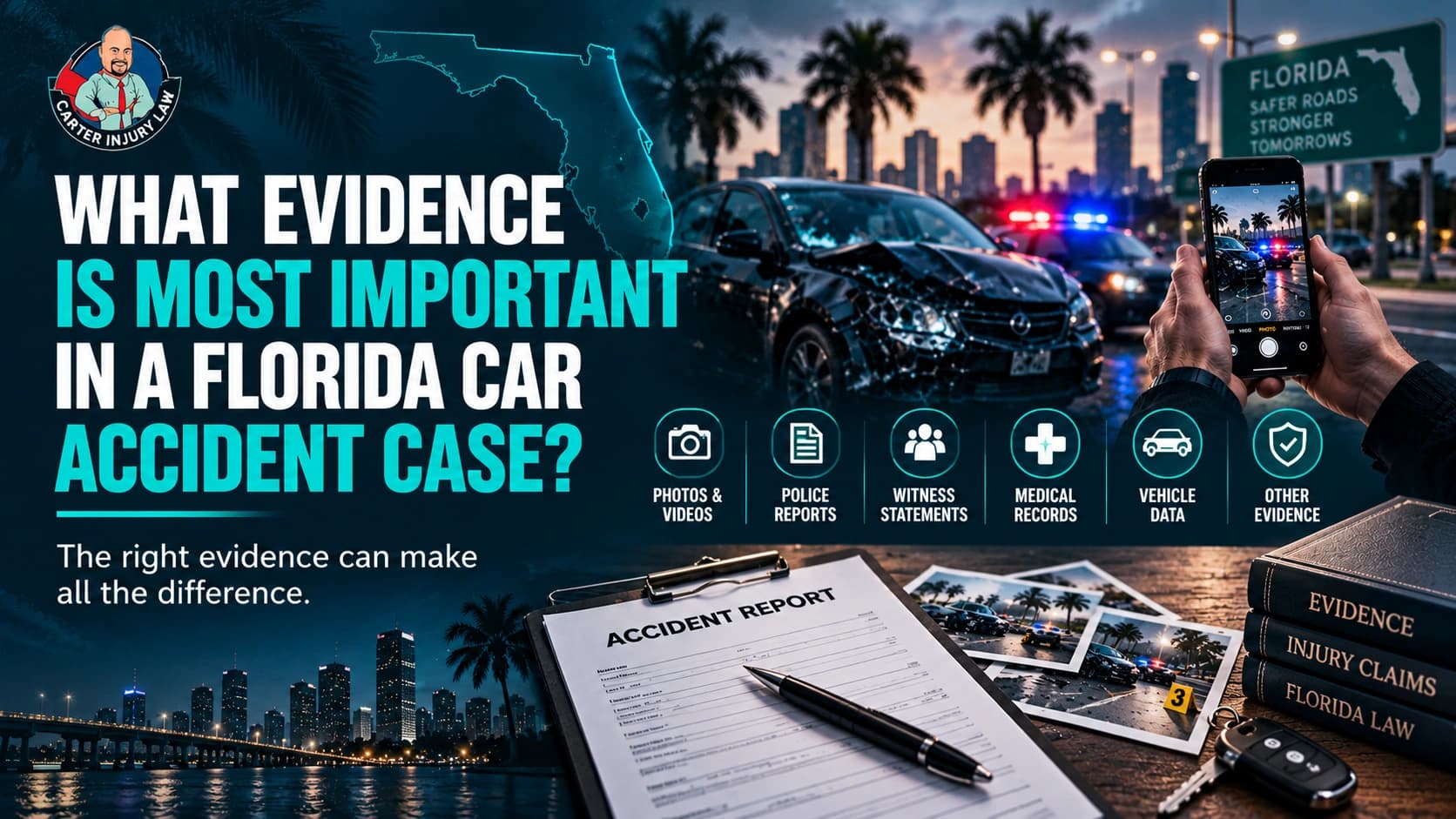
Nighttime claims are won with documentation. The goal is to replace guesswork with proof: light cycles, headlight direction, roadway defects, braking, vehicle speed, witness statements, and medical causation. The sooner that evidence is secured, the less room the insurer has to speculate.
| Evidence Type | Why It Matters After Dark |
|---|---|
| Dashcam footage | Headlights, signal timing, lane position, braking, and speed clues |
| Police report | Officer observations, driver statements, citations, and crash diagram |
| Phone photos | Vehicle positions, damage, road hazards, lighting, and weather conditions |
| Witness details | Independent accounts before memories fade or people leave the area |
| Medical records | The link between the crash, symptoms, treatment, and long-term limitations |
| Surveillance video | Nearby business, traffic, doorbell, or parking lot footage |
7Myths About Nighttime Accidents
A few common beliefs can hurt a claim. The insurer may lean into those assumptions if they make your case look weaker. Do not let a broad myth replace the facts of your specific crash.
Myth
Most nighttime crashes happen after midnight
Many dangerous crashes happen earlier in the evening, when work, dinner, events, and impaired driving patterns overlap.
Myth
Nighttime crashes are mostly DUI cases
Alcohol can matter, but fatigue, speed, poor lighting, distraction, and roadway design can also drive liability.
Myth
Being sober means the claim is simple
Sobriety helps, but insurers can still argue visibility, reaction time, speeding, or comparative fault.
Talk to Carter Injury Law
After a nighttime crash, the facts can disappear quickly. Carter Injury Law can review the scene evidence, protect video, handle insurance communication, and build the medical record needed to support your claim.
Call 813-540-5444 or visit our contact page for a free case evaluation.
Frequently Asked Questions
Do I need a police report for a nighttime car accident in Florida?
Yes. A report is especially important after dark because officers can document lighting, road conditions, driver statements, citations, and other details that may be disputed later.
What if the other driver fled the scene?
Call police immediately and document everything you can remember, including vehicle color, direction of travel, plate details, damage, and witness information. Your uninsured motorist coverage may become important.
Can phone photos from a nighttime crash hold up as evidence?
Yes. Poor lighting does not make photos useless. Take wide shots, close-ups, video clips, and images from multiple angles so your attorney can evaluate what they show.
Does fault work differently in a nighttime accident in Florida?
No. Florida's modified comparative negligence rule still applies. Darkness alone does not make you responsible, but insurers may use poor visibility to argue shared fault.
What if my injuries showed up days after the crash?
See a doctor as soon as possible. Adrenaline can hide pain, and treatment gaps give insurers room to argue that the crash did not cause your injuries.
How does Florida's no-fault system affect a nighttime crash claim?
Your Personal Injury Protection coverage generally pays first, up to policy limits. If your injuries meet Florida's serious injury threshold, you may be able to pursue the at-fault driver for additional damages.
Disclaimer: This article is for general informational purposes and does not form an attorney-client relationship. For help with any personal injury or criminal case, reach out to Carter Injury Law.