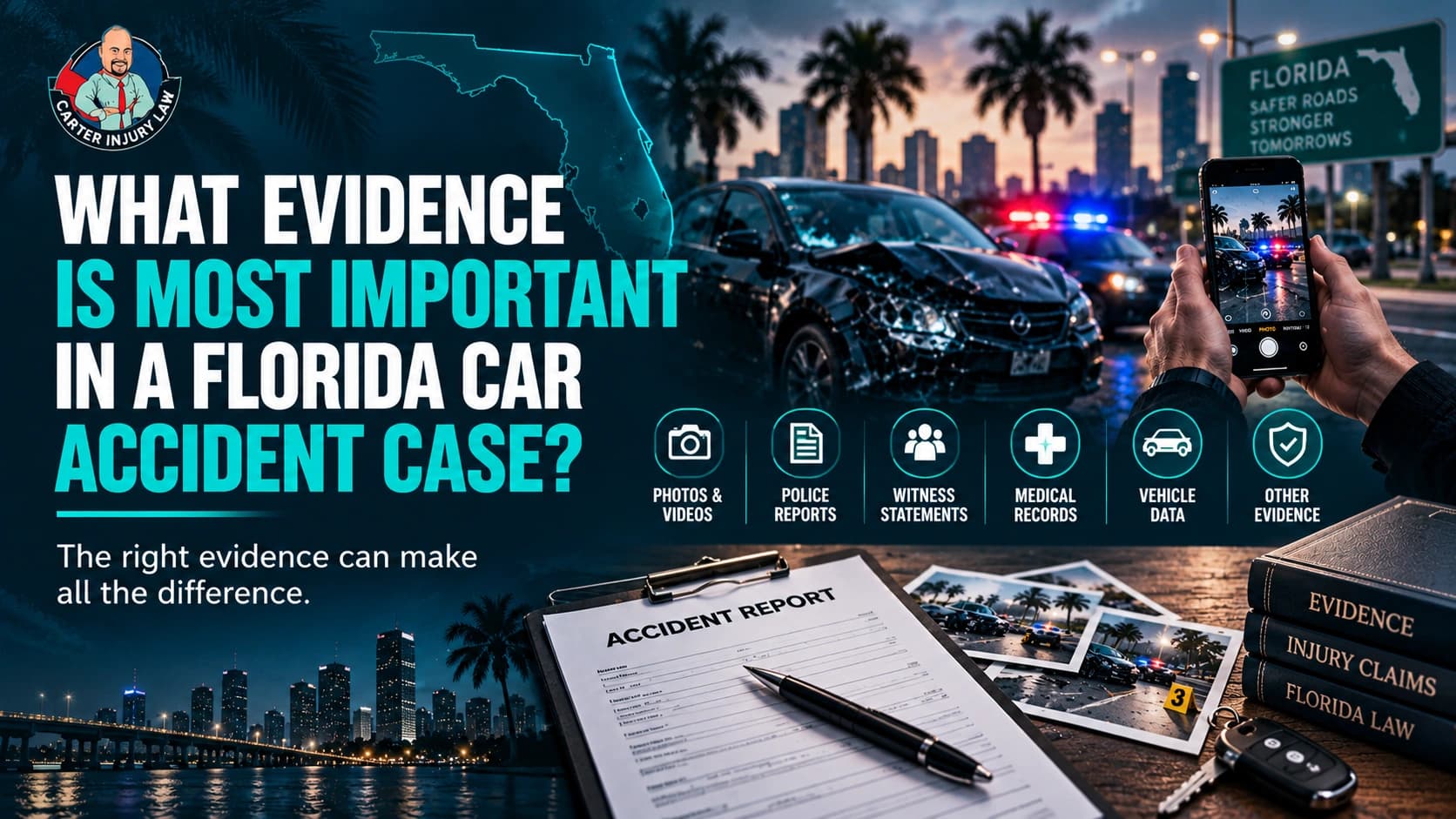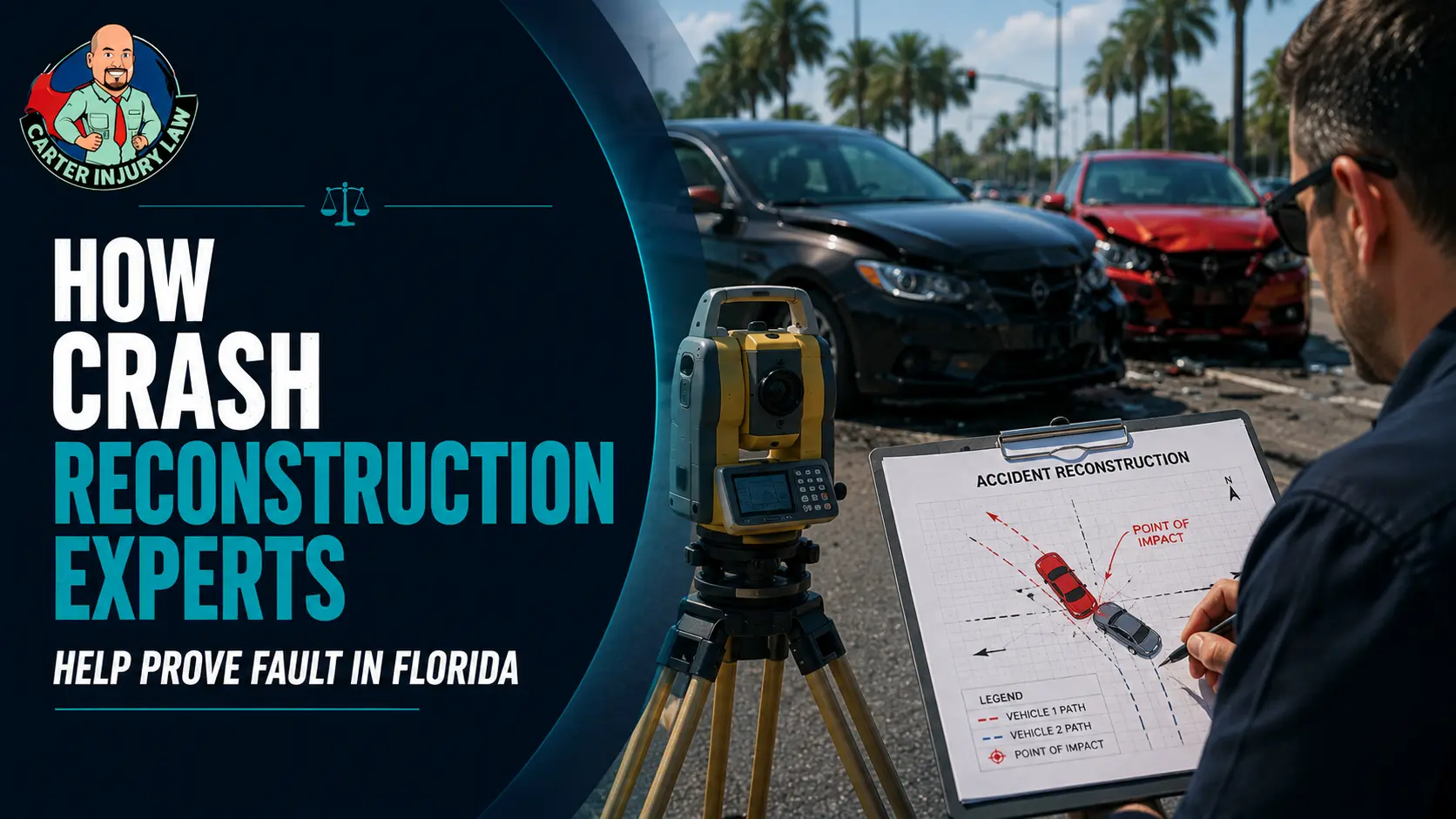
In Florida, accident scene photos are key proof in determining how blame is divided. Weather changes fast, skid marks fade, debris gets swept away, and vehicle angles shift once tow trucks arrive. Photos preserve those details before memory gaps grow.
Early photos also document visible injuries before swelling, bruising, and treatment records change the visual picture. That reference point can make it harder for insurance companies to ignore the real timeline of your Florida injury claim.
Key Points
- Florida's 2023 modified comparative fault law, Fla. Stat. 768.81, makes fault percentage the central battleground in many injury claims.
- Smartphone EXIF metadata can record timestamp and GPS location, creating stronger proof of scene conditions.
- Insurance adjusters may reduce offers when no photo evidence exists to challenge their fault narrative.
- Skid marks, vehicle positions, and debris can disappear quickly after first responders and tow trucks arrive.
- Immediate injury photos create an early reference point that later medical records alone may not show.
1Florida's Fault Law Makes Photos More Important Than Ever
Florida changed comparative fault rules in 2023. Under Fla. Stat. 768.81, a party found greater than 50% at fault for their own harm may be barred from recovering damages in many negligence cases. That hard cutoff makes the fault percentage a critical number.
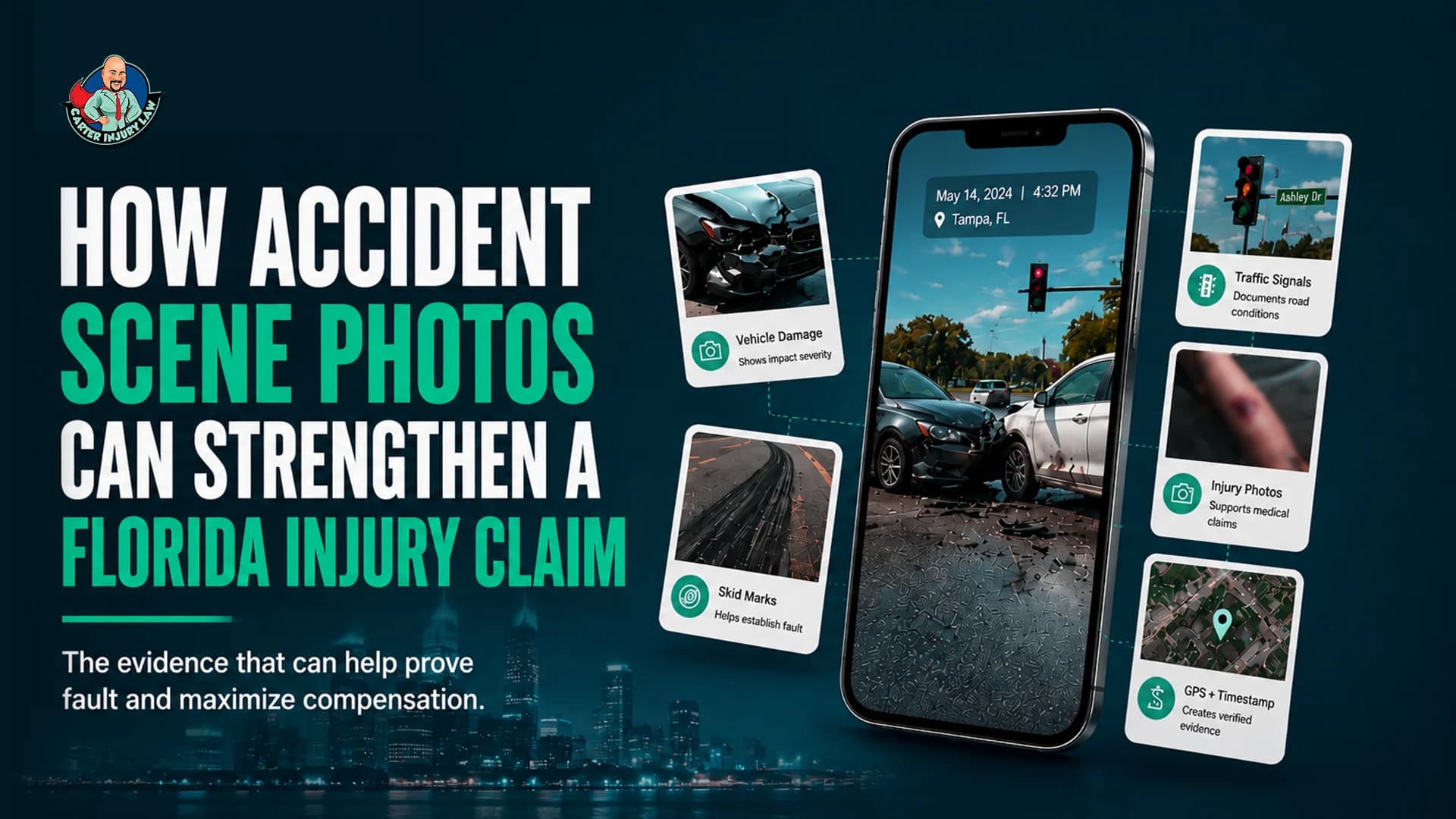
Photos give your attorney something concrete when fault is disputed. They show vehicle positions, direction of impact, road conditions, lane markings, and whether traffic signals or signs were ignored. Without them, it can become your word against the other driver's version of the crash.
Photo Metadata Can Matter
Hidden EXIF metadata inside many smartphone photos may include the time, date, and location of the shot. If the other side disputes when or where a crash condition existed, that metadata can support the timeline your lawyer builds.
2What Should You Actually Photograph at the Scene?
Most people snap a few shots of car damage and stop. That is a start, but the legal value of accident scene photos goes much deeper than dented metal. A complete photo set can document the crash, the roadway, the people, and the conditions around the collision.
| What to Photograph | Why It Matters in Your Claim |
|---|---|
| All vehicle damage from every angle | Establishes severity, point of impact, and direction of force. |
| Skid marks and tire tracks | Shows braking, speed clues, and whether either driver tried to avoid the collision. |
| Road signs, signals, and lane markings | Helps show whether a driver ignored traffic controls at that exact location. |
| Weather, lighting, and road surface | Documents rain, wet pavement, glare, darkness, and other contributing conditions. |
| Visible injuries immediately after the crash | Creates a before-swelling baseline that supports later medical documentation. |
| The other driver's license and insurance card | Prevents identity and coverage disputes before stories change. |
| Witness names, faces, vehicles, or plates nearby | Preserves potential testimony before witnesses leave the scene. |
The table covers the full list. What it cannot show is the time problem. Skid marks can be driven over, debris can be swept away, and final vehicle positions change the moment towing begins. Photographing everything immediately is not optional when evidence is disappearing.
If you were hurt in the Tampa Bay area, Carter Injury Law's auto accident team can review what your specific claim needs to preserve.
3How Scene Photos Fight an Insurance Lowball Offer
Insurance adjusters build narratives. They are trained to find alternative explanations for your injuries and the crash. No photos means less proof to counter that narrative. Detailed, time-stamped photos let your attorney dismantle the adjuster's version of events point by point.
35%
Higher average settlements with documented scene photos.
Source: Insurance Research Council
40%
Potential liability reduction adjusters may argue when no photo evidence exists.
Source: Insurance claim evaluation patterns
60-90 min
Average window before many Florida scenes are cleared after first responder arrival.
Source: Scene preservation estimate
The strategic effect is often bigger than the numbers. When an adjuster knows your attorney has a complete photo record, every documented angle removes one excuse the other side can use to reduce your payout. According to NHTSA crash data resources, crash investigations often focus on driver behavior and vehicle movement before impact. Photos of skid marks, debris fields, and damage patterns speak directly to those issues.
"The cases where clients photographed everything at the scene are the ones where we can walk into negotiations with a position, not just a claim. Photos remove ambiguity. And ambiguity is exactly what insurance companies survive on."David Carter, Founder, Carter Injury Law
Police reports use standardized forms built for road safety management, not civil litigation. They may not capture every angle, minor road defect, or signal issue. Carter Injury Law's Tampa Bay personal injury team uses client-captured photos to fill gaps official reports can leave open.
4What Carter Injury Law Cases Actually Show
Common misconception: photos are helpful but not essential. That assumption can cost people money. In disputed-fault cases, claimants without scene photos may face higher comparative fault arguments because they cannot produce visual documentation.
Pattern 1
Clients with strong photo sets can push back against higher comparative fault percentages.
Pattern 2
Skid marks, final vehicle positions, and immediate injury images can close off common insurer arguments.
Pattern 3
Photos of road hazards or malfunctioning signals can support environmental liability alongside driver fault.
Pattern 4
When no photos exist, nearby business cameras, traffic cameras, and witnesses become urgent investigation targets.
Florida's official crash dashboard tracks reported crash data statewide. In real injury claims, a photo set does more than support your story. It can remove the foundation of the insurer's competing story.
If You Could Not Take Photos, Move Fast
If you were too injured to photograph the scene, the claim is not over. Businesses, dashcams, traffic cameras, doorbell cameras, bystanders, and witnesses may still hold useful evidence.
The catch is timing. Video can be overwritten, witnesses become hard to reach, and physical evidence disappears. Early investigation gives your legal team the best chance to recover what you could not capture.
5What People Ask About Accident Scene Photos in Florida
Does it matter if I only took a few blurry photos at the scene?
Yes. Use them. Even imperfect photos can carry evidentiary weight. Tell your attorney right away so they can build a strategy around what exists. Blurry proof beats no proof.
Can the other driver demand copies of my accident photos?
Yes. Florida civil discovery rules may allow both parties to request photographic evidence. Your attorney can review and manage what gets shared and when.
What if I was too injured to photograph the scene?
Witness photos, bystander videos, dashcam footage, and nearby business surveillance can help substitute for what you could not capture yourself.
Can I use Google Street View screenshots as supporting evidence in Florida?
Yes, with limits. Street View can document pre-accident road conditions and establish a baseline scene appearance, but it does not replace crash-day evidence.
How soon after the accident should I talk to a lawyer about my photos?
Right away. A lawyer who reviews your images quickly can spot missing details and send investigators while evidence is still fresh.
Did You Photograph Your Accident Scene?
Let David Carter review your evidence and tell you what it may mean for your Florida injury claim. The review is free, and there is no commitment.
Call (813) 922-0228 or visit our contact page for a free case evaluation.
Disclaimer: This article is for general informational purposes and does not create an attorney-client relationship. For advice about your specific Florida injury claim, contact Carter Injury Law directly.