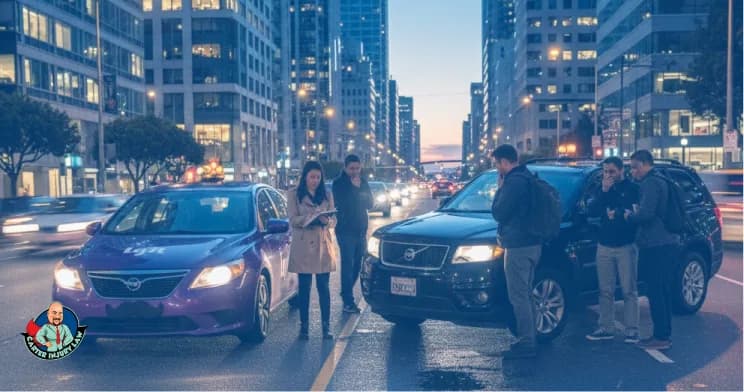
If you live here in the Bay Area, you know the drill. You’re heading down Dale Mabry on a Friday evening, or maybe you’re trying to merge onto I-4 near the malfunction junction, and you see them. They are everywhere. The glowing "Amp" on the dashboard of a Lyft, the Uber sticker in the rear window, and the hazard lights flashing as they pull over in a spot that definitely isn’t a parking zone in SoHo to pick up a group of college kids.
Rideshare is the absolute bloodstream of Tampa transportation. Whether you’re catching a ride to Amalie Arena for a Lightning game or heading to TPA for an early flight, we rely on these apps.
A few years ago, a car accident was usually just "Driver A hit Driver B." Simple. Today? It’s a bundle of apps, corporate policies, independent contractors, and insurance adjusters who would rather do anything than pay out a fair claim.
If you’ve been in a crash involving an Uber or Lyft in 2024 or 2025, you might have already realized this isn't a normal fender bender. Let’s talk about why, and more importantly, let’s talk about how we fix it.
(1) Why Are These Wrecks Happening?
You look at the statistics coming out this year, and they tell a story that I see playing out in my office every week. Nationally, we are seeing reports that rideshare services contribute to a modest but real increase in traffic fatalities, somewhere in the 2-3% range. But why?
It’s not because Uber drivers are "bad" people. It’s because of the system they work in.
When I depose a driver after a crash, I often find a few common denominators:
Imagine driving down Kennedy Blvd in rush hour. Now imagine doing it while looking at a GPS, toggling between the Uber and Lyft apps to see which one pays more, and looking for a passenger waving on the sidewalk. Distracted driving is the number one cause I see for these wrecks.
Inflation in Florida hasn’t been kind. We see drivers pulling 12-hour shifts, chasing "quest" bonuses or surge pricing late at night. A tired driver is a dangerous driver.
The "Period 1" Gap is the silent killer of injury claims. Drivers rushing to get to a "surge zone" (like Ybor at 2 AM) often drive faster and more aggressively before they have a passenger in the car.
(2) The Insurance System Is Not as Simple as You Think
This is the part where folks usually get a headache, but stick with me because this is the most important thing I’ll tell you.
If a regular driver hits you, we go after their insurance. Easy.
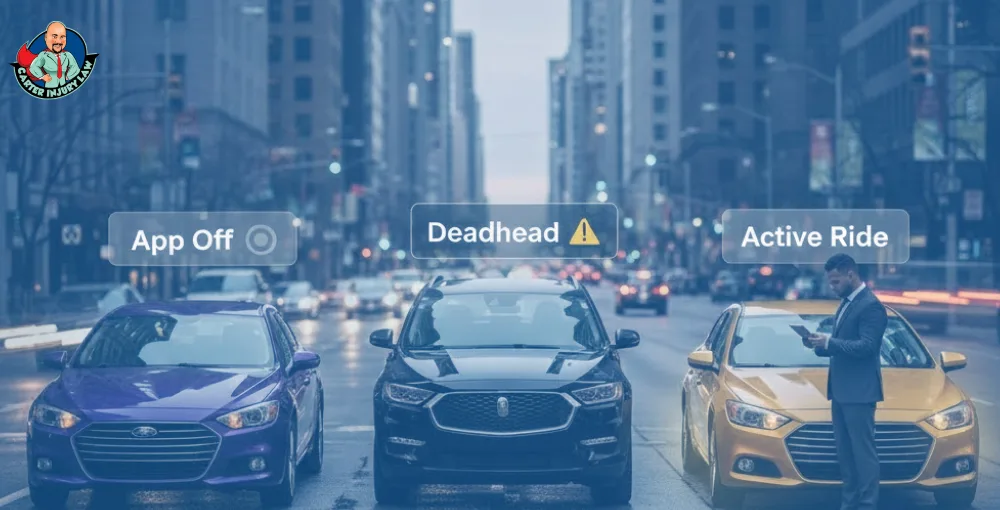
If an Uber driver hits you, or if you are a passenger in one, we have to play a game called "What Phase Were They In?"
The coverage changes second by second. Literally.
Phase 1: The "App Off" Scenario
If the driver is driving their Toyota Camry but the Uber/Lyft app is OFF, they are just a regular person. Uber is not involved. We have to rely on their personal car insurance. And in Florida, where insurance rates are through the roof, you’d be shocked how many people are driving with the bare minimum coverage or worse, no bodily injury coverage at all.
Phase 2: The "Deadhead" Period (App On, No Passenger)
This is the danger zone. The driver has the app open and is waiting for a ping. They are technically "working," but they haven't accepted a ride yet.
The problem is their personal insurance often denies the claim because they were using the car for business (which is usually excluded).
Uber and Lyft provide contingent liability here, but it’s lower. Usually $50,000 per person for injury. That sounds like a lot until you factor in an ambulance ride, an ER visit, and a few weeks of physical therapy. That money vanishes fast.
Phase 3: The "Active Ride" (The Golden Ticket)
From the second the driver hits "Accept Ride" until the moment they drop the passenger off, a $1 Million commercial insurance policy kicks in.
It covers you if you are the passenger.
It also covers you if you are another driver hit by them.
This one covers pedestrians. My job, usually, is fighting to prove that the driver was in Phase 3 and not Phase 2. You’d be amazed how often the digital records "glitch" and the company tries to claim the driver hadn't technically accepted the ride yet.
(3) Florida Law Has Changed (And Not in Your Favor)
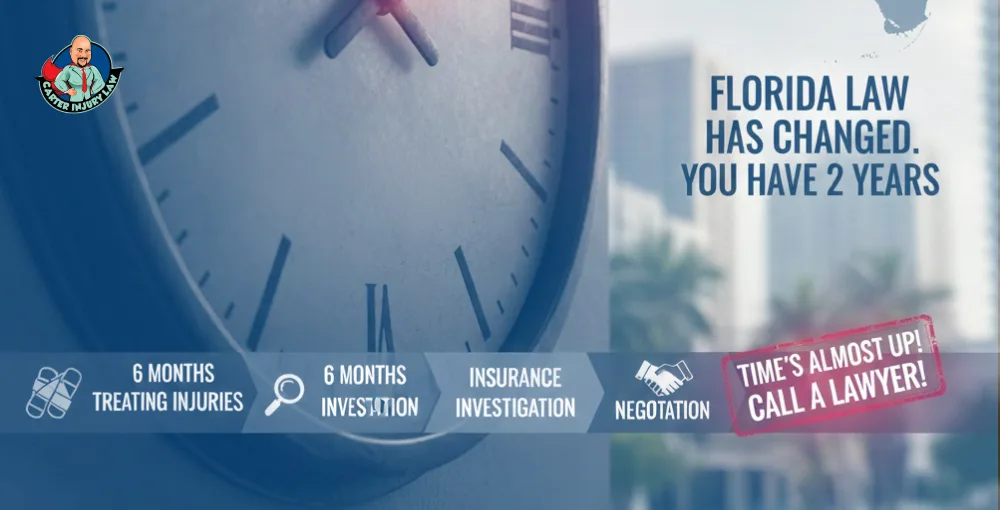
I need to be real with you about the legal landscape in Florida right now. We used to have 4 years to file a negligence lawsuit. That felt like plenty of time to heal, negotiate, and see what happens.
That is gone.
Recent tort reform in Florida slashed the statute of limitations down to 2 years.
Two years sounds like a long time, right? It’s not.
First, you spend six months treating your injuries.
Then, the insurance company drags its feet for six months "investigating."
Then, we negotiate for six months.
Suddenly, you are dangerously close to the deadline.
If you wait too long to call a lawyer, you might be barring yourself from ever getting paid. The insurance companies know this. They will stall on purpose, hoping you run out the clock.
(4) "What Do I Do Now?" – The David Carter Checklist
Okay, let’s say the worst has happened. You’ve been rear-ended on the Howard Frankland Bridge by a rideshare vehicle, or maybe you were in the back seat of a Lyft that T-boned someone in South Tampa. Here is exactly what you need to do.
The "Digital Evidence" Screenshot (Do this first) This is the tip most lawyers forget to tell you. If you are a passenger, or if you are a driver who was hit and can see the other driver’s phone, take a picture of the app screen. If the driver cancels the ride immediately after the crash (which happens more than you think), the record of that trip might disappear from your immediate view. I need proof that the ride was active to get you that $1 million coverage. Screenshot the driver’s profile, the license plate in the app, and the "Ride in Progress" screen.
Call 911. No Exceptions. I don’t care if the driver begs you not to. I don’t care if they say, "I’ll pay you cash to fix the bumper." Rideshare companies are massive corporations. They will not pay a claim without a police report. Without a report from TPD or FHP, it’s your word against theirs. And their lawyers are very good at twisting words. Get the police there. Get an official record.
Watch What You Say Be polite, check on everyone, but do not say "I’m fine," and do not say "I’m sorry." "I’m fine" may get written down by the insurance adjuster as "Victim stated they had no injuries." Three days later, when your neck locks up and you can’t turn your head, they may use those words against you. Just say, "I’m shaken up. I’m going to get checked out."
Go to the Doctor (The 14-Day Rule) In Florida, to access your own PIP (Personal Injury Protection) benefits, you generally need to seek medical treatment within 14 days of the accident. If you try to "tough it out" and wait three weeks, you might lose that coverage entirely. Even if you think it’s just soreness, go to a walk-in clinic or your primary care doc. Get it on the record.
(5) The "Quick Cash" Trap
Here is a scenario I see all the time.
A week after the crash, you get a call. It’s a very nice person from the rideshare company’s insurance team. They are super polite. They ask how you are doing.
Then they say, "Look, we know this is a hassle. We want to send you a check for $1,500 to cover your inconvenience and any co-pays. We can wire it today."
If you cash that check, there is almost certainly fine print that says you are releasing them from all future liability.
If you find out next month that you need a $50,000 neck surgery? Too bad. You settled for $1,500.
If you miss three months of work? Too bad.
They make these offers because they know your claim is worth way more, and they want to buy you out cheap before you talk to a lawyer like me.
(6) Why You Need a Local Lawyer

Look, I know calling a lawyer feels like a big step. You might think, “Can’t I just handle this myself?”
In a normal fender bender? Maybe.
In a rideshare accident? No.
You are dealing with three layers of insurance. You are dealing with corporate legal teams in Silicon Valley who view your injury as a line item on a spreadsheet. You are dealing with Florida’s complex no-fault laws and the new, shorter statute of limitations.
We don’t charge you a dime unless we win. I sit down with you, I look at the facts, and I tell you the truth about what your case is worth. I handle the nasty phone calls, the paperwork, and the fights with the adjusters so you can focus on getting your back fixed and getting your life back to normal.
Give me a call. Let’s look at the evidence and figure out a plan. Stay safe out there, Tampa.