Call US
24/7
Free Confidential case Evaluation
(813)922-0228Call US
24/7
Free Confidential case Evaluation
(813)922-0228Loading...

blog

One moment, life moves as it always has. The next, it fractures. An accident, a blur of pain and confusion, and suddenly, the world is no longer the one you knew. Before you can even make sense of it, the phone rings. The insurance company. Their voice is steady, practiced—almost kind. They have an offer. A few thousand dollars, handed over without trouble, without delay.
It sounds tempting, right ? After all, you have bills piling up, maybe even lost wages. Whereas there’s something unsettling about it—why are they in such a hurry? Why does it feel like they know something you don’t?
Maybe it’s because they do. And that’s exactly why you should think twice before saying yes.
Right after an accident, the insurance company might come to you with an offer—$2,500, maybe $3,000—if you agree to release your claim. "We’ll give you this money right now," they say, as if they’re doing you a favor.
However, they’re not.
This is a lowball offer, plain and simple. The insurance company isn’t in the business to take good care of you—they’re in the business of saving money. And they know that if they can get you to settle early, before you even know the full extent of your injuries, they win.
Because here’s the thing—what if you’re more hurt than you think? What if your pain gets worse or you need more treatment down the road? If you take that first check, you’re done. You can’t go back and ask for more. That release is final.
So my advice is to never accept the first offer without talking to an attorney. A quick payout might seem nice at the moment, but your future health and financial stability are worth more than whatever they’re offering upfront.

Once you’ve gone through treatment, the insurance company might come back with a new offer. This time, it’s a bigger number. It might even seem reasonable. However, before you even think about accepting, you need to ask yourself a few key questions:
Does it cover all my past medical expenses? Every bill, every doctor visit—those costs add up fast.
Will it reimburse my health insurance? If your insurance company paid anything for your treatment, they’re going to want their money back.
Am I being fairly compensated for pain and suffering? This isn’t just about bills. It’s about what you’ve been through.
What about future medical costs? Even if you have health insurance, you’ll still have co-pays, deductibles, and out-of-pocket expenses. Will this settlement take care of that?
Does it account for mental anguish or loss of enjoyment of life? Your injuries might not just affect you physically—they could change your entire quality of life.
What about my spouse? If your injuries have affected your ability to support your spouse emotionally or financially, they may have a claim, too.
A settlement isn’t just a number. It’s about making sure you’re fully covered—past, present, and future. If the offer doesn’t do that, then it’s not enough.
Insurance companies want you to think they’re on your side. However, make no mistake—their priority isn’t you.
The Adjuster’s Job Isn’t to Help You
That friendly voice on the phone? Their job is to settle your claim for as little as possible. They might sound sympathetic, but at the end of the day, they work for the insurance company—not for you.
Filing a Lawsuit Can Increase Their Offer
If you push back—if you file a lawsuit—their tune often changes. Why? Because they know that a trial could cost them a lot more than settling. Many times, just the threat of going to court can make them offer you more.
Going to Trial Might Be the Best Option
If they’re refusing to offer fair compensation, sometimes you have to take them to court. A jury sees what you’ve been through, and they’re not looking out for the insurance company’s profits—they’re looking at what’s fair.
A lowball offer isn’t them doing you a favor. It’s a tactic. And if they’re not offering you what you deserve, you have options.
Explore some of our other related blogs:
How to Handle Out-of-State Car Insurance Claims in Florida Accidents
How to Avoid Common Pitfalls in the Car Accident Claims Process in Florida

Not every settlement offer is bad. Sometimes, taking the offer makes sense—but only under the right circumstances.
If It’s the Full Policy Limits
Insurance policies have a maximum payout amount. If they’re offering you every dollar available under the policy, that might be as good as it gets. In that case, accepting could be the right move.
If They’re Offering Less Than the Policy Limits
Now, if they’re offering you less than the full policy limits, that’s when you need to stop and evaluate. Is this offer really enough? Does it cover everything—your medical bills, pain and suffering, and future treatment? If not, you may want to push back.
Only You Can Decide—But Get Legal Advice First
At the end of the day, it’s your case, your injuries, your life. You have to make the call. But an attorney can help you understand what’s fair, what’s not, and whether you’re being lowballed.
Settling isn’t always a bad thing, but don’t accept an offer without knowing exactly what you’re giving up.
Watch this video to hear more about how we can help you decide whether to accept an offer or fight for more.
Insurance companies know exactly what they’re doing when they make you an offer. Do you?
Understanding the Real Value of Your Claim
We will break down what your case is actually worth, factoring in medical bills, lost wages, pain and suffering, and future expenses. You deserve the full picture before making a decision.
You Have the Final Say, We’re Here to Guide You
We don’t make decisions for you. We give you the facts, the strategy, and the best advice based on years of experience. But at the end of the day, it’s your case, and you make the call.
We Don’t Work for Insurance Companies, We Work for You
Insurance adjusters are trained to minimize payouts. We’re trained to maximize them. Unlike them, we have one goal: fighting for you and making sure you get every dollar you deserve.
No Risk, No Upfront Fees
We offer free consultations, and you don’t pay us a dime unless we win your case. That means there’s no risk in reaching out. However, there’s a lot to lose if you settle too soon.

The first question that inevitably crosses every client’s mind is, “How long is this going to take?” And rightfully so. After an accident, you need answers—and you need them fast. The thing is, the timeline for your case can vary. Some cases settle quickly, while others might take a bit longer, depending on a number of factors.
It could be that the insurance company is responsive and the facts of the case are clear, or maybe there are complications along the way that extend the process. The key is understanding that the timeline is fluid—it depends on how fast things move along, what challenges arise, and how the other side responds. However, I’ll give you a general timeline and walk you through each phase so you’ll know exactly where things stand.
The moment you sign up, we get to work. No waiting around, no delays. We start building your case from day one because the stronger the foundation, the better your outcome.
Sending Letters to Insurance Companies
One of the first things we do is notify the insurance companies. We send out letters letting them know we’re representing you, and we start gathering critical information—what policies are in place, what coverage limits exist, and what potential defenses they might throw at us.
Finding Out About Insurance Coverage and Possible Defenses
Insurance companies don’t just hand over money; they look for ways to reduce or deny your claim. So, we dig into the details. How much coverage is available? Are they trying to claim you were partially at fault? We uncover these answers early so there are no surprises down the road.
Investigating Slip-and-Fall Cases
If your case involves a slip-and-fall, we act fast. We reach out to the property owner, their insurance company, and anyone else involved. Our investigator gets out to the scene, takes photos, and documents everything before evidence fades. If you have pictures, we’ll use those too—because solid proof makes it harder for them to deny liability.

This part of your case isn’t about negotiations or legal battles—it’s about you. Your health comes first. The goal is to heal, to get as close as possible to the life you had before the accident. We don’t rush this process because settling too soon could leave you with unpaid medical bills and ongoing pain.
Medical Visits, Treatment Plans, and Documenting Injuries
During this time, you’ll be seeing doctors, following treatment plans, and doing everything necessary to recover. Every appointment, every test, and every diagnosis is documented because those medical records are going to be the backbone of your case. The more thorough your treatment history, the stronger your claim.
The Importance of Following Through with Doctor Visits
One thing insurance companies love to argue is that you weren’t really injured. If you skip appointments or stop treatment too soon, they’ll use that against you. They’ll say, "If you were really hurt, you would have kept going to the doctor." That’s why we tell our clients—follow through. Keep going until your doctor says you’re fully recovered or you’ve reached the best possible outcome.
Focus on Feeling Better Before Settling
We never push for a quick settlement before you’re ready. Because once you settle, that’s it. You can’t go back and ask for more if your injuries turn out to be worse than expected. So, take your time, focus on healing, and when the time is right, we’ll fight to get you the compensation you deserve.
A "demand" is our way of saying, "It’s time to settle this." We’ve gathered all the facts, the evidence, and your medical records. Now, we package everything up and send it over to the insurance company or the defendant, telling them, "Here’s what we think your responsibility is, and here’s the amount we’re expecting to settle the case." This is the point where we take all our hard work and put it into a formal request.
Packaging Medical Records, Bills, and Investigation Findings
We carefully organize everything—the medical records, bills, photos, investigation results—and put it all together in a neat, professional package. This shows the insurance company the full picture—how your injuries have affected your life and why the amount we’re requesting is fair.
Sending It to the Insurance Company to Settle the Case
Once we’ve got everything put together, we send the demand off to the insurance company or the responsible party. From here, it’s in their hands. However, don’t expect an immediate response. They’ll need time to review everything, check the details, and decide whether they’re going to meet our demand or not.
Expected Response Time (30-90 Days, Sometimes Longer for Government Agencies)
Most of the time, you’ll get a response within 30 days, but depending on the situation, it can take anywhere from 30 to 90 days. If the case involves a government agency, it could take even longer. Government entities often take more time to respond, but rest assured, we actively follow up to ensure they don’t delay unnecessarily.

By the time we reach the 8-10 month mark, we’ll have an idea of what your case is worth based on the offer from the insurance company. The question is, Do you take it, or do you fight for more in court?
What Happens If the Offer is Fair?
If the insurance company comes back with a fair offer that properly compensates you for your injuries, medical bills, and lost wages—it might be time to settle. The advantage here is that you get your money and move on with your life without the stress or uncertainty of a lawsuit. We’re not here to drag things out if a fair settlement is on the table.
What If It’s Too Low?
If the offer is too low, that’s a problem. We don’t settle for less than what your case is worth. We’ll go back to the table and negotiate harder, and if we can’t get the insurance company to budge, we’ll advise you to take it to court. They can’t intimidate us into accepting a lowball offer, and we’ll make sure your case is treated fairly.
Some Companies Refuse to Respond—What Happens Next?
There are cases where the insurance company just doesn’t respond. They ignore us, hoping we’ll give up. That’s when we kick things up a notch. If they’re not responding to our demand, we move forward with filing a lawsuit. They’ve had their chance to settle, and now it’s time for them to face us in court.
If all goes well and the insurance company offers a fair settlement, we'll call you in to hand over the check and walk you through the closing documents. Once you sign, your case is wrapped up, and you’re compensated for your injuries. This is the ideal outcome we aim for from the start. However…
If No Fair Settlement, Lawsuit Filing Begins
Now, if the settlement offer hasn’t been fair, or if the insurance company is still playing hardball, that’s when we step up our game. We’ll file a lawsuit and take your case to court. It’s a big step, but it’s one we’re ready for.
Gathering Documents and Information for Court
Once you’ve made the decision to file a lawsuit, it’s all about preparation. We’ll gather everything we need to present a strong case in court. This includes medical records, bills, witness statements, photos, and anything else that supports your claim. We’ll make sure your case is solid and that we’re ready for whatever the defense throws at us.
To get a better sense of how long the entire process could take, check out our video where we break it down for you in detail:

The courts are backed up. Whether it's the effects of COVID or the new laws that rolled out in March of 2023, there’s a lot of cases on the docket, and that means delays. The court system is underfunded and overwhelmed, and while we do everything we can to keep your case moving, it’s out of our hands once it’s in the court system.
Differentiated Case Management Orders – What They Mean for Your Case
Once we get into the court system, you’ll likely encounter "differentiated case management orders." These are the judge’s orders that will govern how your case moves along. They outline timelines for what happens next, and they’re meant to keep the case on track. But, remember, just because there’s a schedule doesn’t mean things will always go according to plan. With everything going on in the courts right now, we might see delays.
Depositions: What to Expect When Talking to the Opposing Attorney
One of the first things that’ll happen in court is the deposition. This is where you sit down with the opposing attorney, and they ask you questions under oath about your case. It’s part of the discovery process, and while it might feel intimidating, we’ll make sure you’re prepared. You’ll be asked about the details of your accident, your injuries, and the impact it’s had on your life. It’s also important to be honest and clear.
Mediation: Most Lawsuits Settle at This Stage (10-12 Months After Filing)
Now, most lawsuits settle during the mediation stage, which usually happens between 10 and 12 months after we file the lawsuit. Mediation is a chance for both sides to sit down and try to reach a settlement before going to trial. Both sides present their cases to find common ground. If we settle, you get paid; if not, we fight for you in court. Either way, we’re pushing for the best outcome.
You Might Also Enjoy These Helpful Reads:
Understanding the Statute of Limitations for Personal Injury Cases in Florida
What Damages Can You Recover in a Florida Personal Injury Case?
How to Secure Personal Injury Compensation in Florida Expert Tips from Carter Injury Law

Trials can take 2 to 3 years due to delays in the court system, including backlogs and other unforeseen factors. While this timeline is beyond our control, the best approach is to stay patient.
Delays Aren’t the Lawyer’s Fault
I know it can be frustrating when things are moving slowly. However, delays aren’t really our fault. They’re part of the system we’re working in. The courts are overloaded, and while we fight to keep your case moving, sometimes it takes longer than expected. This isn’t something that’s under our control, and it’s definitely not because we’re not doing our job. We’re pushing hard, but we also need you to be patient and trust the process.
Some Cases Settle Before Trial, but Lawsuits Often Increase Case Value
While most cases settle before trial, sometimes filing a lawsuit can actually increase the value of your case. Insurance companies know that once a lawsuit is filed, the stakes are much higher. They can no longer drag their feet or offer lowball settlements. A lawsuit signals that you’re serious and ready to fight, and that often pushes the other side to make a fair offer. So, while it may seem like the trial process is dragging on, it can actually lead to a better result in the end.
Every case is different, and that’s why it’s important to get a personalized timeline for your specific situation. The general timeline I’ve laid out gives you an idea, but I can give you a much clearer picture once I know the details of your case. So, don’t wait—pick up the phone and call us for a free consultation. It’s risk-free, and I’ll be able to give you an idea of how your case will likely unfold based on your unique circumstances.
And remember, there are no fees unless you win your case. That’s right—no fees unless we secure a settlement or win in court. So, take the next step and reach out to us. You’ve got nothing to lose and everything to gain.

Sometimes, the hardest decisions are the ones that seem to demand answers before you’ve had a moment to think. In life, as in law, the pressure to act quickly can leave us questioning whether we’ve chosen the right path. How do you know if the hand you’ve reached for is steady? How do you trust that the words on the page are meant to protect you, not trap you?
These moments of doubt are natural, even necessary. They remind us that choice is a powerful thing—perhaps the only thing we truly own. And when it comes to something as personal as your legal representation, the freedom to choose, to step back, or to start fresh shouldn’t feel like a luxury. It should feel like a right.
A contingency fee agreement means that your attorney’s fee depends on the outcome of your case. If you win your settlement, the attorney gets paid. If you don’t win, they don’t get paid. It’s that straightforward. This setup allows you, the client, to pursue your case without having to worry about upfront costs or hourly fees. The attorney is only compensated if you get the result you’re looking for.
Now, why is this so common, especially in personal injury cases? Well, the reason is simple—most people don’t have the money to pay for an attorney’s time upfront, especially when they’re dealing with medical bills or missing work due to their injuries. Contingency fees level the playing field. They give everyone the chance to fight for what they deserve without financial barriers getting in the way. It’s a way for the attorney to show they’re invested in your case, because if you don’t win, they don’t get paid. So, in a way, they’re as committed to your success as you are.

In Florida, if you’ve signed a contingency fee agreement with an attorney, you have what’s called a "three-day right of rescission". This simply means that you have three full days from the date you sign the contract to change your mind and cancel it—without owing the attorney a dime in fees. If you decide to back out, you won’t have to pay for their time or legal work. It’s a safety net that lets you make sure you’re comfortable with your decision before moving forward.
However, and this is important, you may still owe the attorney for any costs they’ve already spent on your case. For example, if they’ve conducted an investigation or had any other out-of-pocket expenses, those costs will still be your responsibility. But, in terms of attorney fees? Nothing. That’s the benefit of the 3-day window—it’s a chance to make sure you’re really comfortable with the attorney you’ve chosen, and if something doesn’t feel right, you have a way out without any penalty.
This right matters because, as much as we’d like to think we’re making the right choice every time, sometimes things don’t feel like they’re working out. Whether it’s a gut feeling, a change of heart, or simply a matter of needing more time to make a decision—you have the right to cancel within that three-day period.

So, you’ve decided that the attorney you signed up with isn’t the right fit for you. No worries, you’ve got options. If you're within that three-day window, here’s what you need to do to cancel your contract:
Write it Down: First things first, you need to put it in writing. Whether you prefer email or a physical letter, make sure you clearly state that you’re canceling the contract. You don’t want there to be any confusion later on. If you go with email, make sure it’s something official, like a formal resignation letter or a simple, clear email. The main point is—document it.
Be Direct: In the email or letter, mention that you’re canceling the agreement under Florida’s three-day right of rescission. You don’t have to give a detailed explanation of why, just keep it straightforward and to the point. You’re within your rights to cancel, and the attorney should respect that.
Send It Right Away: Time is of the essence. You want to make sure your cancellation is done within those 3 days, so don’t delay in sending the letter or email. The sooner, the better. Remember, the clock starts ticking the day you sign the agreement, so act fast.
Keep a Copy: Always keep a copy of what you sent. You never know when you might need proof that you canceled in time. If it’s a letter, get a delivery confirmation. If it’s an email, save the sent copy and any read receipts.
Avoid Liens: The last thing you want is for the attorney to place a lien on your case for the time they’ve already spent working on it. That’s why it’s so important to cancel before they get a chance to do that. If you wait too long, they might have already started working on your case, and they can try to claim payment for that work. By canceling early, you can avoid that situation.
Now, what happens if you miss that three-day window? Well, don’t panic. At our firm, we understand that sometimes you need a little more time to be sure about your decision. That’s why we offer a 30-day no-fee guarantee.
Unlike the standard three-day rescission period, we give you 30 days to decide if you’re happy with the way we’re handling your case. That’s right—30 full days to evaluate whether you feel comfortable with our communication, our approach, and our service. We know that choosing the right attorney is a big deal, and we want you to be 100% confident in your choice before you move forward.
The benefit of this extended window is you have more time to really get a sense of how we work. In the first 30 days, if you feel like we’re not the right fit for you—maybe we’re not returning your calls or not keeping you in the loop as you expected—just let us know. No hard feelings. You won’t owe us anything for our time or legal fees. You’ll just be responsible for any costs we’ve already incurred on your case—things like investigation fees, for example.
The 30-day window gives you the breathing room to make an informed decision without feeling rushed or pressured. It’s our way of showing confidence in our service and making sure you feel comfortable with us. You don’t have to make any snap judgments—we’ve got you covered for a full month. That’s how sure we are about our ability to get the job done right and take care of you as a client.

When it comes to choosing an attorney, one of the most important things you can do is make sure they’re operating ethically. You deserve someone who truly has your best interests at heart—not someone who’s just out to sign another client. Unfortunately, not every attorney out there plays by the rules.
Let me give you an example. Imagine you’re in a hospital room, vulnerable and in pain, and someone walks in trying to get you to sign a contract right then and there. If that sounds like a scene out of a movie, you’re not far off—it’s straight out of The Rainmaker. That kind of behavior is not just unprofessional; it’s unethical. A good attorney doesn’t pressure you into signing anything when you’re not in the right state of mind to make that decision. If someone approaches you like that, it’s a major red flag.
If an attorney comes to you unsolicited—whether in a hospital, at your home, or anywhere else—you should stop and question their intentions. Ethical attorneys don’t chase after clients. Instead, they let you come to them when you’re ready. Another sign to watch for is an attorney who seems more interested in signing you up quickly than explaining your options or answering your questions. If they’re not taking the time to listen to you and understand your situation, that’s a big problem.
Get More Legal Insights To Avoid Common Pitfalls:
Can I Switch My Car Insurance Company During the Personal Injury Case?
Understanding the Statute of Limitations for Car Accident Claims
In the end, the choices we make often come down to a single, quiet question: "Am I doing what’s best for me?" When it comes to selecting the right attorney, the answer should never feel rushed or uncertain. It’s about trust, integrity, and the confidence that the person standing beside you truly has your back.
Reach out today for a free consultation. No pressure, no obligation—just an honest conversation about how we can help. Because in the pursuit of justice, every step should feel like the right one.

There’s a moment, just after it happens, when time seems to stand still. You’re lying there, on the cold floor of a supermarket or the hard pavement of a parking lot, and the world feels both distant and uncomfortably close. Embarrassment floods in first, followed quickly by a sharp pain or a dull ache that whispers: This isn’t how today was supposed to go.
Slip-and-fall incidents are rarely about the fall itself. They’re about what follows—the questions, the frustration, the realization that this wasn’t an accident at all, but the result of someone’s negligence. And while the world keeps moving around you, you’re left wondering how to make sense of it, how to make it right.
Carter Injury Law understands the chaos that comes after the fall. And more importantly, we’re here to help you rise.
Slip-and-fall cases are a type of premises liability claim, which means they arise when someone gets hurt because a property owner or establishment failed to maintain their premises in a reasonably safe condition. These cases are about more than just the fall itself—they’re about the responsibility a business or property owner has to the people who walk through their doors.
For example, when you enter a store, a restaurant, or even a residential property, you trust that the environment is safe. You’re not expecting hazards that could trip you up or cause you harm. Legally, that trust isn’t just a courtesy—it’s a standard of care that the property owner is obligated to uphold. If they neglect that duty and someone gets hurt, that’s where a slip-and-fall case comes into play.

Slip-and-fall accidents can happen in a variety of ways. Let’s take a closer look at some of the most frequent causes:
Wet or Slippery Floors
This is one of the most common culprits. Whether it’s from spilled liquids, recently mopped floors, or even rainwater tracked in from outside, wet floors create a dangerous environment. Businesses have a duty to promptly clean up spills or post warning signs if the floor is still wet. If they don’t, it can lead to serious injuries.
Uneven Surfaces
Broken pavement, loose tiles, or uneven flooring may not seem like much at first glance, but they’re accidents waiting to happen. Walking on a surface that suddenly changes height or texture can easily cause someone to trip and fall. Property owners are expected to repair these issues or at the very least warn people of the hazard.
Poor Lighting
Without proper lighting, it becomes difficult to see obstacles or changes in the surface ahead. Poor lighting isn’t just inconvenient—it’s dangerous. Businesses must ensure their lighting is adequate to help prevent unnecessary accidents.
Obstructed Walkways
Walkways cluttered with boxes, merchandise, or other obstacles are a hazard to anyone trying to pass through. It’s the responsibility of the property owner or manager to keep pathways clear and accessible, ensuring that people can navigate the space safely.
Slippery Parking Lot Coatings
Parking lots might not be the first place you think of when it comes to slip-and-fall accidents, but they’re a common site for injuries. Sometimes, the surface of a parking lot is made slippery because the wrong type of paint or sealant was used. Facilities are often required to use non-slip coatings to prevent falls, but not all of them comply. When they fail to meet these standards, it puts everyone at risk.

Slip-and-fall accidents can occur almost anywhere, but certain locations tend to see them more often. Let’s break it down:
Retail Establishments
Whether you’re shopping at a big-box store or a local boutique, retail spaces are a frequent site for slip-and-fall accidents. From slippery entranceways during rainy weather to merchandise cluttering the aisles, there are countless hazards if the store isn’t properly maintained. Retailers invite the public in, and with that invitation comes a legal responsibility to ensure the shopping environment is safe.
Restaurants and Supermarkets
In places where food and drinks are served or sold, the risk of slip-and-fall incidents increases. Spilled beverages, dropped food, and freshly mopped floors are all common hazards. Restaurants and supermarkets have a duty to address these issues quickly and make sure the public is warned about any potential dangers, like wet floors or broken tiles.
Public Spaces
Parks, sidewalks, and government-owned buildings are other places where slip-and-fall accidents frequently occur. In these spaces, the responsibility often falls on a municipality or public entity to maintain the area. That means ensuring sidewalks are even, stairways are safe, and any hazards are addressed promptly to avoid injuries.
Residential Properties
If you’re visiting an apartment complex, condominium, or private home, the property owner or landlord has a duty to keep the premises safe for guests. Hazards like broken steps, slippery driveways, or poorly lit pathways can lead to accidents and property owners can be held responsible if they fail to address these risks.
Most businesses and property owners carry general liability insurance to cover incidents like these. These policies are designed to protect them from the financial fallout of an injury claim. But just because they have insurance doesn’t mean they’ll admit fault or willingly compensate you for your injuries. That’s why it’s so important to understand your rights and work with someone who can advocate for you.

The steps you take immediately afterward can have a significant impact on your health, your recovery, and your ability to seek justice. Here’s what you need to do:
Report the Incident
The first step is to notify someone in charge—whether it’s an employee, manager, or property owner. Let them know what happened and where it occurred, and make sure an incident report is filed. This report creates an official record of the accident, which can be invaluable later. If possible, ask for a copy of the report for your own records. Keep in mind that in Florida, businesses are not required to give you a copy, but it never hurts to ask.
Seek Medical Attention
Your health should always be your top priority. Even if you think your injuries are minor, it’s crucial to get checked out. Many injuries from slip-and-fall accidents, like sprains, fractures, or even concussions, don’t always show immediate symptoms. Visit an urgent care clinic, see your primary care physician, or if necessary, go straight to the emergency room. In severe cases, don’t hesitate to take an ambulance.
Document Everything
While you’re still at the scene, try to gather evidence if you’re able. Take photos of the area where you fell, including any hazards like wet floors, poor lighting, or uneven surfaces. Make note of the time, date, and any witnesses who saw what happened. If someone else is with you, ask them to help you document these details.
Explore Our Blogs For Further Legal Insights:
What to Do After a Car Accident in Florida with Out-of-State Insurance
Can I Switch My Car Insurance Company During the Personal Injury Case?
The first thing you need to do is reach out to us for a free consultation. It’s not just some brief chat. It’s a moment for us to listen to your story, to understand the details of your accident, and to offer you clarity in a world full of confusion. If you’re burdened with medical bills, lost wages, or the endless back-and-forth with insurance companies, we’re here to help you find the best way forward.
In that consultation, we’ll make sure to answer every question you have and address the concerns you’ve been carrying. You shouldn’t feel lost, and you shouldn’t feel alone. Just an opportunity to get the answers you need and to understand how we can help.
We’re your advocates, your support, your partners in the pursuit of justice. If you’ve had a slip-and-fall accident, don’t wait. Call us now. Whether you want to meet face-to-face in our office or have a conversation over the phone, we’re here to offer you the attention and guidance you deserve.

If you’ve found yourself in the aftermath of a car accident, the uncertainty can feel paralyzing. The confusion, the mounting stress, the questions that never seem to have simple answers. One of the biggest concerns people have is whether their case will go to court. It’s a natural question, a fear that lurks in the back of your mind as you wonder if you’re heading toward a long, drawn-out legal battle.
However, that doesn't mean it's always smooth sailing. There are twists and turns in the journey ahead, and sometimes, the path to resolution can be much more complex than you’d expect. So, where does this leave you? And what happens if it takes an unexpected turn? Well, that’s the real question—and it’s one we’re here to help answer. Let’s explore what happens when it begins…
Right after an accident, a lot of people wonder, "Am I in a lawsuit now?" The simple answer is, no, not yet. Your case doesn't go straight to a lawsuit. Instead, it starts as something much more straightforward: a claim.
Think of this as the first official step in the process. After an accident, you’re essentially telling the insurance company—or sometimes the person or business responsible—that you’re seeking compensation for your injuries. It’s not a lawsuit yet, but it’s where we begin the journey of making sure you’re taken care of.
When you file a claim, the insurance company will give you something called a claim number. This number is crucial because it helps track your case as it moves through the process. It’s a sign that your case has officially entered what we call the “pre-suit process.”
In this phase, we begin gathering the details. First, we reach out to the insurance company to find out the specifics of their policy. What are the insurance limits? How much coverage do they have? This information is very important because it helps us understand what we’re working with when it comes to negotiating a settlement.
Our goal during this time is to settle your case without going to court. That’s why we send a demand letter to the insurance company. In that letter, we explain exactly how the accident has affected you—whether it’s your health, your job, or your everyday life. We make a solid case for the compensation you deserve. Most of the time, we aim to negotiate with the insurance company to get you a fair settlement, avoiding the stress of a trial.

Now, here’s where it can go one of two ways: settlement or lawsuit. Let’s explore them with more details
In many cases, we’re able to settle your claim without stepping foot in a courtroom. That’s our goal, after all—to reach a fair settlement as quickly and efficiently as possible. This means the insurance company agrees to compensate you for your injuries and damages, and we’re able to wrap up your case without the need for a trial. We can do this through careful negotiation, presenting a strong case to the insurance company that shows why they need to offer you fair compensation. This avoids the stress of a lengthy legal process and gets you the help you need faster.
But sometimes, the insurance company doesn’t play fair. If they offer you a lowball settlement, you don’t have to accept it. We’ll push back and demand what you truly deserve. If they delay your case—meaning they drag their feet, keep asking for more information, or don’t respond in a timely manner—that’s another sign that we may need to move to the next step. Or, worst case scenario, they might outright deny your claim, and that’s when things get a little more complicated.
When that happens, we need to seriously consider filing a lawsuit. This is where things can get a little more formal. In Florida, there’s a statute of limitations, which sets a deadline for filing your lawsuit. You have two years from the date of the accident to file your case in court. This is a hard deadline, so if it comes to filing a lawsuit, we want to make sure we do it within that window.
Once we file a lawsuit, it officially enters the litigation process, and we start with a complaint. This is a formal document that outlines your case and the reasons why you’re seeking compensation. From there, we file it with the court and serve the defendant (the person or company responsible for your injuries) with a copy of the complaint. This is when your case officially transitions from a claim to a lawsuit.

Okay, so your case is now officially a lawsuit. But does that automatically mean you have to go to court? Not necessarily. I know that the idea of going to court can be intimidating, but most cases don’t end up in court right away—if at all. Once the lawsuit is filed, there’s still a lot of behind-the-scenes work that goes on first.
The first step in this phase is what’s called discovery. This is where both sides exchange information. Think of it as a process of both of us gathering the evidence needed to support our case. We’re going to request documents, question the other party, and get a clear picture of what happened and what damages were caused. This is an important step because it helps build your case, but it’s not something that requires you to go to court.
Now, you might be wondering about depositions. A deposition is another part of the discovery process. It’s a chance for the other side’s attorneys (and sometimes the defendant themselves) to ask you questions under oath. It sounds a little like something you’d see in a courtroom drama, but in reality, it’s usually much less formal.
Most depositions take place outside of a courtroom, often over Zoom or at a neutral location, like a court reporter’s office. You’ll be asked questions about the accident, your injuries, and how this has affected your life. It can feel a little uncomfortable, but don’t worry—I'll be there with you, making sure you know what to expect and helping you navigate the process.
So, while depositions are court proceedings, they’re not the same as a trial. You won’t be in a courtroom with a judge and jury—at least not yet.

Before we even think about heading to trial, most cases go through a process called mediation. You’ve probably heard the term before, but what exactly does it mean for your case?
Mediation is essentially a settlement meeting, but with a twist—it’s led by a neutral third party, known as the mediator, who helps both sides try to resolve the case without the need for a full trial. The mediator’s job is to listen to both sides, understand the issues, and then try to guide us toward a resolution that both parties can agree on.
Now, mediation is required by the court. Before we can move forward with a trial, the judge will typically require that we go through this step. It’s not optional. However, while it’s a required step, mediation isn’t in front of a judge, so it’s much more informal and relaxed than what you might imagine a courtroom to be like.
So, when do you actually have to go to court? The short answer is only if your case goes to trial. But very few cases actually end up going to trial. Most of the time, insurance companies will step up and settle the case before it gets to that point. They know that going to trial is a big deal, it’s expensive, and it’s unpredictable for both sides.
It’s important to understand that trial is the rare exception, not the rule. Most of the time, we’ll be able to negotiate and come to a settlement before things ever get that far. But if we do end up in a situation where the insurance company refuses to offer a fair settlement, or if they deny your claim outright, we may have no other choice but to take your case to court.
If you're feeling unsure or overwhelmed about what to do next, you don't have to face it alone. Pick up the phone and give us a call for a free consultation. We’ll walk you through the process, clear up any confusion, and answer the questions that keep you up at night. In a world that often feels indifferent, it's important to know that someone is in your corner.

You’ve been through it before—an accident, an injury. It’s a part of life that can feel inevitable, like a chapter in a book you didn’t choose to write. But then, another accident happens. And suddenly, you're left wondering: Can you still pursue justice for your pain, even though your body bears the scars of past misfortune?
It’s a question that taps into something deeper than just legalities. It's about what happens when life pushes you down, yet again. Do you stay down, or do you get back up, even when you’re bruised from before? Many would say that your past injury limits your chances. They’d tell you that your history of pain might stand in the way of recovery. But what if they’re wrong?
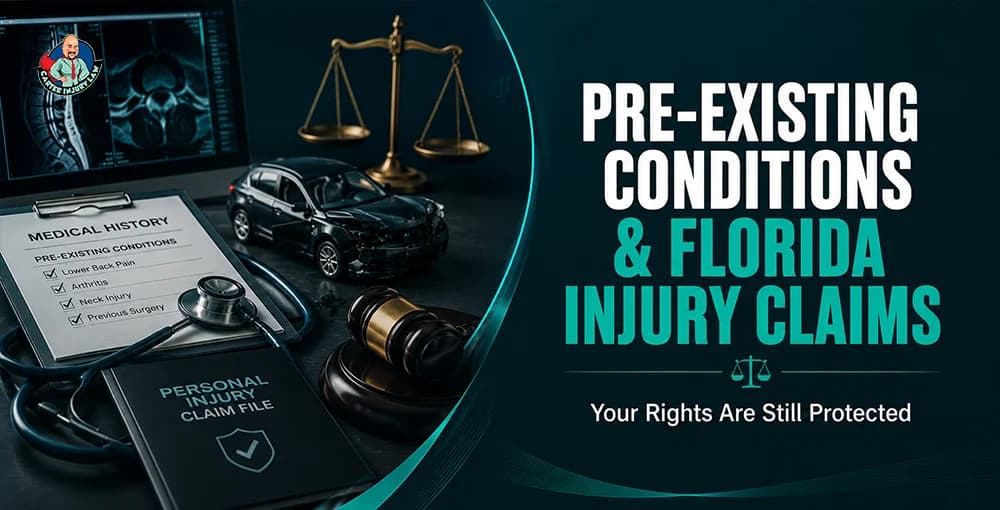
Even if you’ve had a prior injury from an earlier accident or incident, you can absolutely pursue a new auto accident case. Just because you've been hurt before doesn’t mean you don’t have a right to seek compensation again.
I get it—many people worry that their past injuries might hold them back. But let me tell you, don’t let that fear stop you from fighting for what you deserve. You have the right to recover, regardless of whether your current injury is similar to or even the same as one you've had before. Your past doesn’t define your future, and in the eyes of the law, you are entitled to compensation for any new damage caused by someone else’s negligence.
Many lawyers might hesitate to take on your case if you’ve had a prior injury. They might think it complicates things, or that it’ll be too hard to prove you deserve compensation. It's understandable—dealing with a history of injuries can seem like extra baggage. Some lawyers might even see it as a reason to turn you away.
However, at Carter Injury Law, we see it differently. We understand the reality of what happens when you've been hurt before. If you've been injured in the past, you're actually more likely to be hurt again. It’s not a reason to turn you away—it’s the reason we’re here to help. Just because you’ve been through it once doesn’t mean you don’t deserve to be made whole again. We’ll fight for you, no matter what your injury history looks like.

Under the law, if your previous injury has been aggravated, exacerbated, or activated by a new accident, you still have a valid claim.
Let’s say you were in a car accident years ago, and you hurt your lower back. You’ve been managing it with mild discomfort, but then, another accident happens, and your back pain becomes significantly worse. The new accident has aggravated your prior injury, and because of that, you have the right to pursue a claim for the pain and suffering, medical treatment, and other damages resulting from the increased injury.
While the settlement may not be as large as if it were a brand-new injury, you are still entitled to compensation for your aggravated injury. This includes covering medical expenses, lost wages, and pain and suffering caused by the worsening of your pre-existing condition.
Even though you may have a prior injury, that doesn’t mean you should settle for less. If your injury has been aggravated by a new accident, it’s important that this is properly taken into account when settling your case. You deserve to be compensated for the pain, medical costs, and any other damages caused by that aggravated injury. Don’t let anyone convince you otherwise.It’s important that this is properly taken into account when settling your case as highlighted by the American Bar Association.
Let’s say you were in a previous accident and hurt your knee. The pain wasn’t severe, but you managed it. Then, you’re involved in another accident that causes your knee pain to flare up, making it much harder to walk or work. Now, the pain is more intense, and you need to go through physical therapy and maybe even have surgery. If you settle for a lower amount because of the old injury, you’ll be shortchanged for the extra treatment and time off that this new accident caused. Make sure that the full extent of your aggravated injury is accounted for in your settlement.

If you’re unsure about your case or have questions that keep circling in your mind, don’t let them hold you back. We all find ourselves at a crossroads where the path ahead is uncertain. This is one of those moments, and you don’t have to walk it alone.
When you contact us, there’s no cost and no fee. There’s no pressure, no catch—just a chance to have a conversation about what’s best for you. Whether it’s in person or over the phone, we’ll find a time that fits into your life. After all, the journey to getting the compensation you deserve doesn’t need to be complicated or intimidating. We’re here to make it as easy as possible for you to take the next step.

Did You Know Florida’s Auto Accident Laws Have Changed? It means it’s more important than ever to know your rights and act quickly. Missing the deadline to file could mean losing your chance to recover damages, and nobody wants that. The time frame for filing a claim after an auto accident in Florida is a bit tricky right now. Why? Because the law changed recently—on March 24, 2023. Before then, you had four years to file a lawsuit after an accident.
But as of the date of this post, that window has been shortened. You’ll find out exactly what’s changed and why having a personal injury attorney on your side can make all the difference in securing the compensation you deserve. Keep reading to learn what you need to know.
The statute of limitations is the legal deadline to file a lawsuit in court. It’s not just a random date—it’s a critical part of the law that ensures cases are brought forward on time. Over time, evidence can be lost, memories fade, and witnesses become harder to track down. By setting a clear deadline, the law helps preserve the integrity of your case.
Now, in Florida, the statute of limitations for most auto accident cases is two years if the injury occurred after the law changed on March 24, 2023. These timelines balance fairness to both the injured party and the defendant, but they also make it easy to accidentally let time slip by—especially when you’re focused on recovery.
Let’s talk about how Florida’s statute of limitations for auto accidents has changed. It’s a big deal because it directly impacts how much time you have to protect your rights after an accident.
Before March 2023
If you were injured in an auto accident before March 25, 2023, you had a four-year window to file your lawsuit. That meant you had more time to recover from your injuries, gather evidence, and make decisions about pursuing your case. Four years is a significant period, giving people a lot of flexibility to take action.
But even with that extended timeline, it wasn’t something you could afford to take lightly. Waiting too long always carries risks—witnesses forget details, evidence can get lost, and insurance companies may push back harder as time passes. Even with four years, acting quickly was always the smart choice.
After March 2023
For accidents that happened after the law changed in late March 2023, the statute of limitations has been cut in half—from four years to just two years. Here’s where things have shifted. Two years may feel like a long time, but when you’re recovering from injuries, dealing with medical bills, and juggling life, that clock ticks down fast.
This change means there’s much less room for delays or mistakes. If you miss that two-year deadline, you lose your right to file a lawsuit—no exceptions. That’s why it’s more important than ever to seek legal representation early, preserving your ability to pursue compensation.

The change to Florida’s statute of limitations isn’t just a small tweak—it’s a major shift that directly impacts your ability to recover after an auto accident. Let’s break it down.
After an accident, you’re already dealing with a lot—doctor’s appointments, physical recovery, mounting medical bills, and possibly even the emotional stress of the situation or even just trying to get back to your day-to-day life. Before you know it, that window to file a claim could close.
The harsh reality is that if the statute of limitations runs out, you’re legally barred from filing a lawsuit. It doesn’t matter how strong your case is or how obvious it is that the other party was at fault. The court simply won’t hear your case.
And when that happens, your ability to recover damages is gone. That means no compensation for medical bills, lost wages, pain and suffering, or any other losses you’ve incurred. It’s a hard stop, and there’s no getting around it once the deadline has passed.
Every case is different, and there may be unique circumstances or exceptions that apply to yours. But the only way to know for sure—and to protect your rights—is to consult with an attorney as soon as possible. An experienced personal injury attorney can help you navigate this shortened timeline, gather evidence, and file your claim within the legal deadline.
More For You :
Securing Compensation for Car Accidents in Your Area
Avoiding Common Mistakes in the Car Accident Claim Process

When it comes to the statute of limitations in Florida, it’s important to understand that not all cases are the same. Here’s how some exceptional situations can some exceptions and variations could apply to your specific situation.
The General Rule—and the Exceptions
Let me make this clear: every case is unique. The two-year statute of limitations applies to most auto accident claims after the law changes, but depending on the details of your case, there may be exceptions that extend—or sometimes even shorten—that timeframe.
For example, some cases involving minors or individuals with certain disabilities might have different rules. Similarly, claims involving government entities, like if your accident involved a city bus or government vehicle, often come with specific timelines and procedures. These cases can be much more restrictive, with shorter deadlines to act.
Other Types of Injury Claims
Beyond auto accidents, other types of personal injury claims can have completely different statutes of limitations. For instance:
Medical malpractice claims typically have a 2-year deadline, but that clock might start ticking when the injury is discovered, not necessarily when it occurred.
Wrongful death claims usually have a two-year statute of limitations as well, but specific circumstances can affect that timeline.
Product liability cases or injuries involving defective products might follow other timelines, depending on when the defect was discovered or reported.
The key here is that the rules vary widely based on the nature of the claim and the details of your situation.
Don’t rely on general guidelines when it comes to your case. An experienced attorney will analyze your specific circumstances, identify any applicable exceptions, and make sure you don’t miss a critical deadline. Between recovering from your injuries, dealing with insurance companies, and trying to make sense of legal deadlines, it’s easy to feel lost.
At Carter Injury Law, we understand the importance of getting it right the first time. Our team stays up-to-date on Florida’s evolving legal landscape, so you don’t have to. If you’ve been injured in an auto accident in Tampa, Florida, reach out to Carter Injury Law for a free consultation. We can protect your rights and ensure you receive the recovery you deserve. Your case deserves your attention today.

If you’ve been hurt in Florida, you might find yourself asking, 'What can I recover from all this?' It’s a fair question, and the answer, like most things, isn’t simple. Life is rarely that generous. But the law, in its imperfect way, offers two types of compensation: economic and non-economic damages. We won’t get into punitive damages here, but those are punishment damages that a defendant sometimes has to pay if their conduct was especially egregious or outrageous.
The first is practical, medical bills, lost wages, and the cost of what’s been broken. The second is harder to measure, like trying to hold water in your hands. It’s for the pain you carry, the nights spent staring at the ceiling, the way your world has shifted. Both are real, yet neither can undo what’s been done. Let’s look closer at what’s possible, and how Florida’s laws shape what remains of your fight.
When it comes to economic damages, we're talking about the tangible, out-of-pocket costs you’ve incurred because of your injury—things that you can easily calculate and prove with receipts or bills. These damages are all about covering the actual expenses that have a direct financial impact on your life.
To make things clear, here’s a breakdown of what you might be entitled to:
Past and Current Medical Expenses
This includes any treatment you’ve already received, like emergency room visits, surgeries, physical therapy, or doctor’s appointments. It doesn’t matter if the treatment was in the past or is happening right now—these are all part of the medical expenses you can claim.
And don’t forget about ongoing treatments, like prescription medications or follow-up visits to specialists. These costs add up quickly, and you’re entitled to get reimbursed for them.
Future Medical Expenses
If your injury requires long-term care or future procedures, you’re also entitled to compensation for that. Maybe you need additional surgeries, physical therapy, or home care down the line. Even though you haven’t had those expenses yet, they’re a direct result of your injury, and it’s important to account for them.
Your doctors or medical providers might give a prognosis, recommending certain treatments, and these recommendations can be used to estimate what your future medical bills will look like and help secure compensation.
Lost Wages

If you couldn’t work because of your injury, that lost income is something you can recover. This includes the paychecks you missed out on while you were recovering. Whether you were laid up in bed or spending time at appointments, you shouldn’t be left financially burdened because of time missed from work. Lost wages can also apply if you have to take time off to care for a loved one after their injury.
Future Loss of Earning Capacity
This is where things get a little more complex. If your injury is severe enough that you can't go back to the same type of work you were doing before—whether because of physical limitations or an inability to perform certain tasks—This compensation covers both your current losses and the long-term impact on your ability to work of any individual injured worker in Florida.
For example, Let’s say you were involved in a car crash and suffered a serious knee injury. After months of physical therapy, your doctors determine that you can’t return to your job as a landscaper because your knee won’t handle the physical demands. Now, you’re facing the loss of income because you can’t do your previous job. In this case, you'd be entitled to compensation for your loss of future earning capacity.
Property Damage
If your car, bike, or any other personal property was damaged in the accident, you’re entitled to recover the costs of repairing or replacing it. This could include things like fixing your car after a wreck or replacing your damaged phone or other personal items. Property damage may seem straightforward, but it’s important to keep track of these costs, as they can add up quickly, especially in auto accidents.
In short, these are the bills you can show on paper—the expenses you can back up with receipts, pay stubs, medical records, or repair invoices. They’re the costs that make the difference between getting your life back on track and struggling to get by after an injury.

Now, let's talk about the other side of the coin—non-economic damages. These aren’t the types of damages that you can slap a price tag on, like a hospital bill or a car repair. Instead, these are intangible losses, but they still have a huge impact on your life. And while they’re harder to calculate, they are just as important as the economic damages we talked about earlier.
So, what kind of non-economic damages might you be entitled to?
Pain and Suffering
Pain and suffering is a well-known non-economic damage, covering both the physical pain and mental distress caused by an injury. If your injury leads to chronic pain or ongoing treatments, it can take a serious toll on your body and mind. This pain often lingers well after medical care, affecting everyday life—whether it’s back pain that makes sitting uncomfortable or a knee injury that limits your mobility. It’s the kind of pain you can’t see, but it’s very real.
Loss of Enjoyment of Life
Imagine this—before your injury, you were always the life of the party. You loved playing with your kids, running around at the park, or going out with friends. Now, maybe you can’t even enjoy the simple pleasures you once took for granted. That’s a huge emotional loss, and it’s something that the law recognizes as a real loss. You may be entitled to compensation for the activities you can no longer do, whether it’s sports, hobbies, or even spending time with your loved ones in the way you used to.
Emotional Distress
An injury doesn’t just affect your body—it impacts your emotions too. The stress of medical bills, anxiety from missing work, and frustration of losing activities you love can weigh heavily. Emotional distress is the toll of uncertainty and fear, leaving you feeling stuck in a situation that’s not your fault.

In Florida, the way your compensation is calculated doesn’t just depend on how badly you were injured—it also takes into account how much fault you share in the accident. This is where the comparative negligence rule comes into play. Simply, the comparative negligence rule means that if you're found to be partially at fault for the accident, the amount of compensation you’re awarded will be reduced by your percentage of fault.
For instance, let’s say you're awarded $100,000 by a jury after a car accident, but the jury finds that you were 20% responsible for the accident—maybe you were speeding just a little or didn’t notice a traffic signal change. In that case, your award will be reduced by 20%, which means instead of receiving the full $100,000, you’d only get $80,000.
I know, that might sound a little frustrating. But the good part is that the rule is designed to be fair. It's about making sure that everyone involved in an accident is held accountable for their actions, even if the accident wasn't entirely their fault.
Additionally, on lawsuits filed after March 24, 2023, there is a new rule in play called Florida’s modified comparative negligence 50% rule. If you, as the injured person, are found to be over 50% at fault for the incident or injury, a jury will be instructed to award you nothing. That’s right, zip zero zilch. That’s just another reason it is important not to talk to insurance companies or defendants after a loss and let an attorney start investigating right away. Although this new law is certainly unfair to injured people, it does not mean you do not have a case. It just means you need to have an experienced lawyer evaluate the case as soon as possible.
In Florida, you’re entitled to two key types of damages: economic and non-economic. However, navigating these claims, dealing with insurance companies, and ensuring everything is properly calculated can put in a lot of distress.
With Carter Injury Law on your side, we’ll make sure every dollar you're entitled to gets accounted for. We’ll work to ensure that your lost wages from missing work and any loss of earning capacity are fully recognized. Whether it’s negotiating with your insurance company or pushing for a fair settlement, we’re here to handle the details so you don’t have to. Plus, we'll make sure that your pain and suffering are fully considered when calculating your compensation.
If you or a loved one has been injured, don’t take the hurdles alone. Carter Injury Law offers no-cost, no-obligation consultation to explain your rights and options. Call us today to fight for the compensation you deserve.

If you’ve been in a car accident or suffered a personal injury, you might find yourself asking, “What sets one lawyer apart from another? Does it even matter?” It really does. The truth is, some lawyers shy away from the courtroom, avoiding the battle altogether. They take the easy road, chasing settlements that come quickly, not those that are just.
However, the fight for what you’re owed often demands something more: the courage to step into the arena, to face uncertainty head-on. It’s in that willingness to stand and fight where the real difference lies.
When it comes to personal injury cases, having an attorney who knows their way around the courtroom isn’t just helpful—it’s essential. Insurance companies aren’t in the business of handing out fair settlements unless they’re forced to take you seriously.
The reality is, until you file a lawsuit, the insurance company won’t look closely at your case. They won’t see the depth of your injuries or the weight of what you’ve endured. But the moment you serve that lawsuit, everything changes. The process begins—depositions, mediations, meetings with a judge. It compels them to confront the details, to reckon with what really happened and what it will take to set things right.
Without a lawyer willing to go to court, you're already at a disadvantage. You need someone who knows how to file a lawsuit and has the experience and resources to follow through. That’s how you make sure you’re not outmatched by the big insurance companies. In the end, it’s about evening the odds and ensuring you don’t settle for less than what you deserve.

When people hear the word “lawsuit,” it can feel overwhelming, but the truth is, the process isn’t as intimidating as it seems when you have the right attorney by your side. At our firm, we break it all down for you, step by step, so you always know what’s happening and what to expect.
It starts with filing the lawsuit. That’s when we formally notify the person responsible for your injury, and it sends a simple, undeniable message to the insurance company: We’re not backing down until you get what you’re owed.
From there, the case moves into what’s called discovery. This is where the real work begins. We take depositions , where we sit down with the other parties involved and ask them detailed questions about the incident. You’ll also have the chance to tell your story in a deposition, and we’ll make sure you’re fully prepared for it.
Next, there are mediations. This is where both sides come together with a neutral mediator to see if we can reach a fair resolution before heading to trial. It’s not about backing down; it’s about exploring every opportunity to settle on your terms.
If the case still doesn’t resolve, we go to hearings with a judge, presenting evidence and arguing on your behalf.
Through it all, our purpose goes beyond simply fighting the case—it’s about making sure you’re truly seen, truly heard. Representation isn’t just a matter of process; it’s a matter of dignity. We’ve walked this path many times before, navigating the examinations, the arguments, and the relentless machinery of the courtroom. It’s a weight we carry so you don’t have to, leaving you free to focus on what matters most—piecing yourself back together.
Not all attorneys are built the same, and unfortunately, some avoid litigation entirely. They might tell you they’ll handle your case, but when things get tough—when the insurance company refuses to pay what’s fair—they’re quick to push for a settlement. Why? Because filing a lawsuit takes time, money, and experience, and not every lawyer is ready to make that commitment.
Some attorneys will even refer your case out to another firm once it’s clear that a lawsuit is necessary. The problem with that? They’re financially incentivized to settle before it ever gets to that point. That means they may accept a lowball offer just to avoid the effort of filing and litigating. If an attorney is more focused on their convenience than your compensation, they’re not the right one for you.
At our firm, we don’t take the easy way out. We believe your case is worth the effort, the time, and the fight it takes to seek what’s truly fair. Because if your lawyer isn’t ready to take that stand, can you really trust them to fight for you at all?

Choosing the right attorney after a car accident or personal injury can feel overwhelming, but there’s one question that can cut through the noise: “What happens if my case doesn’t settle? Will you take it to court?” The answer you get can tell you everything about whether this attorney is the right fit for you.
Don’t be afraid to ask specifics. “Do you file lawsuits? How often? What’s your strategy when the insurance company lowballs my claim?” Their answer will tell you everything you need to know about their readiness to fight for you. A confident attorney will explain their process—how they handle lawsuits, what steps they’ll take, and how they’ll stand up to big insurance companies on your behalf.
The bottom line? Don’t settle for vague promises or excuses. An attorney who’s serious about your case will have a clear answer and a plan to get you the compensation. At our firm, we’re upfront about our commitment to fight for you—whether that means settling your case or taking it all the way to court.
The choice of a lawyer in your personal injury case isn’t a small thing—it’s everything. The right lawyer isn’t just your representative; they’re your voice when no one else will listen, the one who ensures your story is told and your rights are defended.
You deserve more than a compromise, more than silence. Don’t gamble with what’s ahead. Call us today for a free consultation. Let’s talk, face-to-face, about where you stand, where you could go, and how we’ll walk that road together.